Decision Brief

Collector Car Hail Protection: What Concours Owners Need to Know About Transport, Storage, and Show Field Risk

A single hail dent on a concours-quality restoration can erase tens of thousands of dollars in value — and most prestigious shows happen outdoors during peak storm season.

Collector Car Hail Protection: What Concours Owners Need to Know About Transport, Storage, and Show Field Risk
Hail Protector Editorial / GeminiDecision Brief

The Transport Paradox

Enclosed trailers have become standard practice for moving high-value collector cars to events, and for good reason. A quality enclosed trailer shields a vehicle from road debris, weather, and prying eyes during the most dangerous part of its journey. Many collectors who trailer their cars to shows have invested in climate-controlled units with soft-tie systems and air-ride suspension. The car arrives pristine.

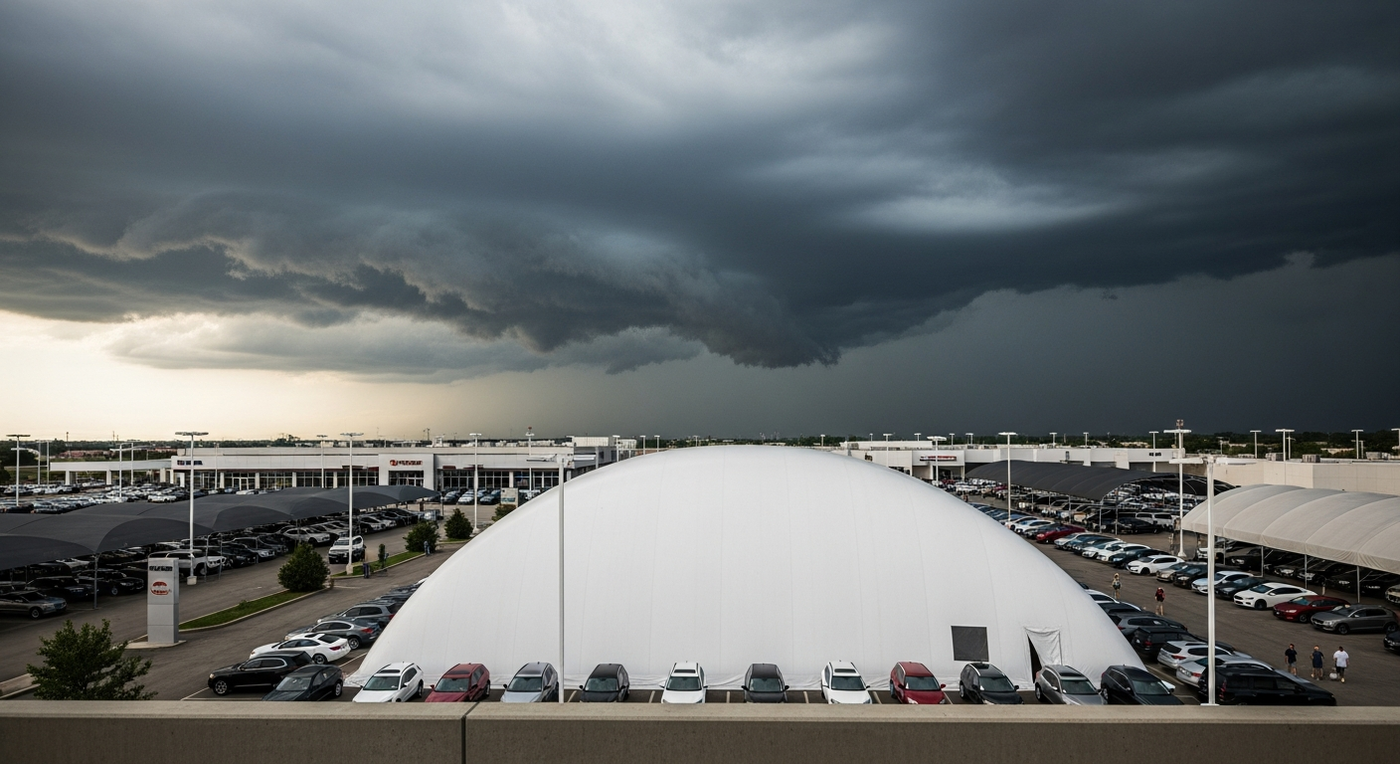
Then they park it on a grass field for three days.

The irony is stark. Owners spend considerable sums on transport protection, then willingly expose their cars to the exact risks they just paid to avoid. But the show field is the whole point — a 1938 Talbot-Lago T150-C SS wasn't restored to museum standards so it could live in a trailer. The vehicle exists to be seen, judged, and appreciated. That means outdoor venues during summer months, which in much of the United States means hail season.

Storm Prediction Center data shows that the peak months for large hail (one inch diameter or greater) across the central and eastern United States run from April through August, with June and July representing the highest-risk period. This overlaps almost perfectly with the traditional concours calendar. Pebble Beach runs in mid-August. The Concours d'Elegance of America at St. John's happens in late July. Amelia Island moved to early May partly to dodge Florida's summer storm season, but even that timing isn't foolproof.

Major events have contingency plans — sort of. Pebble Beach has a network of volunteers who monitor weather and can coordinate emergency cover deployment, though the logistics of protecting numerous cars spread across multiple show fields remain daunting. Smaller regional concours often have no formal weather protocol beyond hoping participants notice darkening skies in time to move their cars. Some shows provide large tents for featured marques, but these are display structures, not storm shelters. A canvas tent offers zero hail protection.

The truly risk-averse owners simply don't show their cars during summer. They wait for indoor events or venue-based concours held in covered pavilions. But this eliminates participation in the most prestigious outdoor shows, which remains the primary way to establish a vehicle's competitive credentials and market value.

Insurance That Actually Understands What You Own

Collector car insurance operates on fundamentally different principles than standard auto policies, and nowhere does this matter more than hail claims. The typical daily driver carries actual cash value coverage, meaning the insurer pays the depreciated value of the vehicle or the cost to repair it, whichever is less. A ten-year-old sedan with 90,000 miles has a defined market value that factors in age and wear.

A 1961 Ferrari 250 GT SWB California Spider doesn't depreciate. It appreciates. And its value has nothing to do with mileage.

Agreed-value policies, which dominate the collector car market, establish the vehicle's insured value upfront through appraisal and negotiation between owner and insurer. If the car is totaled, the owner receives that agreed amount regardless of market fluctuations. This sounds straightforward until hail enters the picture. A total loss is clean — the car is gone, here's your check. But hail damage typically doesn't total a collector car. It just damages it, often severely, in ways that can't be fully remediated.

Here's where policy language matters enormously. Some agreed-value policies include diminished value provisions that compensate owners for the permanent reduction in market value even after repairs are completed. If a hail-damaged 1969 Camaro Z/28 with original paint gets repainted after a storm, the repair might cost substantial amounts, but the loss of originality could reduce the car's market value even more significantly. A policy with diminished value coverage would address that gap. Many policies don't include this provision, or cap it at a percentage of the agreed value.

The other critical distinction: how the policy handles original versus reproduction parts. A 1957 Chevrolet Bel Air with original, un-dented front fenders is worth substantially more than one with reproduction fenders, even if the reproductions are perfect. If hail damages those original fenders beyond repair, does the policy compensate for the loss of originality, or just the cost of replacement panels? The answer varies by carrier and policy type.

Insurance Information Institute data suggests that collector car policies generally cost a fraction of standard auto insurance — often a few hundred dollars annually for vehicles valued at $50,000 to $100,000 — because the cars are driven so rarely and stored so carefully. But not all policies are created equal when it comes to hail. Some exclude coverage when the car is at a show or event. Others require proof of enclosed storage but don't address transport or show field exposure. Reading the actual policy language, not just the marketing materials, becomes essential.

Owners of truly irreplaceable vehicles sometimes carry multiple policies: a primary agreed-value policy through a specialist like Hagerty, Grundy, or American Collectors Insurance, plus an umbrella policy that covers gaps in the primary coverage. This redundancy costs more but eliminates the nightmare scenario where a high-value car suffers substantial hail damage and the owner discovers their policy caps show-related claims at a fraction of the repair cost.

What Actually Works

The only guaranteed protection against hail is a roof. Not a car cover — hail will dent through fabric and padding. Not a tarp — same problem. A solid roof, preferably with some standoff distance from the vehicle's surface.

For home storage, this is straightforward. Collector cars belong in garages, ideally climate-controlled ones. The owners who keep high-value vehicles under carports or in pole barns with open sides are gambling, especially in hail-prone regions. According to NOAA severe weather data, states like Texas, Oklahoma, Kansas, Nebraska, and Colorado see frequent large hail events, sometimes with stones exceeding two inches in diameter. At that size, hail punches through metal roofing and shatters windshields. A carport offers theatrical protection, not actual protection.

Transport requires enclosed trailers, full stop. Open trailers are acceptable for moving lower-value project cars to a shop. They're inappropriate for high-value restored vehicles.

The show field problem has no perfect solution, only risk management. Some owners bring portable canopies, though these are often prohibited by show rules for aesthetic reasons. The more practical approach: obsessive weather monitoring. Modern radar apps can show storm cells forming 30-60 minutes out, which is usually enough time to either move a car to covered parking (if the venue has any) or at minimum get it back in the trailer. This requires someone staying with the car or checking weather constantly, which defeats the social purpose of attending a show.

A handful of owners have started using weather alert services that send push notifications when severe thunderstorm warnings are issued for their specific GPS coordinates. These services, typically designed for RV owners and outdoor event planners, typically cost in the range of $50-100 annually and provide more targeted alerts than general weather apps. They're not foolproof — hail can develop with minimal warning — but they reduce the odds of being caught completely unaware.

The nuclear option: only show the car at indoor events or venues with immediate access to covered parking. The Gilmore Car Museum in Michigan hosts its annual show on grounds with multiple large barns where cars can be moved quickly. Some private concours held at estates or golf clubs have underground garages or covered porte-cochères that can accommodate emergency vehicle relocation. These venues are rare, and the shows are often invitation-only, but they represent the closest thing to zero-risk showing.

Here's what most people get wrong: they assume car covers provide meaningful hail protection. They don't. A padded car cover might prevent scratches from wind-blown debris, but hail strikes with enough force that the padding just transfers the impact to the paint beneath it. Some owners have tried double-layering covers or placing foam blocks under the cover to create air gaps. This helps marginally with small hail (pea-sized), but anything golf ball-sized or larger will dent through the setup. The physics are unforgiving.

The most pragmatic collectors simply accept that showing a car outdoors during summer involves risk, and they price that risk into their ownership experience. They carry appropriate insurance, they monitor weather religiously, and they make peace with the fact that a vehicle driven and shown is a vehicle exposed to the world. The alternative — keeping a concours-quality car in permanent climate-controlled storage, never risking it at outdoor events — preserves the investment but eliminates the joy.

Decision Tradeoffs

Pros

  • Agreed-value coveragePre-negotiated payout amount regardless of market shifts
  • Lower annual premiumsFraction of standard auto costs due to limited use
  • Diminished value provisionsCompensates for permanent market value reduction after repairs

Tradeoffs

  • Show exclusionsSome carriers deny claims during event participation
  • Reproduction part limitsMay only cover replacement cost, not originality loss
  • Claim capsEvent-related damage sometimes capped far below agreed value

Specialist policies beat standard coverage, but scrutinize show field terms and diminished value language before signing.

Some risks are worth taking

Some risks are worth taking. But only if you understand exactly what you're risking, and what happens if the sky opens up.

Verified Sources

  1. Storm Prediction Center

    Storm Prediction Center

    Hail climatology and seasonal patterns

Back to Protection Guides