Comparison

The Paint Tells You Everything: When PDR Works and When You Need Traditional Bodywork

Paintless dent repair preserves your car's original finish and costs half what traditional bodywork does — but only if the paint survived intact and technicians can reach the backside of the damaged panel.

The Paint Tells You Everything: When PDR Works and When You Need Traditional Bodywork
Hail Protector Editorial / GeminiComparison

The Factory Paint Question

Your car left the assembly line with paint applied in a controlled environment: electrostatically charged, baked at precise temperatures, cured in conditions you can't replicate in any body shop. Once that finish is gone, it's gone forever.

Paintless dent repair (PDR) exists because of this simple truth. The technique pushes dents out from behind the panel using specialized tools, leaving the original paint untouched. Traditional bodywork grinds off the factory finish, applies filler, and repaints the panel. According to Insurance Information Institute guidance, this distinction matters enormously for resale value — CARFAX and AutoCheck reports flag repainted panels, and buyers discount accordingly.

The cost difference follows from the process. PDR typically runs $75-150 per dent for standard hail damage, with most hail-damaged vehicles requiring repairs in the range of several hundred to a few thousand dollars depending on severity. Traditional bodywork starts around $150-200 per panel before you've even addressed the actual damage, then adds paint materials, color matching, and labor. According to Insurance Information Institute guidance, PDR typically costs roughly 40-60% less than conventional repair for equivalent damage.

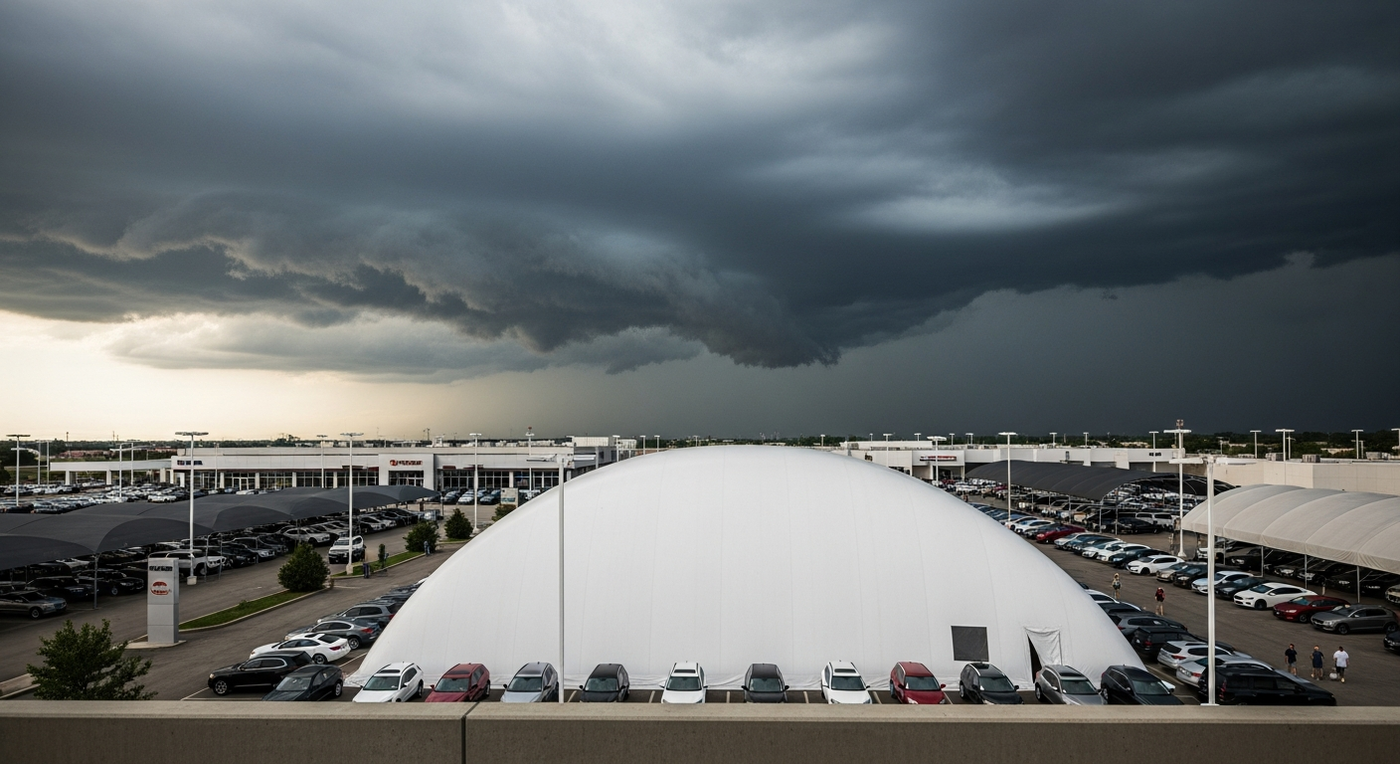
Paint damage forces the issue immediately.
When Traditional Bodywork Is the Only Option

When PDR Works: The Access and Integrity Test

Two conditions must both be true: the paint must be unbroken, and technicians must be able to reach behind the dent.

Paint integrity is binary. If you run your fingernail across the dent and feel a ridge, crack, or paint flake, PDR is out. The technique works by flexing the metal back to its original shape — flexing cracked paint just makes the crack worse. Even tiny paint chips disqualify a dent because pushing from behind will cause the compromised paint to spiderweb outward.

Access matters just as much. PDR technicians work through existing openings: they remove door panels, tail lights, and interior trim to slide tools behind the damaged area. Dents on flat panel centers — hood, roof, trunk, door skins — are usually accessible. Dents near panel edges, body seams, or structural braces often aren't. If a dent sits two inches from a door frame or right along a character line where two body panels meet, there's frequently no way to get a tool behind it at the correct angle.

Here's what most people get wrong: they assume PDR is just for small dings. Panel size matters more than dent size. A technician can often repair a softball-sized dent on a wide-open hood faster than a quarter-sized dent tucked against a door jamb. The limiting factor isn't the diameter of the damage — it's whether the metal can be manipulated without obstruction.

The Hail Damage Sweet Spot

Hail creates the ideal PDR scenario more often than any other damage type. Hailstones strike from above, hitting horizontal and near-horizontal surfaces: hoods, roofs, trunk lids, the upper portions of doors and fenders. These are exactly the panels with the best access from behind.

Most hail dents also leave paint intact. A hailstone impacts and bounces off in a fraction of a second — the metal deforms, but the paint's flexibility often lets it stretch without breaking. According to National Weather Service hail safety data, stones up to golf-ball size (roughly 1.75 inches) frequently dent sheet metal without cracking modern automotive paint systems, which are engineered to flex.

The exception is large hail — anything baseball-sized or larger. These impacts carry enough energy to both dent the panel and shatter the paint. They also sometimes crack the metal itself, creating a situation where even if you could push the dent out, the panel would never be structurally sound again.

When Traditional Bodywork Is the Only Option

Paint damage forces the issue immediately. Once the finish is compromised, you're repainting regardless of technique, which eliminates PDR's main advantages. You might as well use filler and traditional methods.

Structural damage similarly ends the PDR conversation. If the impact bent a frame rail, crumpled a door edge, or damaged anything beyond the outer skin panel, you need conventional repair. PDR addresses cosmetic dents in sheet metal — it doesn't fix structural components.

Edge and seam damage rarely works for PDR because of access limitations. A dent along the bottom edge of a door sits against internal reinforcement bars. A dent where the fender meets the door has no clean backside access. Technicians can sometimes work these spots using glue-pulling PDR techniques (bonding tabs to the paint and pulling outward), but results are inconsistent and the risk of paint damage increases.

Multiple overlapping dents create problems too. When hailstones hit the same area repeatedly, the metal work-hardens and becomes brittle. Pushing out one dent might cause stress cracks in the surrounding metal that's already been deformed. Some PDR technicians will attempt this, but many won't guarantee the results.

The Time Factor Nobody Mentions

PDR typically takes one to three days for a heavily hail-damaged vehicle. Traditional bodywork takes one to three weeks.

The difference comes from paint cure time. After a body shop applies new paint, the vehicle sits in a controlled environment while the finish hardens. Rush the process and you get soft paint that mars easily. Most shops won't release a car until the paint has cured at least 48 to 72 hours, and that's after all the bodywork and painting is complete.

PDR has no cure time. The technician works the last dent, reinstalls the trim panel, and you drive away. For anyone who needs their vehicle back quickly — or who's paying for a rental car while repairs happen — this timeline difference often matters more than the cost savings.

Option Tradeoffs

Pros

  • Preserves factory finishOriginal paint stays intact, avoiding CARFAX refinish flags
  • Significantly cheaperCosts less than half of conventional repair methods
  • Fast turnaroundNo paint cure waiting period means same-week completion
  • Better resale valueNo refinish history means higher trade-in prices

Tradeoffs

  • Requires intact paintAny cracks, chips, or breaks eliminate this option
  • Access limitationsEdge dents and seam damage often unreachable from behind
  • Not for structural damageOnly works on cosmetic sheet metal issues
  • Work-hardened metal problemsOverlapping dents can cause stress cracks during repair

PDR delivers major savings and preserves originality for hail damage on accessible panels with unbroken paint. Anything involving paint cracks, edge damage, or structural issues requires traditional methods.

The Resale Value Calculation

CARFAX reports show paint work. They don't show PDR.

When a body shop files an insurance claim for repainting, that claim enters databases that vehicle history services access. Future buyers see "damage reported" and "refinished panels" on the vehicle history. This disclosure can reduce resale value by several hundred to over a thousand dollars, depending on the vehicle.

PDR leaves no trace in these systems because it's not refinishing — it's repair. The original VIN-stamped paint remains intact, and the vehicle history shows hail damage was repaired but doesn't flag repainted panels. For anyone planning to sell or trade the vehicle within a few years, this distinction has real dollar value.

Comparison Questions

Verified Sources

  1. Insurance Information Institute

    Insurance Information Institute

    hail damage repair options and resale value considerations

  2. National Weather Service

    National Weather Service

    hail size classifications and impact characteristics

Back to Protection Guides