Decision Brief

When Four Months of Storage Costs Less Than One Hail Repair

Climate-controlled vehicle storage in hail-prone cities now offers seasonal protection packages that cost a fraction of a single comprehensive claim — and some drivers are doing the math.

When Four Months of Storage Costs Less Than One Hail Repair
Hail Protector Editorial / GeminiDecision Brief

The $200 Monthly Equation

A climate-controlled storage unit in north Dallas typically runs roughly $200-350 per month depending on size and access frequency. For the four-month active hail season — typically April through July in the southern Plains — that translates to approximately $800-1,400. A moderate hail event causing paintless dent removal across a sedan's hood, roof, and trunk typically runs several thousand dollars to repair. For vehicles valued above roughly $40,000, the math starts making sense.

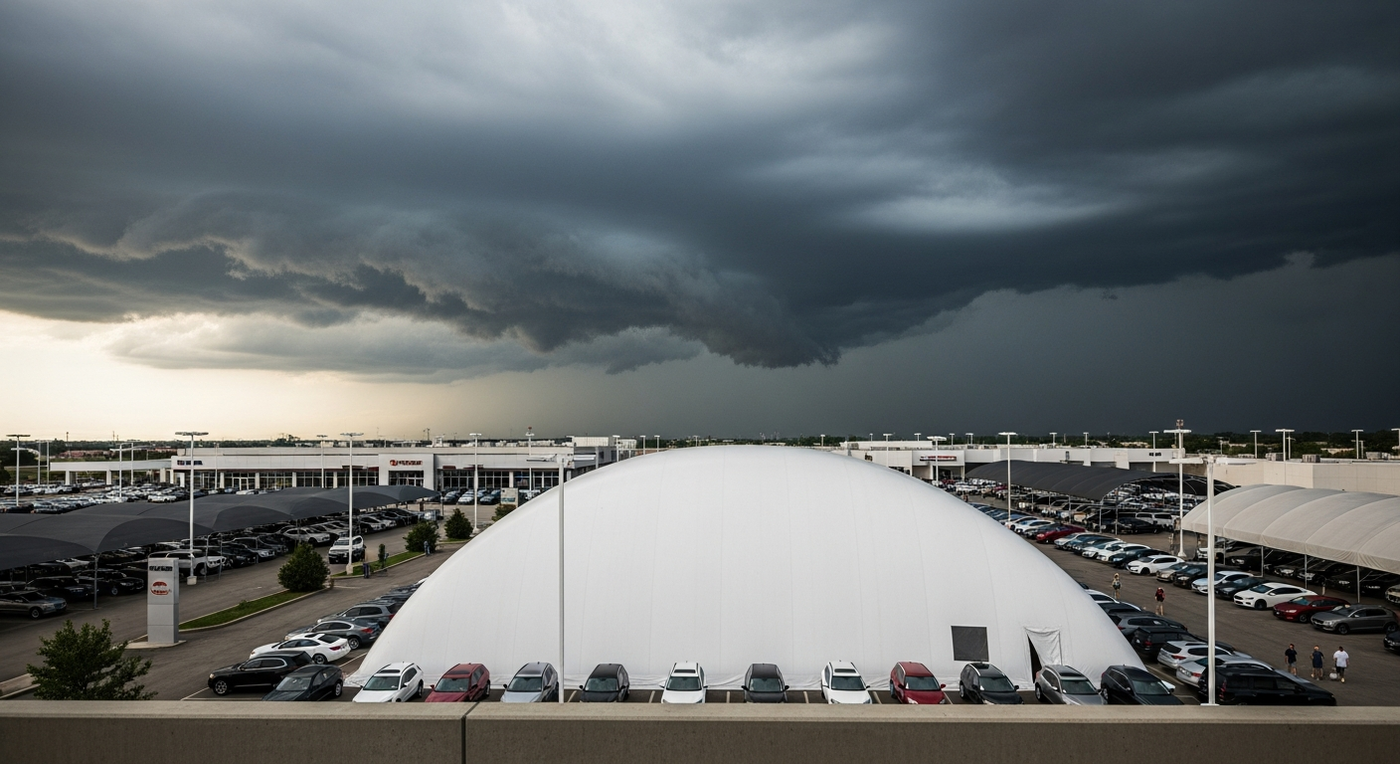
Storage facilities in Denver, Oklahoma City, and the Dallas-Fort Worth metroplex have responded to this calculation. Several now advertise "seasonal hail protection" explicitly, bundling April-through-July storage with vehicle transport and flexible access terms. The model works because these facilities already maintain climate-controlled space year-round — they're simply repackaging existing inventory for a specific risk window.
The Sweet Spot: Occasional-Use Vehicles

Storage makes the least sense for your daily commuter. You need the car. But consider the household's second or third vehicle: the weekend sports car, the truck used for monthly Home Depot runs, the sedan the college kid drives only during summer break. These occasional-use vehicles sit vulnerable in driveways during peak hail months while being driven perhaps 10-15 days total during that window.

For a vehicle valued around $60,000 with a typical $1,000 comprehensive deductible, four months of storage costs roughly what the deductible alone would run — and that's before factoring in potential premium increases after a claim. According to Insurance Information Institute data, comprehensive claims can affect rates for three to five years depending on the carrier and your claims history.

The financial threshold appears to be somewhere around $50,000 in vehicle value, though it shifts based on local storage costs and individual deductibles. Below that value, most drivers accept the risk. Above it, particularly for vehicles not driven daily, the storage option starts competing with self-insurance.

What You're Actually Buying

Climate-controlled storage isn't just a roof. Facilities maintain consistent temperature and humidity, which matters for vehicles with leather interiors and sensitive electronics. Most offer 24-hour access, though seasonal packages sometimes restrict this to business hours or require advance notice — read the contract specifics.

Transport is the variable that changes the calculation. Some facilities include pickup and delivery in their seasonal rate; others charge approximately $75-150 each way. If you're storing a vehicle you rarely drive anyway, the transport fee is negligible. If you need the car every other weekend, those charges accumulate quickly.

Security varies wildly. The premium facilities offer individual enclosed units with independent locks, surveillance systems, and on-site management. Budget options may be shared warehouse space with vehicles parked in rows. For hail protection, both work equally well — hail doesn't care about surveillance cameras. But if you're storing a high-value vehicle for four months, the security features matter for reasons beyond weather.

The Timing Problem Nobody Mentions

Here's what makes seasonal storage imperfect: hail doesn't respect calendars. The bulk of damaging hail in the central Plains falls between April and July, but Storm Prediction Center climatology data shows significant events occurring as early as March and as late as September. A strict April-July storage contract leaves your vehicle exposed during shoulder months that still carry meaningful risk.

Some drivers solve this by monitoring extended forecasts and making ad-hoc storage decisions — pulling the vehicle into storage when a severe weather outbreak looks likely, then retrieving it after the pattern shifts. This works if your facility offers month-to-month terms and you're comfortable with the logistics of moving a vehicle on short notice. It fails completely if you're traveling during the forecast window or if the facility is already at capacity.

The Collector Car Spillover Effect

The seasonal storage market initially developed around collector vehicles — cars worth six figures that owners typically drive perhaps 500 miles annually. Those economics are straightforward: year-round storage at roughly $300-500 monthly is simply part of ownership cost, like insurance and registration.

What's changed is the expansion into the broader market. Facilities that once catered exclusively to vintage Porsches and restored muscle cars now court ordinary high-value daily drivers. A 2024 BMW X5 or a loaded F-150 Platinum isn't a collector vehicle, but at approximately $70,000-80,000 in value, it fits the same risk profile during hail season. The storage industry recognized this and adjusted their marketing accordingly.

This has created a two-tier market. Premium facilities still focus on long-term collector storage with concierge services and detailing. But a second category has emerged: no-frills warehouse space marketed specifically for seasonal weather protection, with minimal amenities and lower monthly rates. You're not paying for carpet and a lounge area — you're paying for a structurally sound roof during April thunderstorms.

$800-1,400

Four-month seasonal storage

$50,000

Vehicle value threshold

3-5 years

Rate impact duration

When the Math Doesn't Work

Storage makes no financial sense if you're financing the vehicle and required to maintain comprehensive coverage anyway. Your lender mandates the insurance; a hail claim costs you the deductible regardless. Adding roughly $1,200 in storage fees on top of insurance you're already paying doubles your weather-related expense without reducing the underlying requirement.

It also fails for vehicles you actually drive regularly. Four months of storage on a car you need three times a week means you're paying for protection while simultaneously paying for alternative transportation — whether that's ride-sharing, a rental, or accelerated depreciation on a different vehicle you're now driving harder.

The model works for households with vehicle redundancy: multiple cars, where one can be sidelined for a season without disrupting daily logistics. It works for recreational vehicles used primarily outside the hail window. It works for the wealthy who view approximately $1,500 as a rounding error compared to the inconvenience of bodywork appointments.

Decision Tradeoffs

Pros

  • Deductible avoidanceStorage cost often matches or beats your comprehensive deductible
  • No rate increasesPrevents multi-year premium hikes from filing claims
  • Climate benefitsControlled environment protects interiors and electronics
  • Works for spare vehiclesIdeal for cars driven only occasionally during hail months

Tradeoffs

  • Calendar mismatchHail can strike outside standard April-July contracts
  • Transport fees add upPickup and delivery charges erode savings if you need frequent access
  • Insurance still requiredFacilities disclaim weather liability; you maintain comprehensive coverage
  • Daily drivers excludedImpractical if you need the vehicle regularly

Financial sense emerges for high-value occasional-use vehicles in households with multiple cars, particularly above $50K value with $1K+ deductibles.

What Facilities Won't Tell You

Storage contracts typically disclaim liability for weather damage. Yes, the building has a roof, but if that roof fails during a hail event, the facility's insurance covers the building structure — not your vehicle. You're still relying on your own comprehensive coverage as the backstop.

This seems contradictory until you read the fine print. You're renting space in a building the facility maintains to reasonable standards, but they're not guaranteeing weather protection as a contractual obligation. The practical risk is minimal — commercial buildings in hail-prone regions are engineered for severe weather — but the legal liability structure means you can't eliminate your comprehensive coverage just because the car is in storage.

Access restrictions matter more than most contracts emphasize. "24-hour access" often means you have a key code, not that staff is present. If you need to retrieve your vehicle at 2 AM before a road trip, you're on your own navigating the facility and ensuring you've locked up properly. Some drivers prefer this autonomy; others find it unsettling when storing a $75,000 vehicle.

The Seasonal Migration Pattern

In Oklahoma City and parts of the Denver metro, a small but growing number of drivers now treat hail season like snowbirds treat winter. They store their primary vehicle in April and drive a cheaper secondary car through July, then swap back. The secondary vehicle is typically older, lower value, and insured with a higher deductible — something where hail damage is financially tolerable.

This strategy only works if you already own the secondary vehicle. Buying a vehicle valued around $15,000 to protect one valued around $60,000 from hail makes no sense unless you needed the second vehicle anyway for other reasons. But for households that already maintain multiple vehicles, designating one as the "hail season driver" costs nothing beyond the mental adjustment.

The pattern mirrors what some drivers in northern climates do with summer cars and winter beaters, just inverted. Instead of protecting vehicles from road salt, they're protecting from ice falling from the sky.

Verified Sources

  1. NOAA Storm Prediction Center

    NOAA Storm Prediction Center

    Hail climatology and seasonal patterns

  2. Insurance Information Institute

    Insurance Information Institute

    Comprehensive claim impact on premiums

Back to Protection Guides