The Geometry of Vulnerability
The problem starts with basic physics and design philosophy. Sedans evolved with aerodynamics in mind, featuring sloped windshields, curved rooflines, and tapered rear glass. These angles serve a purpose beyond fuel efficiency—they deflect impacts. A hailstone striking a sedan's curved rear window at a 30-degree angle dissipates energy differently than one hitting a flat surface perpendicularly.
Modern crossovers and SUVs prioritize interior volume and visibility over aerodynamic efficiency. The result is what engineers call a "two-box" or "three-box" design with more vertical surfaces. Rear quarter windows that would be absent or minimal on a sedan become substantial glass panels on an SUV. Side windows extend higher to accommodate the elevated seating position. And the roofline—critical in hail events—tends toward flatness to maximize headroom.
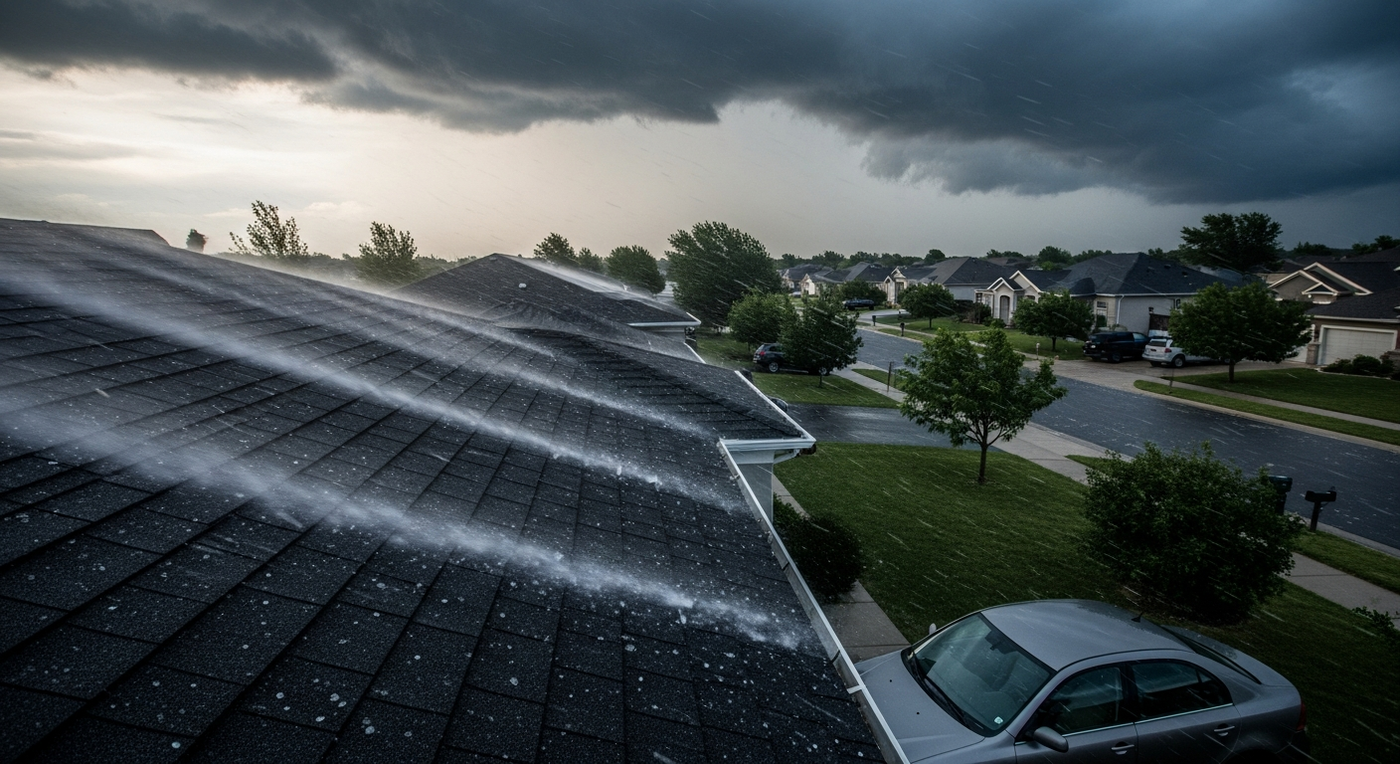
That flat roof creates what amounts to a horizontal collection surface. During a hailstorm, stones fall at terminal velocity (typically around 40-70 mph for golf ball-sized hail, according to National Severe Storms Laboratory research) and strike horizontal surfaces at close to perpendicular angles. A curved sedan roof might deflect some of that energy; a flat crossover roof absorbs the full impact. Multiply that by dozens or hundreds of impacts during a severe storm, and the damage accumulates rapidly.
The panoramic sunroof trend has compounded this vulnerability. What was once a luxury feature on high-end vehicles has become nearly standard equipment on mainstream crossovers and SUVs. A typical panoramic sunroof adds another 8-12 square feet of glass to the roof surface—glass that's often thinner than windshield glass and more prone to cracking under impact. The 2023 Toyota RAV4, America's best-selling non-pickup vehicle, offers a panoramic sunroof on most trim levels. So does the Honda CR-V, the Nissan Rogue, and virtually every three-row crossover on the market.
Here's what most people don't realize: panoramic sunroofs usually can't be repaired at all, even for minor cracks. The entire assembly typically requires replacement, and because these roofs often integrate with structural reinforcements and headliner components, the labor costs can rival the parts cost. Panoramic sunroof replacement typically runs anywhere from roughly $1,500 to $4,000 depending on the vehicle, before considering related damage to the housing or drainage system.