Explainer Deep Dive

Why Hail Is Harder to Forecast Than Tornadoes: The Prediction Gap That Affects Every Driver

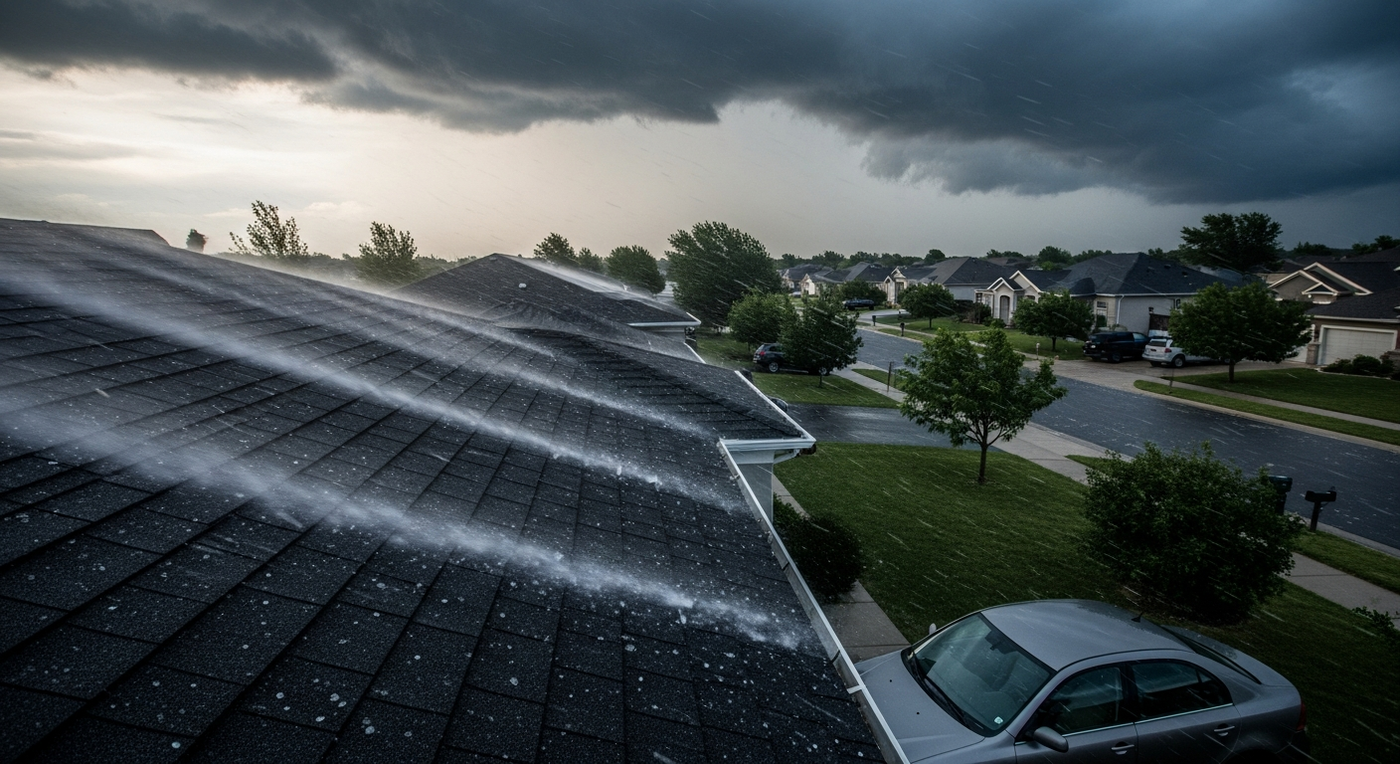
Tornadoes can be detected with high confidence minutes before they form, but the hail falling on your windshield right now may be twice the size meteorologists warned about.

Why Hail Is Harder to Forecast Than Tornadoes: The Prediction Gap That Affects Every Driver
Hail Protector Editorial / GeminiExplainer

The One-Category Rule

Here's what most people get wrong: they treat hail size warnings as maximums. The National Weather Service issues warnings with specific size estimates — "quarter-sized hail" or "golf ball-sized hail" — and drivers assume that's the upper bound of what to expect. In reality, these estimates represent the most likely size based on radar data, and they're accurate within one size category roughly 50% of the time. The other half? The hail is either smaller or larger than warned, and crucially, there's no way to know which before it starts falling.

The hail size categories used in warnings progress through penny (0.75 inches), quarter (1 inch), golf ball (1.75 inches), tennis ball (2.5 inches), and baseball (2.75 inches), among others. A warning for golf ball hail means tennis ball hail is entirely plausible. This isn't meteorological failure — it's the physical limitation of remote sensing technology trying to measure something it wasn't designed to measure with precision.

Storm chasers and researchers have known this for years, which is why experienced chasers don't calibrate their safety decisions to warned hail size. If a warning mentions hail of any size capable of causing damage — generally anything quarter-sized or larger — the working assumption is that stones one full category larger are possible. This mental adjustment, which might seem like paranoia to casual observers, is simply accounting for the prediction gap that radar technology cannot close.

Compare this to tornado warnings. When Doppler radar identifies a tornadic velocity signature — a tight couplet of winds moving toward and away from the radar at high speed — that signature corresponds to an actual rotating column of air. The tornado may be weak or strong, but the rotation exists. Storm Prediction Center research has established clear relationships between mesocyclone characteristics and tornado probability. Lead times for tornado warnings have improved substantially over the past three decades, typically ranging from 10-20 minutes according to Storm Prediction Center research, and false alarm rates, while still significant, have declined. The detection method is fundamentally sound because radar directly observes the phenomenon it's measuring: rotation.

Hail detection, by contrast, is inferential. Radar observes reflectivity and differential reflectivity, then meteorologists apply algorithms that say "storms with these characteristics have historically produced hail of approximately this size." It's correlation, not causation, and the correlation is loose enough that warnings carry substantial uncertainty.

50%

%

Warnings accurate within one size

10-20

minutes

Tornado warning lead time

2013

Dual-pol radar nationwide deployment

~30,000

ft

Hailstone formation altitude

What This Means for Your Car

The practical implication is that hail warnings should be treated as binary: either hail large enough to cause damage is possible, or it isn't. The specific size mentioned in the warning is less important than the fact that damaging hail is in the forecast. A quarter-sized hail warning and a golf ball warning should trigger the same response from a driver — seek hard cover if available, because the actual hail size won't be known until it arrives.

This runs counter to how people naturally process warnings. We're conditioned to calibrate our response to the stated threat level. A severe thunderstorm warning mentioning quarter-sized hail feels less urgent than one mentioning baseball-sized hail, and that psychological gradient makes sense for most hazards. But hail size estimation is too imprecise for graduated responses to be reliable. The gap between warned size and actual size can easily span the difference between cosmetic damage and total windshield loss.

Insurance claims data reflects this prediction gap, though not explicitly. Adjusters regularly document hail damage from storms where the warned size was smaller than the stones that actually fell, but these discrepancies don't typically make it into public databases. The mismatch becomes apparent only when you compare warned hail size from NWS archives against actual damage reports and spotter observations. Storms warned for quarter-sized hail routinely produce golf ball damage patterns, and the reverse occurs too — storms warned for large hail sometimes produce only small stones or no hail at all.

The false alarm problem cuts both ways. Drivers who experience several warnings for large hail that produces only rain or small stones develop warning fatigue and begin ignoring future alerts. Then a storm arrives that actually produces the warned size — or larger — and vehicles are left exposed because the warning had lost credibility. This is the cost of imprecise forecasting in a system where people make binary decisions: park outside or seek cover.

Meteorologists are candid about these limitations when asked directly. The NWS doesn't claim hail size warnings are precise measurements; they're probabilistic estimates based on the best available data. But that nuance rarely reaches the public. A driver hearing "golf ball-sized hail" on the radio interprets that as a fact, not a statistical likelihood, and plans accordingly. The communication gap may be as significant as the prediction gap.

One development that's improved ground truth data, if not forecasting, is crowdsourced hail reporting. Apps and social media have made it easier for people to photograph and report hail as it falls, giving meteorologists faster feedback on whether their size estimates were accurate. This helps calibrate future warnings and improves the statistical models over time, but it doesn't solve the fundamental problem that radar cannot directly measure hail size aloft or predict what will reach the ground.

Some research groups are experimenting with machine learning approaches that incorporate additional data sources — lightning frequency, storm top height, environmental wind shear — to improve hail size estimates beyond what reflectivity alone can provide. Early results suggest modest improvements, perhaps pushing accuracy from roughly 50% to approximately 60% within one size category, but nothing approaching the confidence level of tornado detection. The physics simply don't allow it. You can't measure the diameter of an ice ball from approximately 50 miles away by bouncing radio waves off it, no matter how sophisticated your algorithms become.

The One-Category Rule

The Forecast You Can Trust

What drivers can rely on is hail probability, not hail size. The Storm Prediction Center's convective outlooks include categorical hail risk areas — ranging from marginal to high risk — that indicate the likelihood of hail occurring somewhere within a region. These broader forecasts are considerably more reliable than storm-scale size estimates because they're based on environmental parameters that are well understood and directly measured: instability, wind shear, moisture. When atmospheric conditions favor large hail formation, that can be forecast with reasonable confidence hours in advance.

The breakdown occurs at the storm scale. Once thunderstorms develop, predicting which individual cell will produce baseball-sized hail versus golf ball-sized hail versus no hail at all remains largely beyond current capabilities. Two storms in the same environment, five miles apart, can behave completely differently, and radar cannot tell you which will be which until the hail is already falling.

This is why storm-scale warnings for hail will always carry more uncertainty than tornado warnings, barring some revolutionary sensing technology that doesn't yet exist. Tornadoes are rotation, and rotation shows up clearly on velocity data. Hail is ice, and ice looks like heavy rain until it's measured on the ground. The prediction gap isn't a temporary limitation waiting for better computers or denser radar coverage — it's a fundamental constraint of remote sensing.

For drivers, the takeaway is straightforward: treat any hail warning as a warning for potentially large hail, regardless of the specific size mentioned. The difference between quarter-sized and golf ball-sized hail is the difference between minor dimpling and shattered glass, but radar cannot reliably distinguish between those outcomes before the storm arrives.

Decision Tradeoffs

Pros

  • Tornado DetectionDirectly measures rotation signatures with high precision
  • Regional Hail ForecastsEnvironmental conditions predict likelihood hours ahead
  • Dual-Pol TechnologyDistinguishes hail presence from rain reliably

Tradeoffs

  • Hail Size EstimationRadar infers size from reflectivity, not direct measurement
  • Storm-Scale VariabilityIdentical radar signatures produce different outcomes
  • Atmospheric ChangesStones melt or grow unpredictably during descent

Radar excels at detecting rotation and hail presence, but cannot reliably predict the size of stones that reach the ground.

Verified Sources

  1. National Weather Service

    National Weather Service

    Dual-polarization radar capabilities and hail detection methodology

  2. Storm Prediction Center

    Storm Prediction Center

    Tornado detection and mesocyclone characteristics

  3. NOAA Storm Prediction Center

    NOAA Storm Prediction Center

    Official convective outlook archive and risk categories.

Back to Hail Science