Regional Report

The First Monsoon Hail Hits Albuquerque in Mid-July, and Half the Parked Cars Have California Plates

New Mexico's summer storms follow a calendar most transplants don't learn until after their windshield cracks.

The First Monsoon Hail Hits Albuquerque in Mid-July, and Half the Parked Cars Have California Plates
Hail Protector Editorial / GeminiRegional Report

What the Radar Doesn't Tell You

The National Weather Service issues warnings, but monsoon hail in Albuquerque doesn't always meet the formal threshold that triggers a severe thunderstorm warning. Since 2010, the NWS changed the criteria for severe hail from a 0.75-inch minimum to a 1.00-inch minimum—roughly the diameter of a quarter. National Weather Service Plenty of storms produce half-inch to three-quarter-inch hail, which can still crack windshields, dent hoods, and shred soft-top convertibles, but won't generate the push notification that sends people running outside.

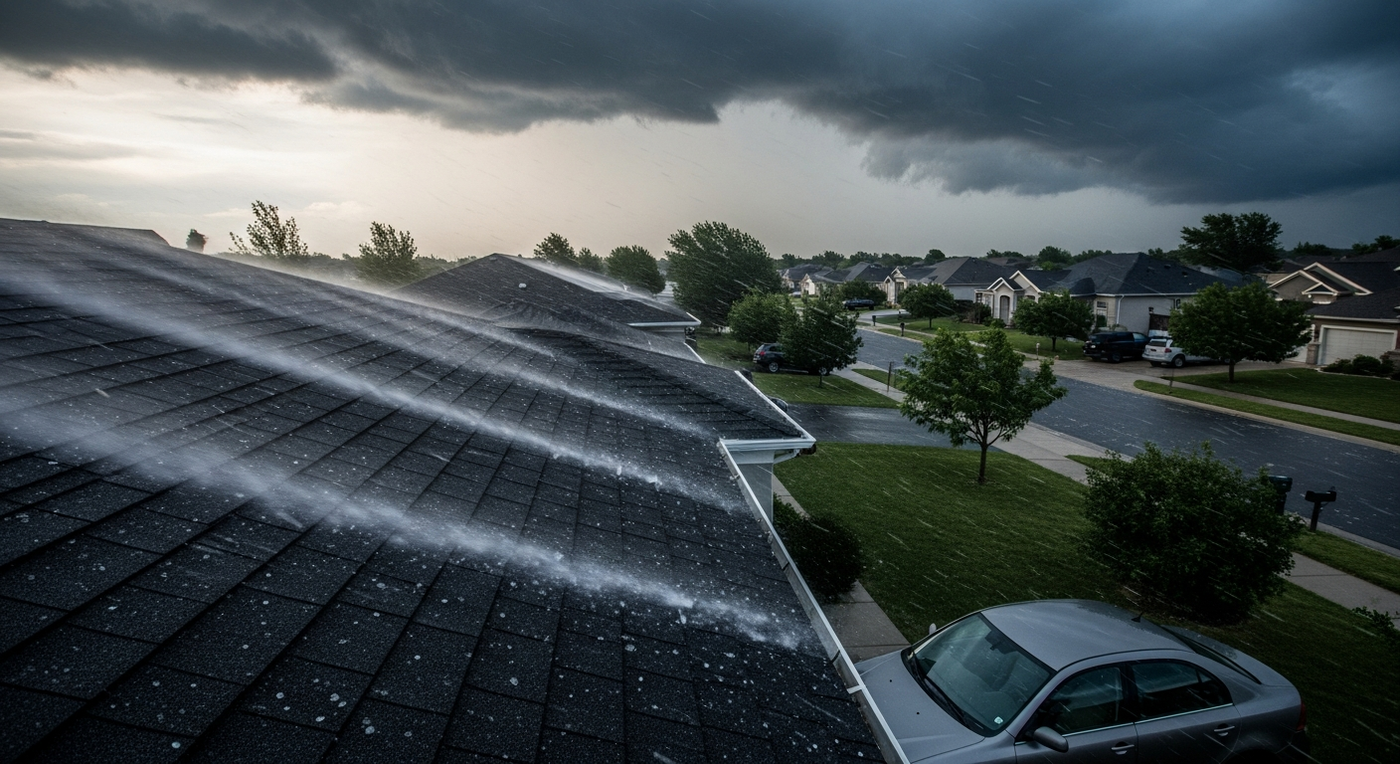
Locals know this. They don't wait for an official warning. They watch the sky. When the clouds start stacking vertically and the light takes on that strange yellow-green cast, cars get moved under cover. Grocery store parking lots empty out. People who were sitting on patios 10 minutes earlier are now inside, away from windows.

Transplants, meanwhile, are still learning the visual cues. The first storm catches them at Target, or on a hiking trail in the foothills, or working from home with headphones on. By the time they notice the noise—hail sounds like someone throwing gravel at your roof, then like someone throwing rocks—the damage is already happening. A single three-minute hailstorm can cause thousands of dollars in auto body repairs, and comprehensive insurance deductibles typically run $500 to $1,000. Even with coverage, you're paying out of pocket before the claim kicks in, then dealing with the appointment backlog at body shops that see a surge of hail claims every August.

Here's the part that surprises people: monsoon hail is more predictable than severe weather in most of the country. It follows a seasonal calendar. It happens in the afternoon. It's geographically concentrated in the same corridors year after year—the East Mountains, the West Mesa, and the Rio Grande Valley through Albuquerque see the majority of events. This predictability is an advantage if you use it.
The Preparation Gap

There's a consistent pattern in how people respond to monsoon hail risk, and it breaks down along a timeline. Longtime residents prepare in June, before the first storm. They check that their carport or garage can actually fit their vehicle—not just theoretically, but with the bikes and storage boxes moved out of the way. They identify backup covered parking: a friend's garage, a workplace parking structure, a gas station canopy they can reach in under five minutes. They buy a car cover rated for hail (the thick padded kind, not the $40 tarp from a big-box store) and practice deploying it, because you won't figure out the bungee cord system while hail is already falling.

Transplants prepare in late July or early August, after the first storm. They're the ones calling body shops with a cracked windshield, asking how soon they can get in. The answer is usually "three weeks" because every shop in town is booked solid. They're the ones buying a car cover on July 28 and realizing it takes four days to ship. They're learning, in other words, on a compressed and expensive timeline.

The cost difference between preparation and reaction isn't subtle. A quality hail car cover typically runs somewhere in the low three figures. A windshield replacement typically costs several hundred to over a thousand dollars depending on the vehicle, and that's before you address the dents in the hood and roof. Comprehensive claims for hail damage often run into the low four figures when you're paying for paintless dent removal across multiple body panels. And here's the thing about comprehensive claims: they can affect your premiums. Not as dramatically as an at-fault collision, but insurers do track claim frequency. File two comprehensive claims in three years, and you may see your rates adjust upward when your policy renews, according to insurance industry data.

Prevention costs less than repair, and it's not close. But prevention requires believing the risk before you experience it, and most people don't operate that way. We're pattern-matchers. We learn from experience. The problem with hail is that the learning experience is also the expensive experience.

50,000

ft

Supercell updraft height

90

min

Storm formation to dissipation

1.00

in

NWS severe hail threshold

3

weeks

Body shop wait time

The Afternoon Scramble

On a day when conditions are right—high moisture, strong daytime heating, instability in the upper atmosphere—the scramble starts around 2 PM. You'll see it in office parking lots first: people checking weather apps, walking out to move their cars under the building's covered entrance, texting coworkers to ask if they can squeeze into a garage spot. The ones who've been here a while don't wait for the first rumble of thunder. They move cars when the clouds start building, even if the sky is still partly blue.

This is where local knowledge beats technology. Radar apps are useful, but they show you what's happening now, not what's about to happen in the next 20 minutes. The visual cues—towering cumulus with anvil tops, darkening base, that odd greenish tint to the light—typically give you a 10- to 15-minute head start. That's enough time to move a car. It's not enough time to drive across town, which is why the preparation phase matters. You need a covered spot within a short radius of wherever you spend your afternoons.

Some people get creative. There's a parking garage downtown that's technically for office tenants, but the gate is often open during the day. A few surface lots have overhangs along one edge—not official covered parking, but enough to shield a vehicle if you park at the right angle. Gas stations with large canopies become temporary shelters during storms, though you'll sometimes find three or four cars crowded under a canopy built for two pumps. Nobody complains. There's an unspoken understanding during monsoon season: we're all just trying to avoid the body shop.

The people who don't scramble are either very new or very confident in their insurance. Both groups usually end up at the same body shop in August.

What Actually Works

Covered parking is the only reliable solution, but it's not always available. If you're renting and your apartment complex doesn't include a garage, your options narrow. Portable carports—the metal-frame, tarp-roof kind—work if you have a driveway or assigned parking spot and your landlord allows them. They're not elegant, but they stop hail. Car covers work if you can deploy them quickly, which requires practice and a storage system that doesn't involve digging through a trunk full of camping gear to find the bag.

Here's a less obvious tactic: adjust your schedule during peak hail season. If you work from home or have flexible hours, run your errands in the morning. Go to the grocery store at 10 AM instead of 4 PM. Schedule your hiking or biking for early morning, not late afternoon. This doesn't eliminate risk—monsoon storms can occasionally fire up earlier or later than the typical window—but it reduces your exposure significantly. Most hail in Albuquerque typically falls between 2 PM and 7 PM. Structure your day around that fact.

For people who commute to an office, the calculation is different. If your workplace has a parking garage or covered lot, you're set. If it doesn't, you need a plan. Some people coordinate with coworkers who have garages at home—park at their house, carpool to the office, split the gas cost. Others identify nearby parking structures and pay for a monthly spot during July and August. The cost of a covered parking spot for two months is usually less than a single comprehensive claim deductible.

The mistake is assuming you'll just deal with it when it happens. By the time it's happening, your options are limited to "stand outside in a hailstorm trying to cover your car with a blanket" or "watch through the window and hope for the best." Neither is a good plan.

The Thing About Transplants

There's no judgment in pointing out that transplants get caught off guard by monsoon hail. Everyone's a transplant somewhere. The issue is that relocation guides, real estate listings, and tourism marketing emphasize New Mexico's sunshine and dry climate but skip the part about convective storms that can total a car in five minutes. The narrative is "300 days of sun, low humidity, mild winters"—all true—but incomplete.

The locals who seem smug about their weather knowledge aren't smug. They're just operating with information they learned the same way you're about to: by getting surprised once, paying for it, and adjusting. The only difference is they learned 10 or 20 years ago, and you're learning now. The goal of this article is to compress that timeline so your learning experience doesn't also have to be a financial experience.

Monsoon season is one of the best parts of living in New Mexico, if you're prepared for it. The storms are dramatic and beautiful. The temperature can drop 15 or 20 degrees in 10 minutes. The smell of rain on hot desert soil—petrichor, technically—is worth the price of admission. The lightning shows are spectacular. You just don't want to watch them from a parking lot while your windshield turns into a spiderweb of cracks.

The rhythm of monsoon season becomes part of the calendar once you've been here a few years. You start checking the forecast in mid-June. You clear out the garage in early July. You keep a weather app open on your phone during afternoon meetings. You move your car when the clouds start stacking, even if your coworkers think you're being paranoid. And then, in mid-September, the pattern breaks. The moisture shuts off. The skies clear. You go back to parking wherever is convenient, and you don't think about hail again until next June.

That's the cycle. The only question is whether you enter it with a cracked windshield or a plan.

Verified Sources

  1. Insurance Information Institute

    Insurance Information Institute

    Insurance context for auto losses and claims impact.

  2. U.S. Census Bureau

    U.S. Census Bureau

    Housing growth and suburban expansion context.

Back to Hail Science