Comparison

The $300 Decision That Costs $4,000: Why Hail Alley Drivers Keep Dropping the Wrong Coverage

In the regions where hail damage averages thousands per claim, insurance customers are canceling comprehensive coverage to save a few hundred dollars annually—then discovering their mistake one storm too late.

The $300 Decision That Costs $4,000: Why Hail Alley Drivers Keep Dropping the Wrong Coverage
Hail Protector Editorial / GeminiComparison

The Coverage Drop Happening in Exactly the Wrong Place

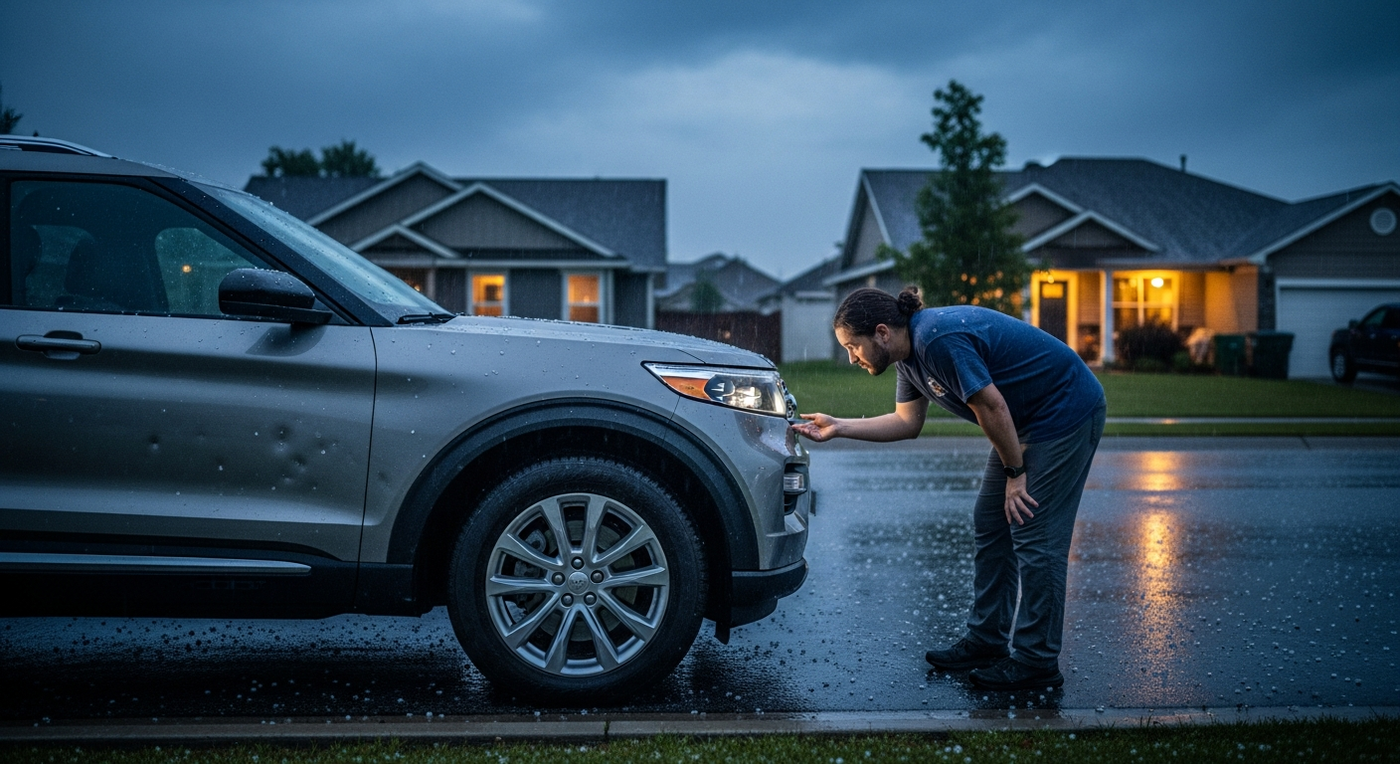
A 2019 hailstorm in Colorado Springs damaged roughly 150,000 vehicles in a single afternoon. According to Insurance Information Institute data, the average hail claim that year ran around $4,000. Yet across the Front Range corridor—one of the nation's most hail-prone regions—comprehensive coverage cancellations increased 18% between 2021 and 2023 as premiums climbed.

The timing is brutal. Drivers are self-insuring against hail damage in precisely the geography where self-insuring makes the least sense.

The math looks deceptively simple: comprehensive coverage in hail-prone areas typically costs an estimated $600-900 annually, depending on the vehicle and deductible. Drop it, pocket the savings, and hope for clear skies. For three years, maybe five, the gamble pays off. Then a single storm erases every dollar saved and adds a few thousand more in losses.
What Comprehensive Actually Covers (And What People Think It Covers)

Comprehensive insurance covers non-collision damage: theft, vandalism, fire, flooding, falling objects, and animal strikes. In Hail Alley—the corridor stretching from Texas through Oklahoma, Kansas, Nebraska, and into Colorado and Wyoming—the dominant risk is obvious.

Most drivers understand this. What they misjudge is frequency.

According to NOAA's National Centers for Environmental Information, the central United States experiences thousands of hail events annually, with the peak season running April through June. A Denver-area vehicle typically faces hail exposure roughly 10-15 days per year during storm season. An Oklahoma City vehicle faces similar exposure patterns.

The relevant question isn't "will it hail this year?" but "will it hail hard enough, close enough, to matter?" And that's where the statistics get uncomfortable. In high-frequency corridors, the answer trends toward "yes" over any five-year period.

150,000

vehicles

Damaged in single afternoon

$4,000

average

Typical hail claim cost

18%

%

Coverage cancellation increase

10-15

days

Annual hail exposure

The Vehicle Age Trap

Here's the conventional wisdom: once your car is worth less than ten times your annual comprehensive premium, consider dropping the coverage.

Here's why that formula fails in hail country: it treats all risks equally.

A 2015 sedan worth $8,000 in Phoenix might reasonably go without comprehensive. The same vehicle in Wichita faces completely different exposure. Hail doesn't care about book value—a $3,500 repair estimate looks identical whether your car is worth $8,000 or $28,000. The damage cost is the damage cost.

The better threshold: if a total hail loss would force you to replace the vehicle before you're financially ready, keep comprehensive. If you're genuinely prepared to drive a dented car indefinitely or scrap it and buy another, then—and only then—does dropping coverage make sense.

Most people think they're in the second category. Most people are wrong.

What Hail Actually Costs to Fix

Paintless dent repair for light hail damage typically starts around an estimated $1,000-2,000 for a sedan, assuming no broken glass. That's the best-case scenario: small dents, no cracked windshield, no shattered sunroof, repairable without paint.

Moderate damage—larger dents, some panels requiring replacement, windshield replacement—typically pushes into the $3,000-5,000 range. Severe damage requiring multiple panel replacements, paint work, and glass can exceed an estimated $8,000-10,000. At that point, many vehicles are totaled, particularly older models where repair costs approach or exceed actual cash value.

The windshield alone typically runs $300-1,000 depending on the vehicle, and hail rarely limits itself to glass. A storm severe enough to crack your windshield probably dimpled your hood, roof, and trunk too.

Option Tradeoffs

Pros

  • Immediate savings$600-900 back in your pocket each year
  • No premium increasesAvoid rate hikes from filing claims
  • Works for older vehiclesMakes sense when car value is very low

Tradeoffs

  • Single storm wipes out years of savingsOne $4,000 repair erases 5+ years of premium savings
  • Forces difficult choicesDrive damaged car, drain savings, or lose transportation
  • High frequency in Hail AlleyMultiple events likely over 5-10 year period

Keep comprehensive unless you have liquid savings equal to twice your vehicle's value and can genuinely afford a total loss without financial strain.

The Self-Insurance Calculation That Actually Works

Self-insuring makes sense under specific conditions: you have liquid savings equal to at least twice your vehicle's value, you're emotionally prepared to drive a cosmetically damaged car, and you're not financing the vehicle (lenders require comprehensive).

Let's say you own a 2016 truck worth roughly $15,000. Comprehensive costs you approximately $750 annually with a $1,000 deductible. Over ten years, you'll pay $7,500 in premiums. If you experience one significant hail event requiring $4,000 in repairs, you're out $1,000 (deductible) plus the premiums you paid. If you experience zero hail events, you've "wasted" $7,500.

But if you drop coverage and get hit once, you're out the full $4,000. Twice? $8,000. The break-even point sits somewhere around 1.5-2 claims over a decade, which in high-frequency hail zones is entirely plausible.

The real question: do you have $4,000-8,000 sitting in an account you're willing to spend on vehicle repairs? Not theoretically—actually? If the answer is "yes, and it wouldn't strain my finances," self-insurance becomes defensible. If the answer is "I'd have to put it on a credit card" or "that would drain my emergency fund," keep the coverage.

Verified Sources

  1. NOAA National Centers for Environmental Information

    NOAA National Centers for Environmental Information

    Hail event climatology and regional patterns

  2. NOAA Storm Prediction Center

    NOAA Storm Prediction Center

    Official convective outlook archive and risk categories.

  3. Insurance Information Institute

    Insurance Information Institute

    Hail claim averages and frequency data

  4. NOAA Storm Prediction Center

    NOAA Storm Prediction Center

    Storm report archive with severe hail event records.

Back to Insurance & Costs