Editorial Texas hail comprehensive Desk

The Texas Hail Claim That Cost More Than Doing Nothing

Filing a comprehensive claim for hail damage in Texas often triggers premium increases that exceed your net payout — here's the math most drivers skip before calling their insurer.

The Texas Hail Claim That Cost More Than Doing Nothing
Hail Protector Editorial / GeminiEditorial

The $2,800 Claim That Became a $1,200 Loss

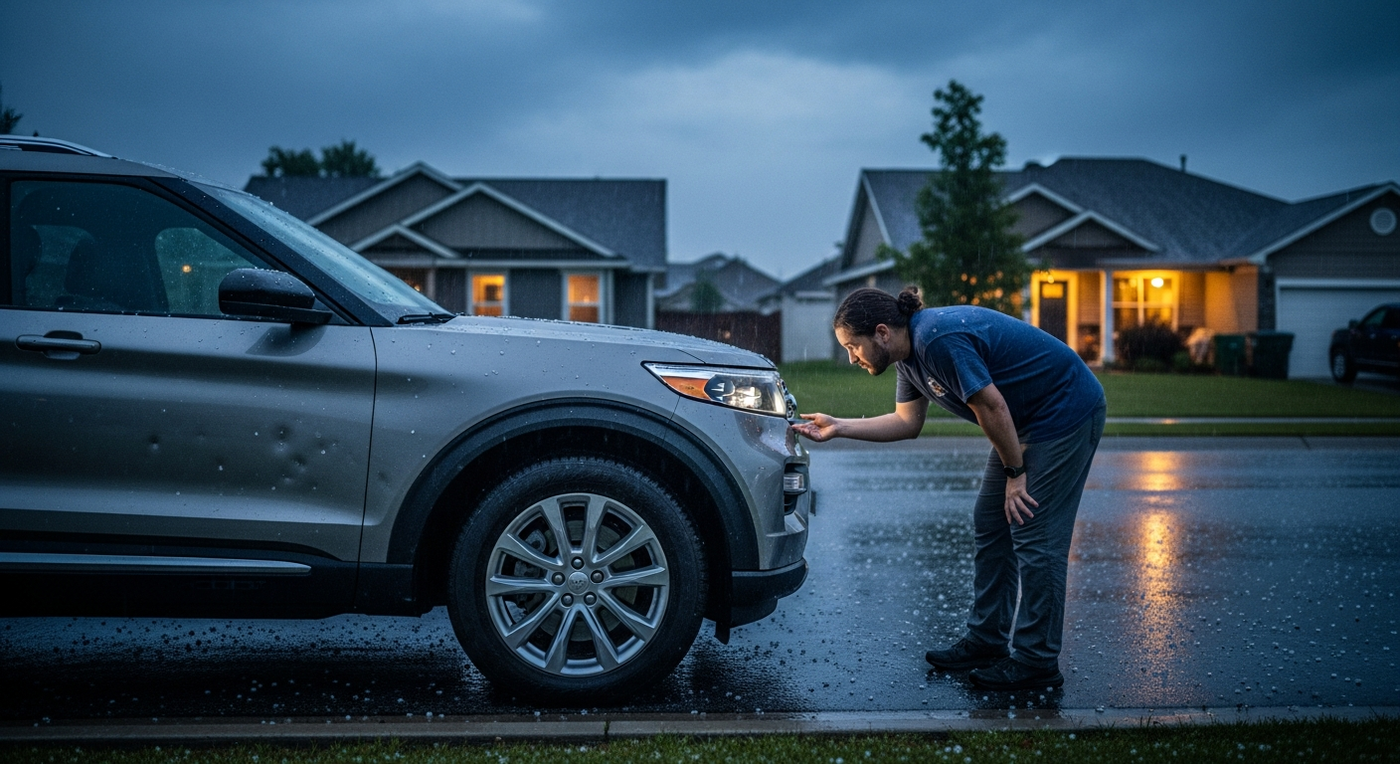
A marble-sized hailstorm rolls through San Antonio in April. Your 2019 Honda Accord takes hits across the hood and roof. You file a comprehensive claim. The repair estimate comes back at $3,500. After your $500 deductible, the insurance company cuts you a check for $3,000.

Except that's not really what happened financially.

Most Texas drivers calculate the claim benefit as "repair cost minus deductible" and stop there. They don't run the second equation: what happens to their premium for the next three to five years. According to Insurance Information Institute research, comprehensive claims can increase premiums depending on the carrier and your claims history. On a policy that costs around $1,800 annually in Texas metro areas, that's an extra $180-360 per year.

Over three years, those increases could total somewhere between $540 and $1,080. Over five years — the length some insurers maintain claim surcharges — you're looking at $900 to $1,800 in additional premiums. Suddenly that $3,000 payout shrinks considerably. In many scenarios, the net benefit could hover between approximately $1,200 and $2,460 before you even factor in the time cost of managing repairs, rental cars, and paperwork.

The breakeven threshold sits higher than most people assume.
When Vehicle Age Flips the Equation Entirely

Here's where the math gets genuinely strange: the older your vehicle, the worse the claim economics become — but not for the reason you'd think.

A 2015 Chevy Silverado with hail damage might generate a repair estimate of roughly $2,200. But the actual cash value of the truck has depreciated enough that some insurers will total it rather than repair it. You receive the ACV payout minus your deductible, which could be substantially less than the truck's utility to you as a functioning work vehicle. Then your premium still increases for having filed a total loss claim.

Meanwhile, cosmetic hail damage on a paid-off vehicle doesn't affect its mechanical function at all. The dents are purely aesthetic. You're essentially paying increased premiums for three to five years to fix the appearance of a truck you might drive for another decade without caring about dimpled sheet metal.

The age sweet spot for filing claims typically falls in the 2-5 year range, where repair costs are high enough to justify the claim, the vehicle retains enough value that repairs make sense, and you likely still care about maintaining resale value. Outside that window, the math tilts toward self-insuring the cosmetic damage.

10-20%

%

Premium hike per claim

$900-1,800

Five-year surcharge total

36

months

Claims tracking window

Deductible Architecture as a Filtering Mechanism

Comprehensive deductibles in Texas range from $100 to $2,500, and that choice functions as a pre-commitment device for which claims you'll actually file.

A $100 deductible makes nearly every hail event worth claiming. A $1,000 deductible means you're self-insuring everything except severe damage. The deductible isn't just about your out-of-pocket cost on claim day — it's about filtering which damages cross the threshold where filing makes mathematical sense after accounting for multi-year premium impacts.

Run the calculation backward: if a comprehensive claim increases your premium by approximately $200-400 annually for three years, you would need to recover at least $600-1,200 above your deductible just to break even. With a $500 deductible, that means the repair would need to exceed approximately $1,100-1,700 before filing becomes economically rational. With a $1,000 deductible, you're looking at needing $1,600-2,200 in damage.

Most minor hail damage — the kind that leaves approximately 15-20 small dents across horizontal surfaces — falls right into this dead zone.

When Filing Makes Absolute Sense

Despite all the math working against small claims, clear thresholds exist where filing is unambiguously the right move.

Windshield replacement due to hail cracks is typically covered under comprehensive with no deductible in Texas (though this varies by carrier). That's a free claim with no premium impact in many cases — verify with your specific policy, but glass claims often receive different treatment than body damage claims.

Severe hail that damages mechanical components — cracked headlight assemblies, broken side mirrors, dented roof affecting structural integrity — crosses from cosmetic into functional territory. When repair costs exceed approximately $4,000-5,000 and involve safety or mechanical systems, the claim math shifts decisively in favor of filing.

Total loss scenarios where hail damage exceeds a significant percentage of the vehicle's value also warrant claims, even with the premium increase. You're recovering a substantial portion of your vehicle's worth, which outweighs the multi-year premium hit.

The decision point isn't whether to file claims ever — it's developing a threshold based on your specific deductible, premium, and vehicle value where claiming makes sense versus self-insuring.

Verified Sources

  1. NOAA Storm Prediction Center

    NOAA Storm Prediction Center

    hail climatology and frequency patterns

Back to Insurance & Costs