Editorial Quick Answers

The $500 Deductible That Actually Costs $3,000: What Your Insurance Company Isn't Explaining About Hail Claims

Most drivers think their deductible is the price of filing a claim, but the real cost includes years of premium increases that dwarf what you pay upfront.

The $500 Deductible That Actually Costs $3,000: What Your Insurance Company Isn't Explaining About Hail Claims
Hail Protector Editorial / GeminiEditorial

The Threshold Problem Everyone Misses

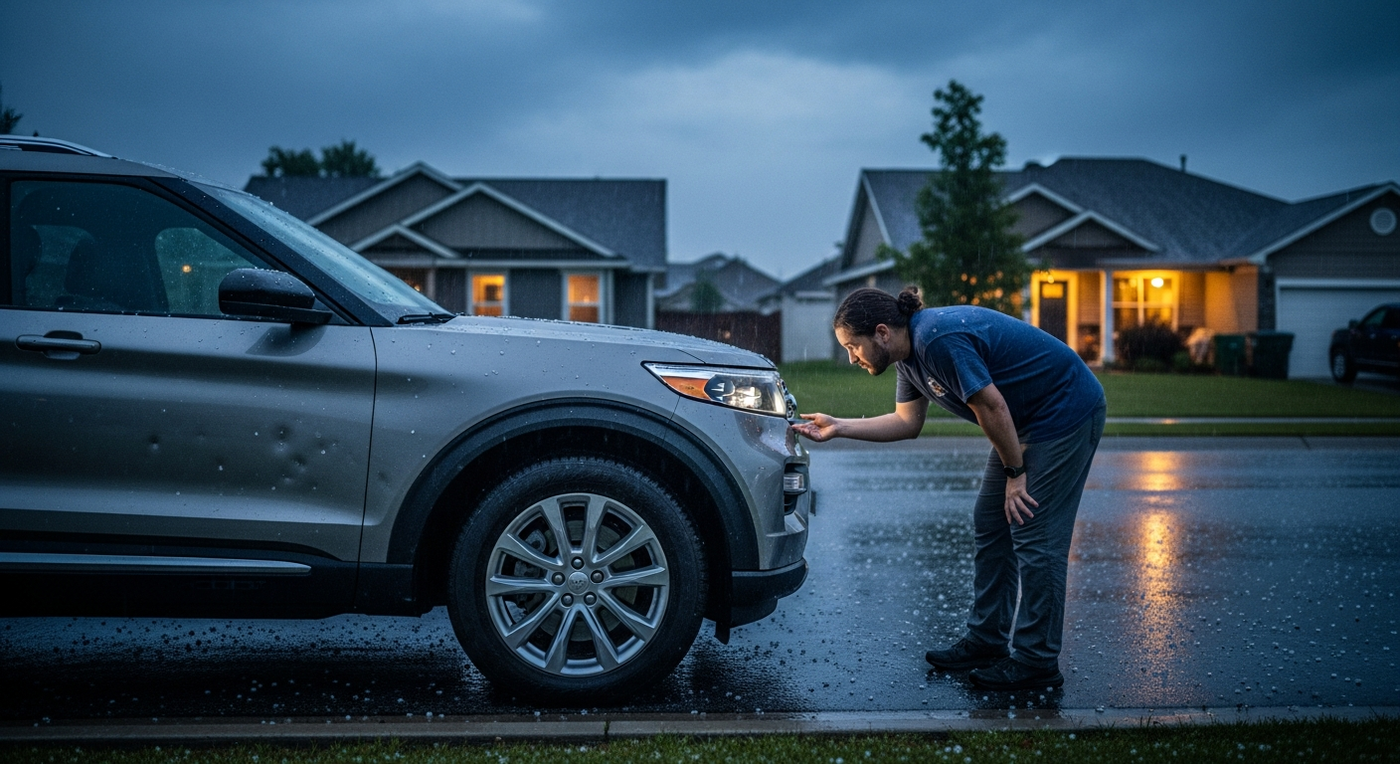
A $500 comprehensive deductible doesn't mean you pay $500 toward repairs and your insurer covers the rest. It means damage under $500 is entirely your responsibility—no claim, no coverage, no conversation. Your insurance only activates once repair costs exceed your deductible amount.

If hail dents your hood and the body shop estimates $480 in repairs, you're writing a check for $480. Your insurance company pays zero dollars. The deductible isn't a co-pay; it's a threshold.

This distinction matters more than most drivers realize. According to Insurance Information Institute data, the average comprehensive claim (which includes hail) runs around $4,400 nationally, but regional hail damage estimates vary wildly—from minor cosmetic dents costing several hundred dollars to total losses exceeding the vehicle's value. That $500 deductible becomes relevant only when you're well past the point of minor damage.
The Hidden Price: Premium Increases That Compound

Here's the math that catches people off guard: filing a comprehensive claim for hail damage typically triggers a premium increase of roughly 10-15% in many states, though this varies significantly by insurer and location. That increase persists for three to five years.

Let's say you're paying around $1,400 annually for full coverage. A 12% increase adds approximately $168 to your yearly premium. Over four years, that's roughly $672 in additional costs—on top of your $500 deductible. Your "covered" $3,000 hail repair actually cost you around $1,172 out of pocket when you account for the premium impact.

Some drivers discover this only after filing. Comprehensive claims are supposed to affect rates less than collision or liability claims, but insurance companies don't distinguish between "you caused this" and "weather caused this" as generously as drivers expect. You're still filing a claim. You're still costing the company money.

Percentage-Based Deductibles: The New Wildcard

A growing number of insurers now offer—or require—percentage-based hail deductibles instead of flat dollar amounts, particularly in high-risk states like Texas, Colorado, and Oklahoma. Instead of paying $500 regardless of damage severity, you pay 1-2% of your vehicle's actual cash value.

For a car worth $25,000, a 2% deductible means you're responsible for $500. Straightforward enough. But if you're driving a $45,000 truck, that same 2% deductible jumps to $900.

Percentage-based deductibles benefit insurers by reducing claim frequency (higher out-of-pocket costs discourage marginal claims) while appearing reasonable on paper. They penalize drivers with newer or more expensive vehicles, who already pay higher premiums.

$4,400

Average comprehensive claim nationally

10-15

%

Typical premium hike per claim

3-5

years

Duration of rate increase

$1,172

True cost after premium impact

When Filing Makes Sense—And When It Doesn't

The break-even calculation isn't complicated, but it requires information most drivers don't think to request. Before filing a hail claim, call your agent and ask two specific questions: "How much will this claim increase my premium?" and "How long will that increase last?".

Some insurers will tell you. Others deflect. If you can't get a straight answer, industry estimates suggest assuming a 10-15% increase for 3-5 years as a baseline for planning purposes.

For damage barely exceeding your deductible—say, $800 in repairs with a $500 deductible—you're paying $500 now to get $300 from insurance, then likely paying several hundred dollars more in premiums over the following years. You're losing money to file that claim.

For significant damage—$4,000 in repairs with that same $500 deductible—the math flips. You're paying $500 to receive $3,500, and even with premium increases, you come out ahead. The claim makes financial sense.

The gray zone falls somewhere between $1,200 and $2,000 in damage, depending on your current premium, your insurer's rate increase practices, and how long you plan to keep the policy.

The One-Claim Forgiveness Myth

Many drivers believe their first comprehensive claim won't affect their rates, or that "accident forgiveness" programs cover hail damage. This is mostly wrong.

Accident forgiveness—offered by insurers like Allstate, Progressive, and others—typically applies only to at-fault collision claims, not comprehensive claims. Some insurers offer "claim-free discounts" that you lose after any claim, comprehensive included. The terminology varies, but the outcome is usually the same: filing costs you something beyond the deductible.

A few insurers have introduced true comprehensive claim forgiveness or "disappearing deductibles" that reduce your deductible amount for each year you don't file a claim. These programs exist but aren't standard. If you have one, your policy documents will specify it clearly.

What Body Shops Won't Tell You About Estimates

Here's a detail most drivers miss: the repair estimate you get from a body shop isn't the same estimate your insurance adjuster will approve. Body shops often provide higher initial estimates, knowing insurance adjusters will negotiate downward.

If a shop tells you repairs will run around $1,800 and your deductible is $1,000, don't assume you're $800 above the threshold. The adjuster might assess the damage at $1,400, putting you only $400 above your deductible. Suddenly the claim math looks much worse.

Before filing, ask the body shop: "What do you think the insurance adjuster will actually approve?" Experienced shops know the difference. They've seen adjusters reduce estimates by 15-25% by questioning repair methods, using aftermarket parts instead of OEM, or deeming certain damage "pre-existing.".

Verified Sources

  1. Insurance Information Institute

    Insurance Information Institute

    Comprehensive claim averages and premium impact data

Back to Insurance & Costs