Editorial Quick Answers

The Hail Damage Claim Decision: When Filing Costs More Than Paying

A comprehensive claim stays on your insurance record for up to seven years — here's the math that determines whether you should use it.

The Hail Damage Claim Decision: When Filing Costs More Than Paying
Hail Protector Editorial / GeminiEditorial

The Three-Year Premium Test

Your deductible is $1,000. The body shop estimates roughly $2,800 to fix the hail dimples across your hood and roof. You'd net approximately $1,800 from the claim.

The answer depends entirely on what happens to your premium. If your insurer raises your rate by roughly $600 annually after the claim, you'll pay approximately $1,800 in extra premiums over three years — close to what you'd receive from the claim. You break even. If the increase is higher, you lose money. If it's lower or nonexistent, filing makes sense.

This is the framework that actually works: claim payout minus deductible, compared against three years of premium increases. Not five years, not one year. Three years gives you enough time to shop for a new insurer if rates spike, but doesn't lock you into speculative math about what insurance might cost in 2028.
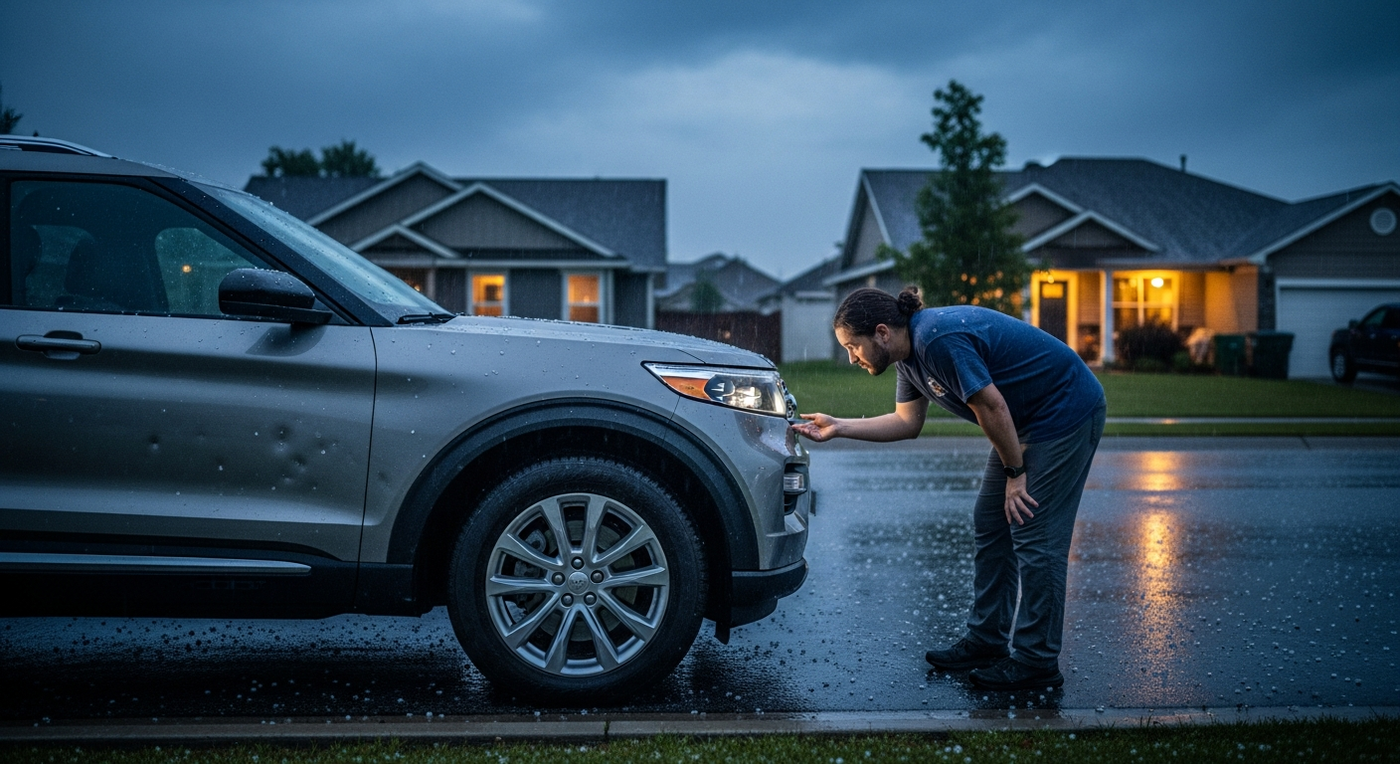
What Comprehensive Claims Actually Do to Your Rate

Here's where the conventional wisdom gets muddy. Comprehensive claims — which include hail, theft, vandalism, and animal strikes — don't affect your rate the same way at-fault accidents do. Many insurers don't increase premiums at all for a single comprehensive claim, particularly if you have a clean record.

But "many" isn't "all." Some carriers apply surcharges even for comprehensive claims, according to Insurance Information Institute data. Others use tiered systems where your first comprehensive claim is forgiven, but a second one within three years triggers an increase. And a handful treat any claim as a risk signal, regardless of type.

The problem is you won't know which camp your insurer falls into until after you file. Your agent can tell you the company's general policy, but the actual algorithm that determines your specific rate increase involves dozens of variables: your claims history, your credit-based insurance score, your ZIP code's claim frequency, even the time of year.

The CLUE Report Follows You

Every claim you file gets recorded in your Comprehensive Loss Underwriting Exchange (CLUE) report, maintained by LexisNexis. This report stays active for seven years. When you shop for new insurance — whether by choice or because your current insurer non-renews you — every company you get a quote from pulls this report.

A $1,800 hail claim from 2019 will still appear when you're shopping in 2025. The new insurer doesn't just see that you filed a claim; they see the date, the payout amount, and the type of loss. Some carriers use this information to decline coverage entirely in hail-prone areas. Others use it to price your policy higher from day one.

This is the hidden cost nobody mentions: filing a claim doesn't just affect your current premium, it affects your ability to get competitive quotes for years afterward. If you're planning to shop around in the next few years anyway — maybe because you're moving, buying a new car, or just hunting for better rates — that CLUE report entry becomes a permanent negotiating disadvantage.

When Cosmetic Damage Doesn't Matter

A hail-dimpled hood on a 2015 sedan with 140,000 miles is annoying. It's not a financial emergency. The car drives identically. The dents don't spread. They don't rust through (modern paint systems prevent that). They just look bad.

This is where the emotional math diverges from the financial math. If you're planning to drive the car into the ground over the next five years, cosmetic hail damage is essentially free. You've already accepted depreciation, wear, and the reality that a 2015 anything isn't winning beauty contests. Adding some hail dimples changes nothing about the car's utility.

But if you're planning to trade it in next year, those dimples cost you real money at the dealership. Trade-in values can drop by hundreds to thousands of dollars for visible hail damage, even if it's purely cosmetic. Suddenly the claim makes more sense — not because the damage matters to you, but because it will matter to the next buyer.

The question isn't "how bad is the damage?" It's "when do I need this car to look good again?".

The Deductible Sweet Spot Nobody Talks About

Here's a counterintuitive observation: a higher deductible makes the claim decision easier, not harder.

If your deductible is $500 and repairs cost $2,000, you're deciding whether to claim $1,500. That's enough money to matter, but not enough to clearly justify the CLUE report entry and potential rate increase. You're stuck in decision paralysis.

If your deductible is $2,000 and repairs cost $2,000, there's nothing to decide. You're paying out of pocket.

If your deductible is $2,000 and repairs cost $6,000, you're claiming $4,000. That's substantial enough that the math almost certainly favors filing, even with a moderate premium increase.

The worst deductible for decision-making is the one that puts you in the middle — where the net payout is large enough to feel wasteful if you don't claim it, but small enough that the long-term costs might exceed the benefit. Most people carry deductibles of $500 to $1,000, which is exactly this zone for typical hail damage repairs.

Should you file Tradeoffs

Pros

  • Immediate cash recoveryGet repair money now instead of saving over time
  • Preserves resale valueMatters if trading in soon; dealerships penalize visible damage
  • No out-of-pocket expenseOnly pay deductible rather than full repair bill

Tradeoffs

  • CLUE report entryFollows you for seven years when shopping coverage
  • Potential rate increasesSome carriers surcharge 10-20% even for weather events
  • Lost claim-free discountsMay forfeit existing discount worth 15-20% of premium
  • Burned forgiveness benefitsWastes accident forgiveness on cosmetic damage

File when net payout exceeds three years of estimated premium increases. Skip when damage is cosmetic and you're keeping the vehicle long-term.

Multiple Vehicles Change the Equation

If hail damaged two cars in your driveway, you're not making two separate decisions. You're making one decision with doubled stakes.

Filing claims on both vehicles means two entries on your CLUE report. Some insurers treat multiple claims from the same event as a single claim for rating purposes, but others don't. You need to ask explicitly before filing. If the answer is "we count them separately," you're potentially looking at a much steeper premium increase.

The math also changes because you're comparing the combined payout against the same three-year premium increase. If each car would net you approximately $1,500 after the deductible, that's roughly $3,000 total. Even a significant premium bump — say, around $800 annually — only costs you approximately $2,400 over three years.

But here's where people make mistakes: they file on the car with $3,000 in damage and skip filing on the car with $1,200 in damage, thinking they're being strategic. Now they have a CLUE report entry anyway, they've triggered whatever rate increase was coming, and they've left roughly $200 on the table (assuming a $1,000 deductible). If you're filing on one vehicle, file on all of them from the same event.

Verified Sources

  1. Insurance Information Institute

    Insurance Information Institute

    comprehensive claim rate impact data

Back to Insurance & Costs