Comparison

Hail Cover vs. Carport vs. Inflatable Shelter: Which Portable Protection Actually Works?

Three portable solutions promise hail protection, but each one fails spectacularly in situations where the others succeed—here's how to match the right option to your actual scenario.

Hail Cover vs. Carport vs. Inflatable Shelter: Which Portable Protection Actually Works?
Hail Protector Editorial / GeminiComparison

The Protection Spectrum Nobody Talks About

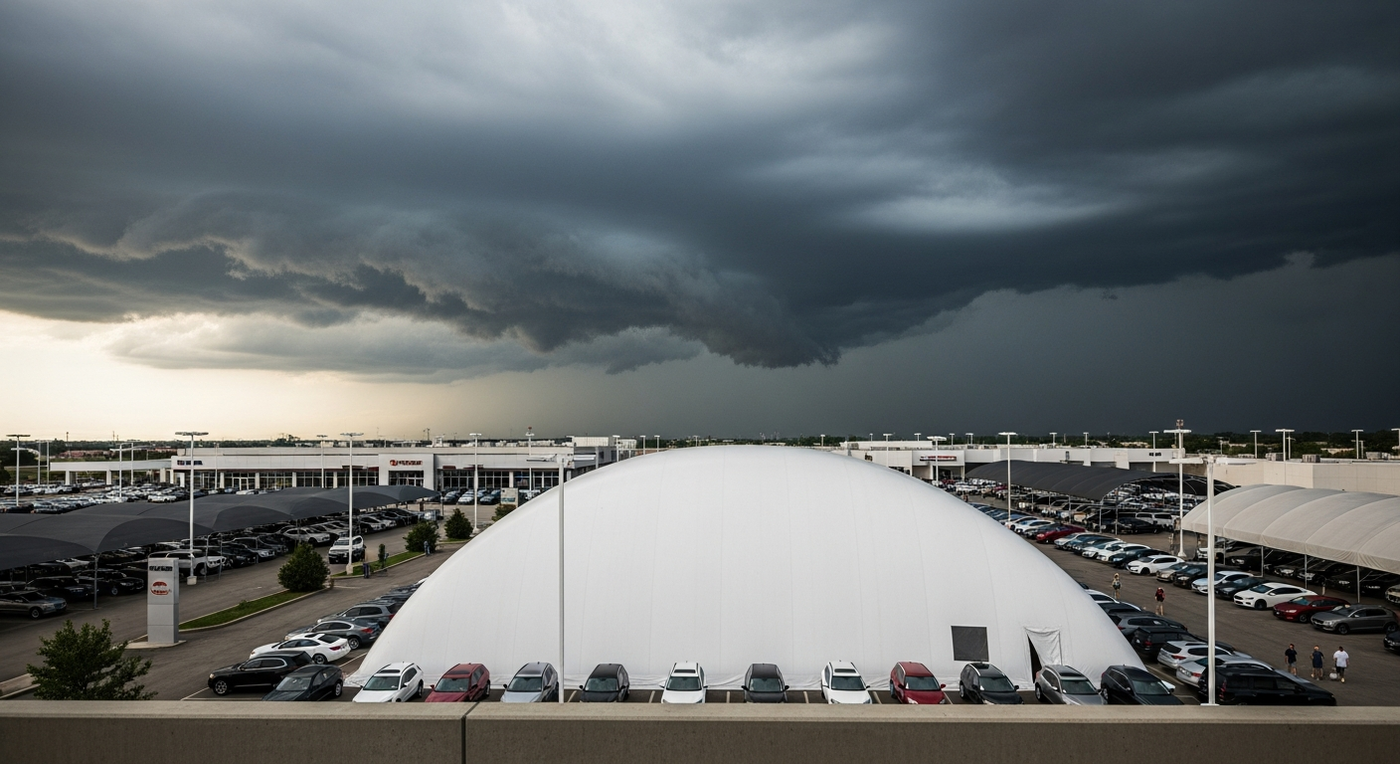
A padded hail cover can typically stop golf ball-sized hail on your sedan. That same cover may rip apart or blow off a full-size truck in approximately 40 mph winds. A steel carport will laugh at baseball-sized hail and hurricane gusts—but you can't take it to your daughter's college apartment for the summer. An inflatable shelter typically deploys in several minutes and collapses into a duffel bag, yet costs more than some used cars.

The portable vehicle protection market has fractured into three distinct categories, each optimized for completely different priorities. Treating them as interchangeable alternatives is how people end up with a $400 cover that doesn't fit their vehicle or a carport they can't legally install.

The Protection Spectrum Nobody Talks About

Padded Hail Covers: The Backpack Solution

Hail covers are exactly what they sound like—thick padded blankets you drape over your vehicle and secure with straps. Quality versions use multiple foam layers sandwiched between weather-resistant fabric, typically weighing approximately 15-30 pounds for a sedan cover.

Where they excel: Apartment dwellers, renters, people who park in different locations, and anyone who needs protection they can grab in ten minutes. If you're watching radar and have a driveway or parking spot where you can work, a cover gives you options. They fold into a storage bag that fits in a trunk or closet.

Where they fail: Wind is the enemy. Most covers are rated for winds up to approximately 30-40 mph, but real-world performance depends heavily on how well you secure them. Elastic straps can slip on smooth paint. If you're not home when the storm hits, the cover is useless. They also require physical effort—wrestling a 25-pound wet cover onto an SUV in 95-degree heat before a storm is nobody's idea of fun.

Cost reality: Quality covers run roughly $300-$600 depending on vehicle size. Cheap versions under $200 typically use thinner padding that may not stop larger hailstones. You're looking at around $0.80-$1.60 per day of protection if the cover lasts five years, assuming you use it 10-15 times annually.

One thing most buyers miss: covers protect paint and glass, but they don't prevent dents on aluminum hoods or roofs from severe hail. The padding absorbs impact energy, but there are limits. According to National Weather Service damage indicators, hail larger than approximately two inches can dent metal even through padding.

Portable Carports: The Middle Ground That Isn't

Portable carports occupy an awkward space between permanent structures and truly mobile solutions. These are metal or PVC-frame structures with fabric covers, typically around 10x20 feet for a single vehicle.

Where they excel: Semi-permanent situations where you own the property but don't want to pour a foundation. Rural properties, seasonal homes, or temporary job sites. They handle wind better than covers (many are rated for approximately 50-60 mph) and provide continuous protection without daily setup.

Where they fail: "Portable" is generous. Assembly typically takes 2-4 hours with two people. Most HOAs prohibit them. Many municipalities require permits even for temporary structures. They're vulnerable to heavy snow loads—several inches of wet snow can collapse cheaper models. And while you can technically disassemble and move them, you're not doing it to chase storms.

Cost reality: Decent single-vehicle carports start around $400-$800 for basic models, with heavy-duty versions reaching $1,500-$2,500. Installation difficulty varies wildly—some use stakes that won't hold in hard soil, others require concrete anchors. If you can leave it up year-round and it lasts seven years, you're paying roughly $0.15-$0.95 per day of protection.

The hidden cost is maintenance. Fabric covers deteriorate in UV exposure. Cheaper models may need cover replacement every 3-4 years at roughly $150-$300. Metal frames rust in humid climates. You're not buying a set-it-and-forget-it solution.

The Scenarios That Actually Matter

Forget abstract comparisons. Here are the situations where each option is clearly superior.

You rent an apartment in a hail-prone area: Hail cover. No installation, no landlord approval needed, stores in a closet.

You own a home but your HOA bans permanent structures: Inflatable shelter if you can afford it, otherwise a hail cover. Some HOAs consider inflatables temporary equipment rather than structures, but verify first. Portable carports are almost certainly prohibited.

You have a rural property and park multiple vehicles outdoors: Portable carport. The per-vehicle cost drops dramatically if you buy a larger structure, and you have space for setup. Wind is your main concern—invest in proper anchoring.

You travel frequently for work and park in different cities: Hail cover is your only realistic option. Everything else requires too much setup time and space.

You're protecting a classic car or expensive vehicle seasonally: Inflatable shelter. The protection level justifies the cost when you're safeguarding a $40,000+ vehicle, and you can store it deflated during months when hail risk is minimal.

The Math Nobody Wants to Do

Cost per protected-vehicle-year is the honest comparison metric, but it requires assumptions about lifespan and usage frequency. Here's the uncomfortable truth: if you only face hail threats 3-4 times per year, even a $300 cover is expensive protection. You're paying $75-$100 per use.

Insurance deductibles complicate the calculation. If your comprehensive deductible is around $500, and a hail cover costs $400, you need to prevent exactly one claim for the cover to pay for itself. But insurance companies don't discount premiums for having a cover—you're simply avoiding out-of-pocket deductible costs and premium increases after claims.

According to Insurance Information Institute data, comprehensive claims can increase premiums roughly 2-10% depending on your insurer and claims history. A typical full-coverage policy might run $1,500-$2,000 annually, so a single claim could add roughly $30-$200 per year for several years according to Insurance Information Institute data. In that context, a $400 cover becomes more economically defensible.

Option Tradeoffs

Pros

  • Hail CoverFits in trunk, works anywhere, quick deployment when home
  • Portable CarportAlways ready, handles stronger winds, multi-vehicle options
  • Inflatable ShelterSuperior protection, truly relocatable, multi-purpose use

Tradeoffs

  • Hail CoverUseless if away, struggles in wind, requires manual effort
  • Portable CarportHOA/permit issues, hours to assemble, fabric needs replacement
  • Inflatable ShelterHigh upfront cost, needs power, blower noise concerns

Match solution to your constraints—legal restrictions and storage space eliminate options faster than budget.

Verified Sources

  1. Insurance Information Institute

    Insurance Information Institute

    Premium increases following comprehensive claims

  2. National Weather Service

    National Weather Service

    Hail damage thresholds and impact data

Back to Protection Guides