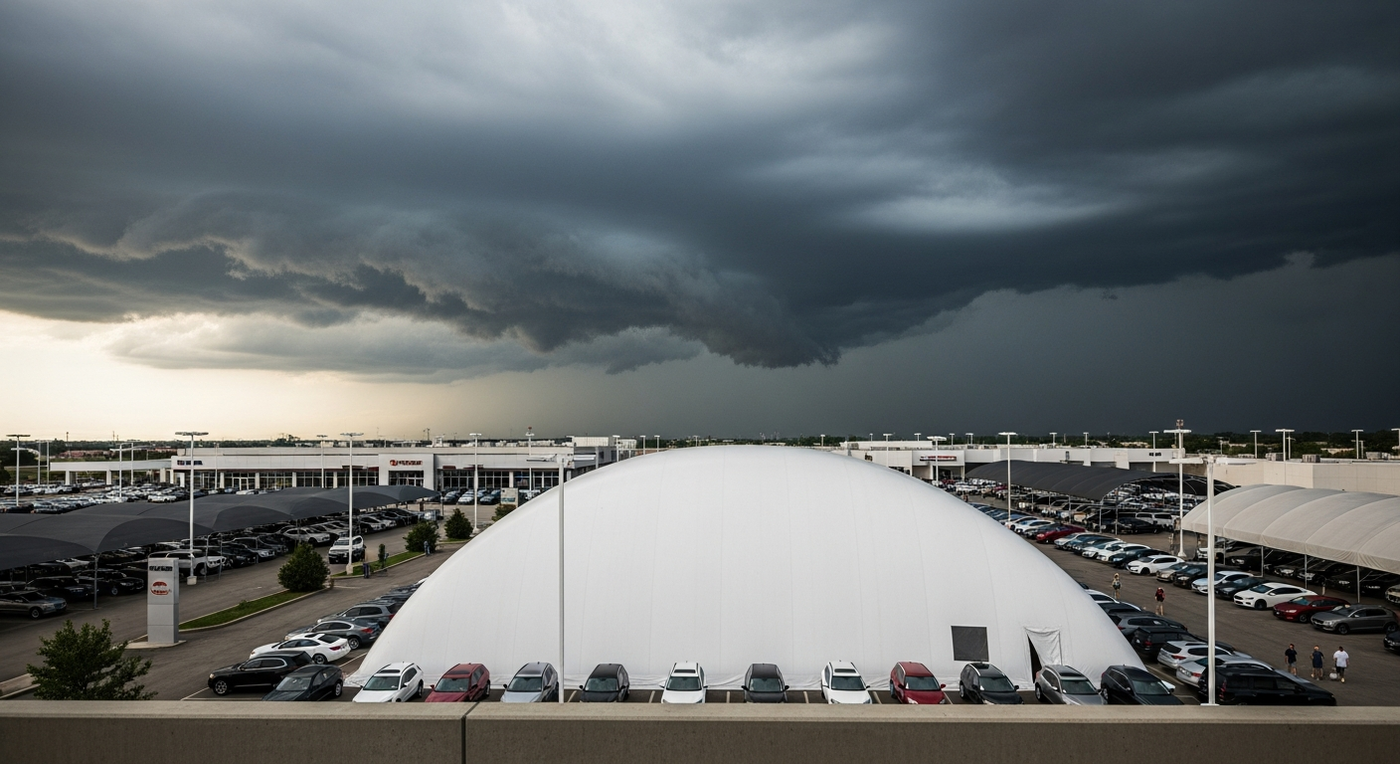
When Inflatable Systems Make Sense
For all their deployment challenges, inflatable hail protection systems solve one problem better than any alternative: they provide genuine all-around protection with serious impact absorption.
The engineering is straightforward. A vehicle drives into a deflated chamber (or the chamber is positioned around a parked vehicle). An electric blower inflates the structure in 10-15 minutes, creating an air cavity typically 12-18 inches thick on all sides. Hailstones strike the outer membrane, compress the air layer, and decelerate before reaching the inner membrane near the vehicle. The air itself acts as the cushion.
This works remarkably well. Testing footage shows these systems absorbing impacts from stones exceeding three inches in diameter without the inner membrane touching the vehicle. No other portable system provides equivalent protection for large hail.
The practical obstacles are significant. You need advance warning, available power, and sufficient space to deploy the system. A typical single-vehicle inflatable unit requires approximately 200-250 square feet of floor space when inflated — about the footprint of a one-car garage. If you're deploying this in a driveway, you need that much clear pavement.
The power requirement isn't trivial. The blower needs to run continuously to maintain pressure, typically consuming 500-800 watts. Over a two-hour storm, that's approximately 1-1.6 kWh of electricity (typically a few cents of operating cost). The real issue is power reliability. Severe thunderstorms frequently cause outages. If power fails, the system deflates, and you need to either restart it on backup power or remove your vehicle before the deflated material settles onto the paint.
Cost typically runs around $400-$800 for single-vehicle systems, positioning them at the premium end of portable protection options.