Decision Brief

The Apartment Dweller's Hail Dilemma: Protecting Your Car When You Don't Control the Parking Lot

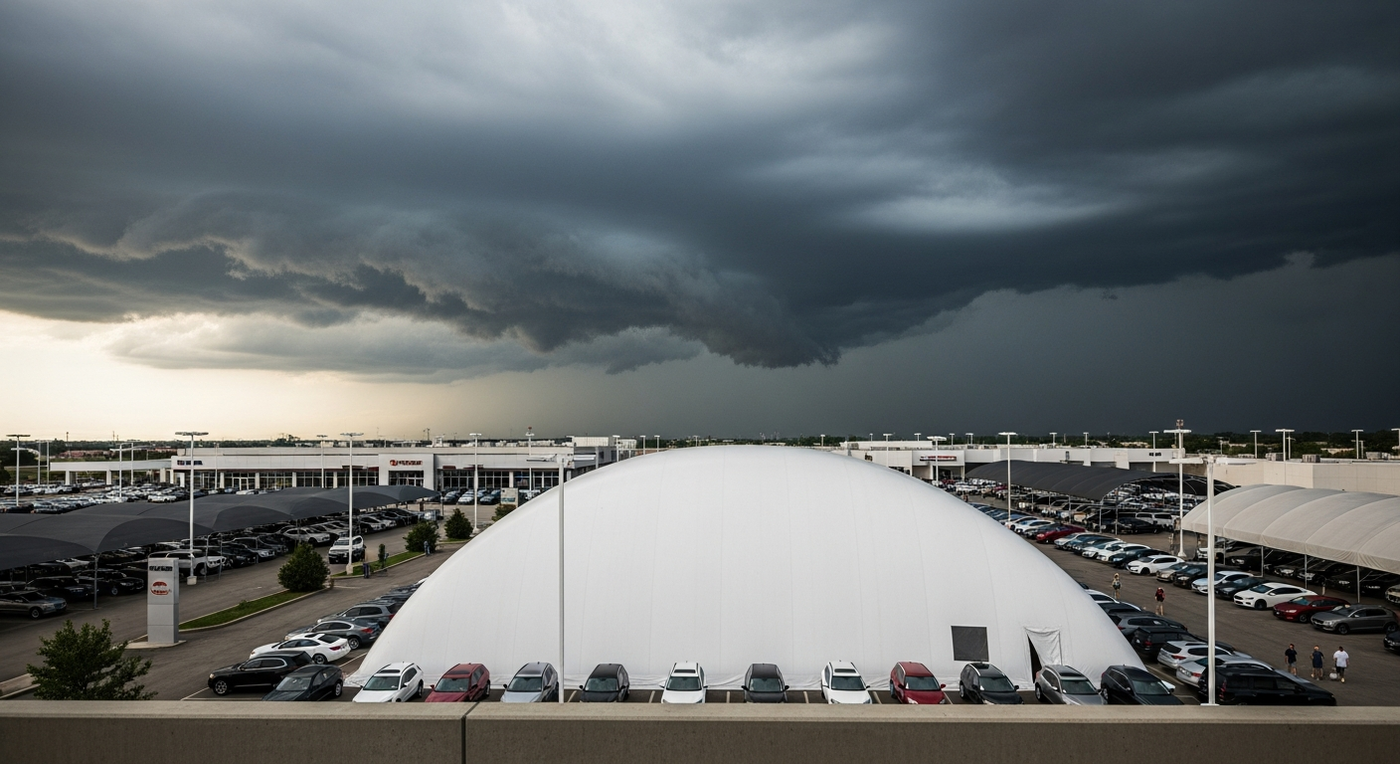
Renters and condo owners face a unique constraint during severe weather: you can't build a carport, can't choose a different parking spot, and often can't even access covered parking without paying extra—but you still own the vehicle sitting in the hail zone.

The Apartment Dweller's Hail Dilemma: Protecting Your Car When You Don't Control the Parking Lot
Hail Protector Editorial / GeminiDecision Brief

The Control Problem

The standard hail preparation advice assumes you own your parking infrastructure. Build a carport. Install a permanent shade structure. Park in your garage. For the roughly 36% of American households that rent, according to Census Bureau housing data, none of those options exist. You're assigned spot 247 in an open lot, and that's where your car lives, regardless of what the radar shows approaching.

This creates a specific planning challenge: you need portable solutions that work within lease restrictions, or you need to negotiate flexibility before the storms arrive.

Portable Covers: The Imperfect Solution

Inflatable car covers and heavy-duty hail blankets represent the most obvious apartment-friendly option. They pack into a trunk, require no installation, and violate no lease terms. They also have significant limitations.

Quality inflatable covers typically run from approximately $200 to $600 and require an external power source—meaning you need access to an outlet near your parking spot or a portable battery pack. The inflation process typically takes 5-10 minutes, which matters when you're racing a storm cell. More problematically, many apartment complexes prohibit leaving covers on vehicles overnight or during business hours, citing aesthetic concerns or fire lane access. You're buying a tool you can only deploy during a narrow window when storms are imminent but haven't yet arrived.

Heavy-duty hail blankets avoid the power requirement but introduce a different problem: wind. A blanket weighing approximately 15 pounds draped over your car becomes a sail in 40 mph straight-line winds. Some designs include elastic anchor points that hook under the vehicle, but these work best on cars with accessible undercarriage attachment points—not always a given with modern aerodynamic designs.

The real question isn't whether these covers work (they do, when properly deployed), but whether your living situation allows you to deploy them effectively.

The Parking Garage Subscription Strategy

Some apartment dwellers solve the hail problem by renting parking separately from their residence. Monthly parking garage subscriptions in urban areas typically cost anywhere from $75 to $300 depending on the city. That's expensive insurance, but the math changes if you're already paying for open-lot parking at your complex.

The key is finding a garage within a realistic drive time. A covered spot fifteen minutes away helps only if you receive adequate warning and can actually get there. This approach works best in cities with robust parking infrastructure and reliable severe weather alerts—places where you might receive 30-45 minutes of advance notice via weather apps and local emergency systems.

Here's the part most people miss: some parking facilities offer "storm day only" arrangements that don't require monthly commitments. A handful of private garage operators in hail-prone metros have started offering per-event pricing, typically around $20-40 for a 24-hour period during severe weather season. These arrangements require calling ahead and establishing the relationship before you need it, but they eliminate the recurring cost of a monthly space you only truly need a few days per year.

Negotiating With Property Management

The most underused strategy costs nothing: asking your property manager for storm-day parking flexibility before severe weather season begins.

Many apartment complexes have covered parking—it's just reserved for premium units or available at an upcharge. But those covered spots often sit partially empty, particularly in complexes where only a fraction of residents pay for the upgrade. Property managers have discretion to make temporary reassignments, especially if you're not asking for permanent access.

The conversation works best in March or early April, well before the typical peak hail months of April through June in many regions. You're not asking for a permanent covered spot; you're asking for a protocol: "When the National Weather Service issues a severe thunderstorm warning for our area with hail probability, may I temporarily move my vehicle to an available covered space?" Frame it as a request for conditional access to unused inventory during specific weather events.

Some managers will say no. Others will agree to a text-based notification system where you message when storms approach and they confirm if temporary covered parking is available. A few complexes have formalized this into a "storm parking" policy where residents can request temporary reassignment through a property management app.

The success rate improves if you're proposing a system rather than asking for special treatment. Offer to help draft the policy language. Suggest they extend the same option to all residents. Property managers are more likely to approve something that scales across the building than a one-off exception.

The Early Warning Mobility Approach

If you can't modify your parking situation, you can modify your vehicle's location. This requires treating your car as a mobile asset rather than a parked possession.

The strategy depends entirely on weather monitoring. Install multiple severe weather apps (National Weather Service alerts, RadarScope, local news apps) and enable all notification types. Set a personal threshold for action—for many apartment dwellers, that threshold is "severe thunderstorm watch with hail mentioned" rather than waiting for a warning.

When conditions meet your threshold, you drive somewhere else. The destination matters less than the timing. Some people drive to work early and park in a covered garage. Others head to a shopping mall with covered parking. A few simply drive to a part of town where the storm track suggests lower probability, then wait it out in the vehicle or a coffee shop.

This approach has an obvious flaw: you need to be home, awake, and able to move the car. It fails completely for overnight storms or situations where you're traveling. But for afternoon and evening convective events—the majority of severe thunderstorms in the Great Plains and Midwest—it provides a zero-cost option that works within any lease restriction.

36

%

U.S. households renting

$75-300

/mo

Urban garage subscription cost

5-10

min

Inflatable cover deployment time

The HOA Condo Variant

Condo owners face a related but distinct version of this problem. You own your unit, but the HOA controls the parking infrastructure. You can't build a carport in a shared lot, and you can't unilaterally install a permanent cover over your assigned space.

The solution here involves HOA governance rather than lease negotiation. Propose a formal policy change allowing temporary hail protection structures during severe weather season. Some HOAs have approved seasonal carport installations (April through September) that must be removed during the off-season. Others have authorized specific portable cover designs that meet aesthetic standards.

This requires working through the HOA board and often involves presenting at a monthly meeting, but it can result in permanent policy changes that benefit all owners. The key is framing it as a property value protection measure—hail damage affects resale values for the entire complex, not just individual units.

Decision Tradeoffs

Pros

  • No lease violationsPortable solutions require no property modifications or permissions
  • Trunk storageBlankets and inflatable covers pack small when not deployed
  • Proven protectionQuality covers effectively shield vehicles from hail impact

Tradeoffs

  • Deployment windowMust be home with enough warning time to set up equipment
  • Complex restrictionsMany properties ban overnight or daytime cover usage
  • Wind vulnerabilityBlankets can blow off; inflatables need power sources

Portable covers work only when your schedule, property rules, and storm timing align—which may be rare.

What Property Managers Won't Tell You

Here's a detail that matters: many apartment complexes carry insurance that covers common area damage but not tenant vehicle damage. When a hailstorm destroys twenty cars in their parking lot, the property owner's liability is typically zero. They have no financial incentive to provide storm protection, which is why covered parking remains a premium amenity rather than a standard feature in hail-prone regions.

This misalignment of incentives explains why negotiating for storm-day flexibility works better than expecting proactive solutions from management. You're asking them to solve a problem that, from their perspective, isn't really their problem.

The Realistic Assessment

None of these strategies provide the same protection as owning a garage. Portable covers require deployment time and favorable conditions. Parking subscriptions cost money and require advance planning. Property management negotiations might yield nothing. Early warning mobility only works if you're present and able to move the vehicle.

The honest answer for apartment dwellers is that hail preparedness involves accepting higher risk than homeowners face, then mitigating that risk through whatever combination of these approaches fits your budget, schedule, and living situation. The goal isn't perfect protection—it's reducing the probability that your car becomes one of the totaled vehicles in the post-storm parking lot photos.

Most apartment residents will experience at least one severe thunderstorm warning where they simply cannot get to their vehicle in time or cannot access any covered parking. That's the constraint of the living situation.

The difference between prepared and unprepared apartment dwellers isn't that one group has perfect solutions—it's that one group has already thought through their limited options and made decisions about which imperfect strategy they'll attempt to execute when the warnings arrive.

Verified Sources

  1. U.S. Census Bureau

    U.S. Census Bureau

    rental housing statistics

Back to Protection Guides