Decision Brief

The Tuesday Afternoon Problem: Hail Prep for Apartment Parking

Most hail damage happens between 3 PM and 8 PM on weekdays, when your car is sitting in an open apartment lot and you're deciding whether to leave work early.

The Tuesday Afternoon Problem: Hail Prep for Apartment Parking
Hail Protector Editorial / GeminiDecision Brief

The Specific Friction Point

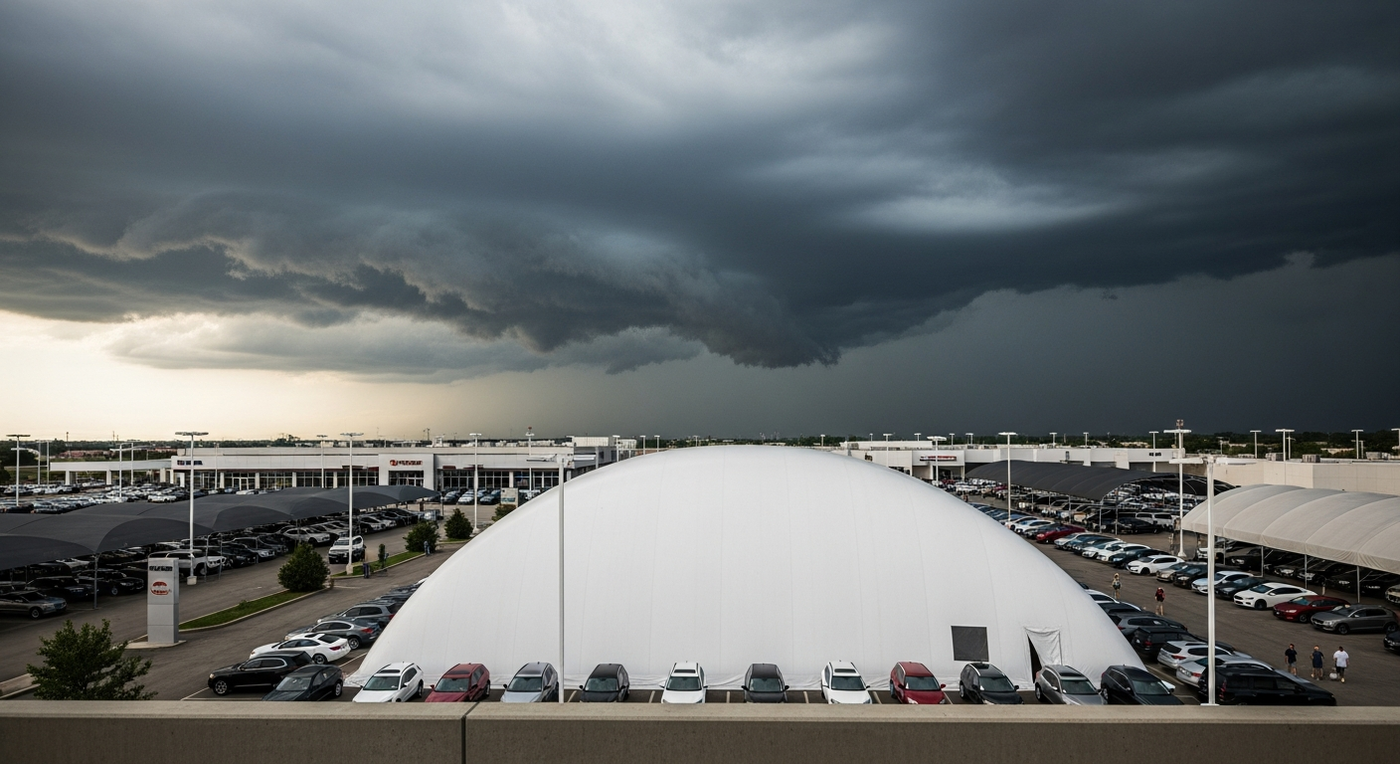
You get a severe thunderstorm watch notification at 2:30 PM. Your apartment complex has 120 uncovered parking spaces and zero garages. The forecast says "large hail possible" but doesn't specify when or where. You're in a meeting. Your car is a 2019 sedan with a $1,000 deductible. Do you leave now? Wait and see? Hope for the best?

This exact scenario plays out frequently each spring across the Great Plains and Midwest. The decision paralysis isn't about lacking information—it's about lacking a pre-committed plan that works within renter constraints.

The Two-Location Fallback

Before storm season starts, identify exactly two places you can move your car on short notice.

Option A: The covered parking you can reach in 15 minutes. This is a mall parking garage, a friend's carport, a grocery store with a concrete overhang, or a bank drive-through with a roof. It doesn't need to be free. It needs to be available between 2 PM and 7 PM on weekdays and close enough that you can Uber back to work or home. Drive there once during non-storm conditions. Note the exact entrance, the ceiling height clearance, and whether you need to pay.

Option B: The underpass or bridge you can reach in 8 minutes. This is your emergency fallback if you have 20 minutes of warning instead of two hours. According to National Weather Service safety guidance, overpasses are not recommended for tornado shelter, but for hail protection they function adequately as last-resort vehicle cover. Find one with a shoulder wide enough to fully clear traffic lanes. Screenshot the exact GPS coordinates.

The entire system is: if Moderate or High risk is forecasted for your county and you're not home, the car goes to Option A during your lunch break. If a severe thunderstorm warning is issued with hail mentioned and you have less than 30 minutes, the car goes to Option B immediately.

What This System Deliberately Ignores

You are not trying to interpret radar velocity scans. You are not refreshing weather Twitter to gauge storm intensity. You are not waiting to see if the watch becomes a warning. The plan activates on simple triggers that require zero meteorological expertise: risk level in forecast, or warning issued for your county.

This means you will sometimes move your car for storms that fizzle. You will occasionally pay for parking you didn't technically need. That's the cost of the system. The alternative is decision paralysis at 4 PM when a supercell is 40 minutes out and you're trying to read reflectivity loops on your phone.

The Landlord Conversation Worth Having

Most apartment complexes will not build covered parking for existing tenants. But some will designate 4-6 spaces under existing building overhangs or near dumpster enclosures as "severe weather parking" during warnings. This costs them nothing and reduces their liability exposure.

The request works better when framed as risk reduction for the property: "During severe thunderstorm warnings, could the complex allow temporary use of the loading zone / covered breezeway / spaces under the second-floor balconies for vehicle protection?

An estimated 20-30% of property managers will say yes if multiple tenants ask together. It's worth one email in March.

The Weekday Timing Pattern

Decision Pivot

Apartment dwellers cannot install hail nets or build carports.

The Deductible Math That Changes Behavior

A hail damage claim for a sedan with moderate denting typically runs several thousand dollars in repairs. If your comprehensive deductible is $500, you'll pay that amount before insurance covers the rest. If your deductible is $1,000, you're covering more of the repair yourself.

Here's the behavioral shift: people with $1,000 deductibles are often more likely to take preventive action because the financial exposure is immediate and personal. If you're deciding whether to pay $8 for two hours of garage parking versus risking a $1,000 deductible plus potential premium increases, the parking is cheaper.

If you have a $100 deductible, the math changes—but your premiums are already higher, and according to Insurance Information Institute data, filing hail claims can still affect your rates at renewal even when you're not at fault.

What Actually Happens When You Do Nothing

If you skip all preparation and your car takes hail damage, the repair process is: file a comprehensive claim, pay your deductible, wait approximately 2-4 weeks for an adjuster appointment, wait another 2-6 weeks for shop availability, be without your car for 1-2 weeks during repairs. Hail repairs typically take roughly 3-4 weeks from claim to completion during peak season because body shops are backlogged.

During that time you're arranging alternative transportation. If you're in a city with limited public transit, that typically means a rental car, which insurance may cover for only a portion of the repair period depending on your policy.

The actual financial cost is deductible plus potential premium increase. The operational cost is a month of logistics disruption. For many renters, the logistics cost is higher than the money.

Decision Tradeoffs

Pros

  • Inflatable hail coversAir cushion absorbs impact effectively; compact storage in trunk
  • Moving blankets + tarpsBudget-friendly at $60-80; handles typical 1-2 inch hail
  • Pre-committed fallbackReduces indecision under pressure.

Tradeoffs

  • Inflatable hail coversRequires 3-4 minutes to deploy; only works if you're present at vehicle
  • Moving blankets + tarpsWon't protect against baseball-sized stones; installation time needed
  • Ad-hoc parking relianceAdds delay and uncertainty during warnings.

Both solutions fail if you're away from your car—making pre-identified covered parking locations more valuable than equipment.

The One Thing Most People Get Wrong

The mistake is waiting for certainty. You will never have certainty about whether a specific storm will produce hail at your specific parking lot. The radar will show a thunderstorm. The warning will say "hail possible." You'll refresh the forecast and see a 40% chance.

Forty percent is not a plan.

The system works because it removes the certainty requirement. You're not predicting the storm. You're executing a pre-committed response to a simple trigger. When the trigger occurs, you move the car. Most of the time, nothing happens. Occasionally, you avoid several thousand dollars in damage and a month of hassle.

That's the entire value proposition: trading occasional unnecessary action for elimination of decision paralysis during the critical window when action actually matters.

Buyer Questions

Verified Sources

  1. NOAA Storm Prediction Center

    NOAA Storm Prediction Center

    Storm report archive with severe hail event records.

  2. National Weather Service

    National Weather Service

    Public guidance on severe thunderstorm and hail safety.

  3. weather.gov

    weather.gov

    Referenced in article via weather.gov.

  4. iii.org

    iii.org

    Referenced in article via iii.org.

Back to Protection Guides