Decision Brief

Vehicle Storage Facilities in Hail Country: When Four Months of Rent Beats One Repair Bill

Climate-controlled storage in hail-belt cities costs a fraction of what a single severe hail event does to an unprotected vehicle, creating a growing market for seasonal protection.

Vehicle Storage Facilities in Hail Country: When Four Months of Rent Beats One Repair Bill
Hail Protector Editorial / GeminiDecision Brief

The Math That's Changing Storage Decisions

A climate-controlled vehicle storage unit in the Denver metro area typically runs approximately $200-350 per month. For the four-month core hail season—roughly April through July—that's approximately $800 to $1,400. Meanwhile, comprehensive hail damage repairs on modern vehicles with aluminum body panels often exceed an estimated $8,000, and total losses aren't uncommon when hail reaches golf ball size or larger.

The calculation becomes even more compelling for vehicles worth $50,000 or above. Many high-value auto policies carry comprehensive deductibles of approximately $1,000 to $2,500, meaning the out-of-pocket cost for seasonal storage can be less than the deductible alone—before factoring in premium increases that follow a claim.

This arithmetic has created a distinct market segment in cities along the hail belt. Storage facilities in Dallas, Oklahoma City, Denver, and the Colorado Front Range have begun offering packages specifically designed around hail season rather than traditional year-round contracts.
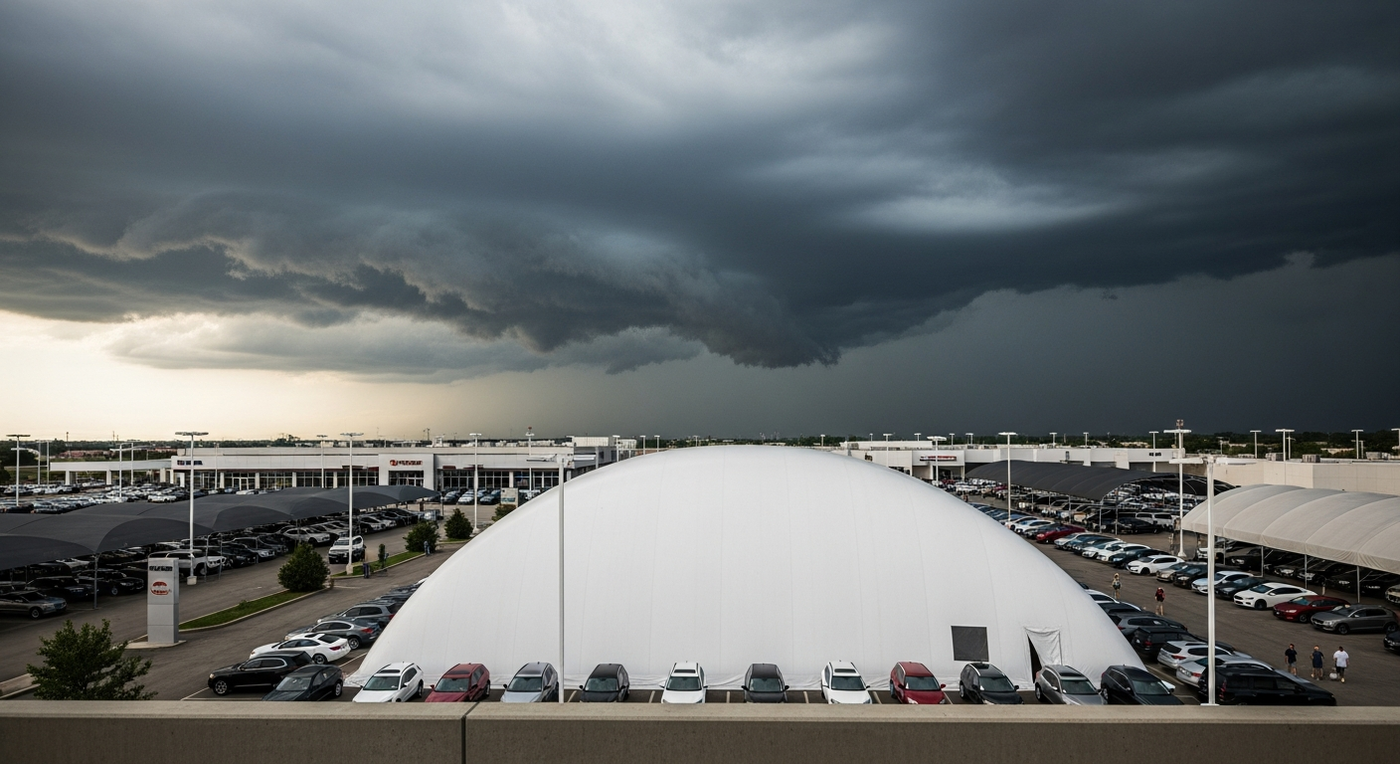
The Seasonal Protection Model

Several storage operators now market April-through-July contracts with simplified pricing. These seasonal packages often include.

- Transport service from the customer's residence to the facility when severe weather is forecast - 24-hour access for owners who want to retrieve vehicles between storm systems - Climate control that doubles as protection against summer heat damage to interiors - Security systems that provide documentation for insurance purposes.

The transport component addresses the practical problem that hail often arrives with little warning. A facility in north Dallas advertises same-day pickup within a 15-mile radius when the Storm Prediction Center issues a moderate or high risk for severe weather. The service costs approximately $75-100 per trip, but customers report using it only two or three times per season.

Who Actually Uses Hail Storage

The customer base isn't limited to exotic car collectors. Storage facilities report demand from several distinct groups.

Leased luxury vehicles. Lessees face end-of-term penalties for unrepaired damage, and hail damage can trigger substantial charges even if the vehicle remains drivable. A leased BMW or Mercedes with four years of hail dings can generate several thousand dollars in excess wear fees.

Fleet vehicles parked at home. Contractors and sales professionals who take company trucks or vans home nightly but don't use them on weekends. Storing the vehicle Friday through Monday during active weather periods costs less than explaining hail damage to fleet management.

Vehicles in deductible limbo. Cars worth approximately $30,000-60,000 often carry comprehensive deductibles of roughly $1,000-2,000. Owners calculate that paying the deductible plus accepting a premium increase costs more over three years than seasonal storage costs over the same period.

Second and third vehicles. Households with multiple cars often store the newest or most valuable one during hail season while continuing to drive older vehicles with lower replacement costs.

Here's what most people get wrong: storage doesn't need to be continuous. Many customers pay for the space but only move vehicles in when NOAA's convective outlooks show elevated hail probability for their specific area. The monthly fee buys the option to protect, not the requirement to store constantly.

The Insurance Angle

Some insurers have begun acknowledging storage as a risk mitigation strategy, though premium credits remain rare. The Insurance Information Institute notes that comprehensive coverage pricing reflects ZIP code hail frequency, but most carriers don't yet offer discounts for documented seasonal storage—they simply avoid the claim.

The real insurance benefit appears in claims history. A driver who stores a vehicle during high-risk months and drives it the rest of the year maintains a clean record, preserving eligibility for accident forgiveness programs and loyalty discounts that disappear after comprehensive claims.

One wrinkle: storage doesn't eliminate the need for comprehensive coverage. Lenders require it, and facilities themselves can experience damage from catastrophic hail that penetrates roofing. The difference is that a storage facility's structure provides far more protection than a residential driveway, and facility insurance covers building damage rather than individual vehicles in most contracts.

Regional Market Differences

Storage availability and pricing vary considerably across hail-prone regions.

Denver and Front Range Colorado. The most developed market, with purpose-built facilities offering individual enclosed units rather than shared warehouse space. Pricing runs higher—often approximately $300-400 monthly—but includes amenities like battery maintainers and tire pressure monitoring.

Dallas-Fort Worth. More competitive pricing due to abundant commercial real estate, with rates typically around $150-250 per month. Many facilities occupy repurposed warehouse space rather than purpose-built structures. Transport services are more common here than in other markets.

Oklahoma City and Tulsa. Smaller market with fewer specialized facilities, but lower overall costs. Monthly rates of approximately $125-200 are common, though climate control and 24-hour access are less standard.

Kansas City and Wichita. Emerging market where traditional storage facilities are adding hail-season marketing without necessarily changing their infrastructure. Pricing remains closer to standard storage rates.

$800-$1,400

Four-month seasonal storage

$8,000+

Typical hail repair cost

$1,000-2,500

Common comprehensive deductibles

The Breakeven Question

For a vehicle worth approximately $40,000 with a $1,000 deductible and comprehensive coverage costing roughly $800 annually, the calculation looks like this:

Four months of storage at $200/month costs $800. A single hail claim triggers the $1,000 deductible plus a potential premium increase of around 10-20% for three years—adding roughly $240-480 in additional premiums over that period. Total claim cost: approximately $1,240-1,480 minimum, assuming no diminished value concerns.

The storage option costs less in year one and dramatically less if hail strikes multiple times over several years.

The equation shifts for vehicles worth under approximately $20,000 or those with lower deductibles around $500. At that price point, accepting the risk and paying for repairs when they occur often makes more financial sense than ongoing storage costs.

Decision Tradeoffs

Pros

  • Lower than deductibleSeasonal fees often cost less than insurance deductible alone
  • Clean claims recordPreserves accident forgiveness and loyalty discount eligibility
  • Flexible usagePay monthly but only store during high-risk forecast periods
  • Multi-year savingsAvoids premium increases that compound over three years

Tradeoffs

  • Access limitationsImpractical for single-vehicle households needing daily transportation
  • Forecast dependencyUnexpected storms can strike before vehicle reaches facility
  • Concentrated facility riskCatastrophic hail at storage location affects many vehicles simultaneously
  • Poor value for cheaper carsDoesn't pencil out for vehicles under $20,000

Most cost-effective for multi-vehicle households with cars valued above $30,000, especially when one vehicle serves recreational rather than daily commuting needs.

What Storage Doesn't Solve

Vehicle storage addresses hail risk but creates other complications.

Access becomes an issue for single-vehicle households. Storing your only car during the entire hail season means arranging alternative transportation for four months, which negates any cost savings.

Storage facilities concentrate risk geographically. A severe hail event that strikes the facility itself can damage dozens of vehicles simultaneously. While facility insurance typically covers structural damage, individual vehicle damage falls to each owner's policy—meaning everyone files claims at once.

The transport model depends on forecast accuracy. Hail can develop in environments that don't show up on outlooks 24 hours in advance, particularly in pulse severe thunderstorm scenarios. A vehicle sitting in a driveway when an unexpected supercell forms gets no benefit from a storage contract.

The Broader Trend

The growth of hail-specific storage reflects a larger shift in how vehicle owners in hail-prone regions manage risk. Rather than treating hail as an unpredictable act of nature, drivers are adopting the same seasonal preparation mindset used for winter tire storage in northern climates.

This approach works best for households with multiple vehicles, flexible work arrangements, or vehicles that serve recreational rather than daily transportation needs. For the person driving a higher-value truck to a construction site every day, storage isn't practical. For the person with an expensive truck used for weekend trips and a less valuable sedan for commuting, storing the truck from April through July starts to make sense.

The market will likely continue expanding as hail frequency data becomes more granular and facilities develop more sophisticated forecasting partnerships. Several storage operators now subscribe to private weather services that provide facility-specific hail probability forecasts, allowing them to contact customers with 48-72 hour warnings rather than relying on customers to monitor weather themselves.

Whether this represents a permanent shift or a temporary response to a particularly active hail period remains unclear. What's certain is that the financial logic—four months of storage costs less than one repair—creates a compelling case for vehicle owners willing to accept the logistical trade-offs.

Verified Sources

  1. NOAA Storm Prediction Center

    NOAA Storm Prediction Center

    Official convective outlook archive and risk categories.

  2. NOAA Storm Prediction Center

    NOAA Storm Prediction Center

    Storm report archive with severe hail event records.

  3. National Weather Service

    National Weather Service

    Convective outlook interpretation and severe weather categories

Back to Protection Guides