Explainer Deep Dive

A Two-Inch Steel Ball Falls Twenty Feet: Why Your Roof Has Impact Ratings and Your Car Doesn't

Building codes require roofs to survive standardized hail tests, while automotive panels have no hail standards whatsoever — a divergence that reveals fundamentally different assumptions about what should be engineered versus insured.

A Two-Inch Steel Ball Falls Twenty Feet: Why Your Roof Has Impact Ratings and Your Car Doesn't
Hail Protector Editorial / GeminiExplainer

10-35%

%

Insurance discount for Class 4

2

inch

Steel ball test diameter

8

inch

Largest U.S. hailstone recorded

$3,000-$4,000

$

Paintless repair cost estimate

The Engineering That Does Exist

Some automotive manufacturers have experimented with hail-resistant design elements, though not in response to any regulatory requirement. Certain luxury brands offer optional carbon fiber roofs, which handle impact differently than steel or aluminum — they're less likely to dent permanently, though they can crack under sufficient force. A few manufacturers have tested polymer body panels that flex under impact and return to shape, similar to how modern plastic bumpers work. These innovations emerge from material science advances and manufacturing cost considerations, not from hail-specific engineering goals.

The aftermarket tells a different story. Hail protection products for vehicles — car covers with padded layers, inflatable garage systems, portable carports — constitute a significant market segment in hail-belt states. These products exist precisely because the vehicles themselves aren't engineered for hail resistance. The logic inverts: rather than building hail resistance into the vehicle, owners are expected to provide external protection or accept the insurance claim process.

Paintless dent repair technology has arguably done more to address hail damage than any design standard could. The technique, which removes dents without repainting by manipulating metal from behind the panel, has transformed hail damage from a total-loss scenario into a repairable inconvenience for many vehicles. A hailstorm that would have required $8,000 in traditional body work fifteen years ago might now cost roughly $3,000 to $4,000 in paintless repair. The repair innovation reduced the economic incentive to engineer hail-resistant panels.
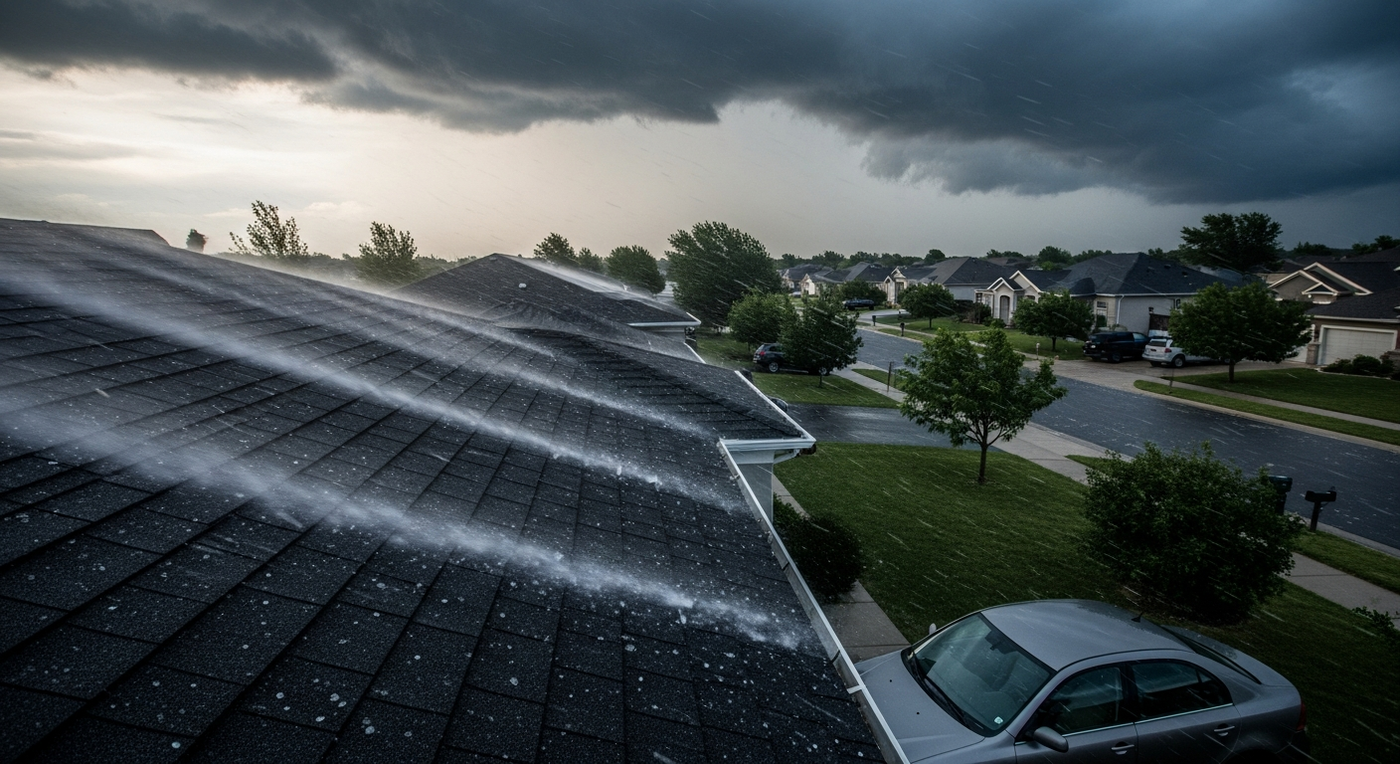
Why Buildings Got Standards and Cars Didn't

The divergence traces back to how each industry encountered the hail problem. The roofing industry faced a crisis in the 1990s when insurance claims for hail damage spiked across the Great Plains and Southeast. Insurers responded by raising premiums, dropping coverage, or exiting markets entirely. State insurance regulators, facing constituent pressure, looked for solutions that would keep insurance available and affordable. Impact-resistant roofing standards emerged as a compromise: give homeowners a way to reduce risk through better materials, and insurers will offer discounts that make those materials economically rational. The Insurance Institute for Business & Home Safety conducted research demonstrating that Class 4 roofing significantly reduced claim frequency and severity, providing the actuarial justification insurers needed.

The automotive industry never faced equivalent regulatory pressure because the problem manifested differently. Hail damage to vehicles, while expensive in aggregate, spreads across millions of individual comprehensive insurance claims rather than concentrating in homeowner policies the way roof damage does. A hail-damaged vehicle remains drivable; a hail-damaged roof leaks and causes interior damage. The urgency differs. And critically, the automotive industry operates globally with standardized platforms, making region-specific design requirements for hail resistance economically impractical in ways that don't affect roofing, which is already region-specific based on climate, building codes, and aesthetic preferences.

Building codes can mandate roofing standards because buildings are permanent, permitted structures subject to inspection and local regulation. Vehicles cross state lines freely, making state-level mandates ineffective, and federal vehicle safety standards focus on crashworthiness and emissions, not environmental damage resistance. The regulatory architecture simply doesn't exist to impose hail standards on automotive design.

The result is a system where your roof might survive a hailstorm that destroys your car, despite both being exposed to identical conditions. It's not an oversight. It's a reflection of different risk models, different regulatory histories, and different assumptions about whether a problem should be solved through engineering or insurance. The two-inch steel ball keeps falling in testing labs, but only on roofing samples. For vehicle panels, the test is the storm itself.

Back to Hail Science