Explainer Deep Dive

The Billion-Dollar Hailstorm You Never Heard About: Why Crop Damage Affects Your Car Insurance

Agricultural hail insurance pays out roughly $1-3 billion annually in the United States, creating a loss environment that quietly influences comprehensive auto premiums even for drivers who've never set foot on a farm.

The Billion-Dollar Hailstorm You Never Heard About: Why Crop Damage Affects Your Car Insurance
Hail Protector Editorial / GeminiExplainer

The Dual-Claim Problem

Walk onto any working farm in Kansas or Nebraska and count the vehicles. There's the family pickup, maybe two. A sedan or SUV for the spouse. Often a third vehicle for a teenage driver. Then come the farm trucks—grain haulers, spray rigs, service vehicles. A mid-sized operation might have six to eight insured vehicles on the property at any given time, all sitting outdoors because barn space is reserved for equipment worth ten times as much.

When hail hits, every one of those vehicles files a claim under someone's comprehensive coverage. The farmer's personal auto policy covers the family vehicles. The farm's commercial auto policy covers the trucks. If there's a hired hand living on the property, that's another personal auto claim. A single hailstorm doesn't just create one claim per household—it creates three, four, sometimes five claims from the same GPS coordinates.

Now multiply that across an entire county. According to USDA National Agricultural Statistics Service data, the average farm in Iowa operates around 350 acres. A severe hail event might affect 200,000 acres, which translates to roughly 570 farms in the direct damage path. If each operation has an estimated four insured vehicles, that's over 2,000 auto claims before you count a single town resident, dealership lot, or highway traveler caught in the storm.

Insurance companies don't distinguish between "farm hail claims" and "regular hail claims" when they're modeling future exposure. They see concentration risk—too many insured assets in too small a geographic area, all vulnerable to the same peril at the same time. This is why comprehensive coverage in agricultural counties often costs more than in suburban areas with similar vehicle values. The risk isn't just your car. It's your car plus everyone else's car plus the economic reality that hail doesn't hit one vehicle at a time in these regions—it hits hundreds simultaneously.

Here's the counterintuitive part: crop insurance and auto insurance are completely separate products, often issued by different companies. Crop-hail policies are specialty coverage, frequently written by agricultural insurers like ProAg or Rain and Hail. Your Geico or Progressive auto policy has nothing to do with whether soybeans got hammered. But the reinsurance market—the global network of companies that insure the insurers—doesn't care about these distinctions. When Swiss Re or Munich Re assess their exposure to U.S. hail risk, they're looking at total insured losses from hail events, aggregated across all policy types. A bad hail year for agriculture means reinsurance rates tick upward, and those costs eventually filter down to primary insurers, who adjust their pricing across the board.

The Geography of Hail Pricing

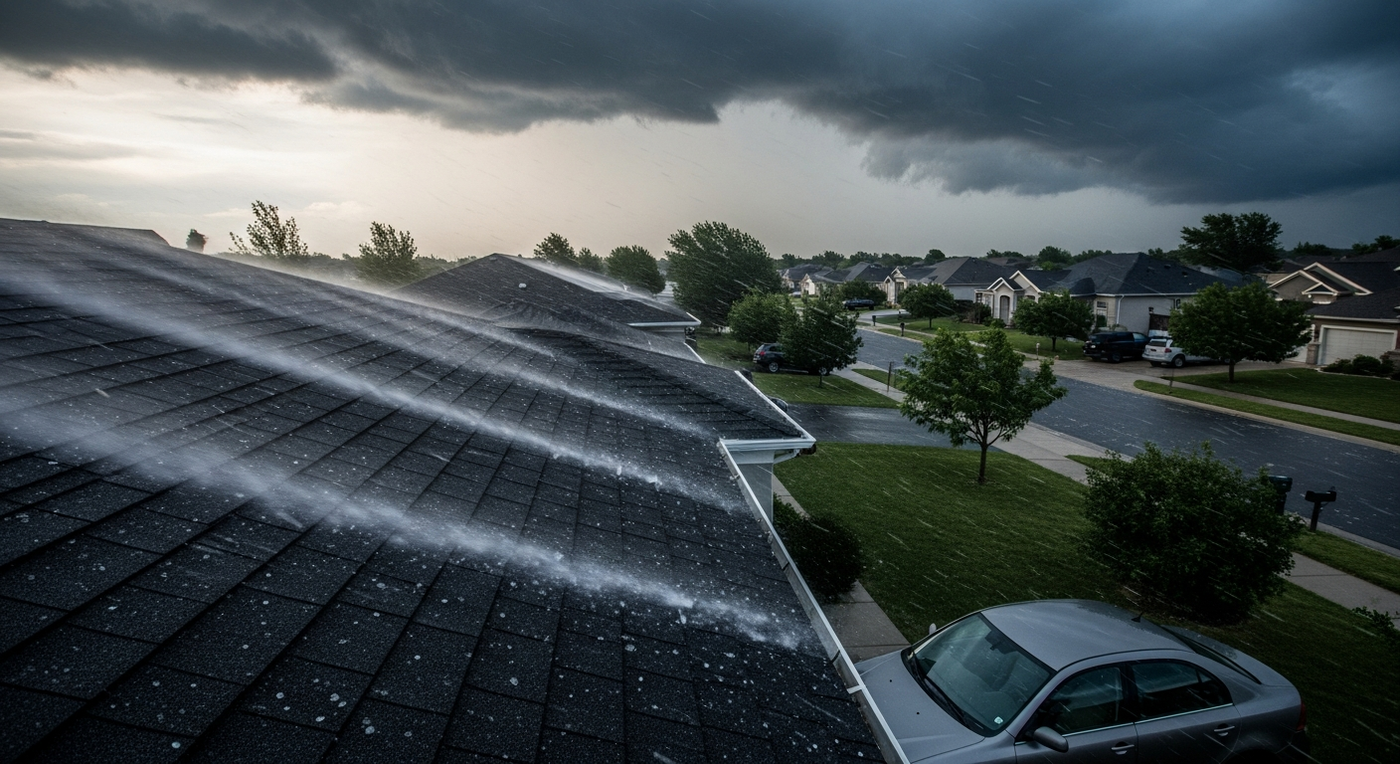
Pull up a map of average comprehensive insurance premiums across the United States and you'll see a clear band of elevated pricing running from Texas through Oklahoma, Kansas, Nebraska, and into South Dakota. This is Hail Alley, where atmospheric conditions during late spring and summer create ideal hailstorm environments with disturbing regularity. It's also where the majority of U.S. corn, wheat, and sorghum production happens.

The overlap isn't coincidental. The same meteorological setup that makes these states agricultural powerhouses—warm, moist air from the Gulf colliding with dry air from the Rockies, creating powerful updrafts—also makes them hail factories. According to NOAA's National Centers for Environmental Information, the central Great Plains experience more large hail days per year than virtually anywhere else on Earth. This isn't occasional bad luck; it's climate reality.

Insurance actuaries price for frequency and severity. In agricultural counties within Hail Alley, both metrics are elevated. Hail happens more often, and when it happens, it affects more insured property because the landscape is dotted with farms, each representing multiple claim points. A hailstorm in suburban Atlanta might damage 200 cars in a shopping center parking lot. The same storm in rural Nebraska damages 200 cars plus 80,000 acres of corn plus dozens of outbuildings, grain bins, and equipment sheds. The total insured loss is exponentially higher, even though the meteorological event is identical.

This creates a pricing environment where comprehensive coverage in a place like Seward County, Nebraska—population roughly 17,000, economy dominated by agriculture—can run approximately 30-40% higher than in a non-agricultural county with similar population density. You're not paying more because your individual risk is higher. You're paying more because the aggregate risk pool you're part of includes massive agricultural exposure, and insurers can't price your policy in isolation from that broader context.

Some drivers in these areas drop comprehensive coverage entirely, gambling that they won't be in the path of a severe storm. This is mathematically questionable. In the highest-risk counties, a vehicle has roughly a 1-in-15 chance of sustaining hail damage in any given year. Over a five-year period, you're more likely than not to take a hit. A typical hail damage repair—depending on severity—can run anywhere from several hundred dollars for minor dents to several thousand for panel replacement and paint work. The comprehensive premium might seem steep at approximately $400-600 annually in these markets, but it's priced that way because the actuarial data says the claims are coming.

$1-3B

Annual U.S. crop-hail payouts

400K

acres

Destroyed in 90 minutes

60-70

%

Claims occur July-August

1-in-15

Annual hail damage odds

Corn is most vulnerable to hail during a roughly six-week window when the plant is between knee-high and tasseling—typic
What Actually Drives Agricultural Hail Losses

What Actually Drives Agricultural Hail Losses

Corn is most vulnerable to hail during a roughly six-week window when the plant is between knee-high and tasseling—typically late June through early August in the central Corn Belt. Before that, the plant is small enough that hail passes over it. After pollination, the plant is sturdy enough to withstand moderate hail without total loss. But during that critical growth phase, hail shreds leaves, breaks stalks, and destroys the plant's ability to photosynthesize effectively. A severe hailstorm during this window can reduce yield by an estimated 70-100%.

Wheat faces a different vulnerability curve. Winter wheat, which dominates Kansas and Oklahoma production, is most susceptible just before harvest in late May and June. The heads are full of grain, standing upright on relatively fragile stalks. Hail knocks the heads off entirely, scattering grain that can't be recovered. Spring wheat in the Dakotas faces similar risk in July and August.

Soybeans are surprisingly resilient to hail, but only early in the season. A young soybean plant can be completely defoliated and still recover if it happens before flowering. After pod set, though, hail damage to pods means direct yield loss—those beans aren't coming back.

The timing of these vulnerability windows coincides almost perfectly with peak hail season across the Great Plains. This isn't bad luck; it's physics. The atmospheric instability that produces severe hail requires strong surface heating, abundant moisture, and wind shear. Those conditions peak in summer. Farmers plant their crops to optimize growing degree days and moisture availability, which means the most vulnerable growth stages happen when hail risk is highest.

This creates a predictable annual pattern in agricultural hail losses. According to USDA Risk Management Agency data, approximately 60-70% of crop-hail insurance claims occur in July and August. These aren't evenly distributed—a handful of major hail events typically account for the majority of losses in any given year. Major individual hail events can represent a substantial portion of annual U.S. crop-hail losses, despite lasting less than two hours.

Auto insurers know this pattern. They know that when July arrives, the probability of a major hail event—and therefore a major cluster of auto claims—increases substantially. They can't predict which specific county will get hit, but they can predict with reasonable confidence that somewhere in their coverage territory, a significant hail event will occur. This is why comprehensive coverage pricing doesn't fluctuate month-to-month despite the seasonal risk variation. Insurers amortize the summer hail risk across the entire annual premium.

The economic pressure this creates extends beyond just premium calculations. After a major hail event, repair shops in affected areas become overwhelmed. A typical body shop might handle roughly a dozen hail claims per month under normal conditions. After a severe storm, they might have several hundred claims in the queue. This creates repair delays stretching months, and it also creates opportunities for fraud—fly-by-night "hail chasers" who show up, do substandard repairs, and disappear before problems emerge. Insurers factor these claim management costs into their pricing models, adding another layer of expense that gets distributed across all policyholders in hail-prone regions.

One detail that often surprises people: hail size matters enormously for crop damage, but less than you'd think for vehicle damage. Quarter-sized hail can destroy a corn crop if there's enough of it, but it typically won't damage a car's sheet metal. It typically takes hail roughly an inch in diameter or larger to start denting hoods and roofs. For crops, though, volume matters more than size—a fifteen-minute barrage of pea-sized hail can be just as destructive as five minutes of golf ball-sized hail. This means the threshold for a catastrophic agricultural loss is lower than the threshold for a catastrophic auto loss, but when storms cross that higher threshold, both types of claims spike simultaneously.

The Modeling Challenge

The insurance industry has spent decades trying to model hail risk with greater precision, using Doppler radar data, satellite imagery, and increasingly sophisticated atmospheric modeling. They've gotten better at predicting seasonal risk—identifying that a particular summer will likely see above-average or below-average hail activity based on broader climate patterns. But they still can't predict where individual storms will form with enough lead time to matter for pricing. A hailstorm develops in under an hour. By the time meteorologists identify a severe hail threat, it's too late to adjust anyone's premium.

This uncertainty is baked into the pricing structure. Insurers charge enough to cover the average expected loss plus a margin for the years when losses exceed expectations. In agricultural counties, that average expected loss is elevated because the total insured exposure is elevated. You're not just insuring against your car getting hit—you're part of a risk pool that includes everyone's car plus the entire agricultural infrastructure of the region. The premium reflects that reality, whether you own a farm or not.

The feedback loop between agricultural losses and auto insurance pricing isn't immediate or transparent, but it's real. When crop insurers face a catastrophic hail year, they tap their reinsurance contracts. Reinsurers pay the claims, then reassess their pricing for the following year's contracts. Those higher reinsurance costs get passed to primary insurers across multiple lines of business—not just crop insurance, but also property, auto, and commercial coverage. An actuary pricing comprehensive auto coverage in Nebraska doesn't receive a memo saying "corn losses were high, increase rates by X%." Instead, they see their company's overall reinsurance costs rising, and they adjust their models accordingly. The crop losses become part of the broader risk assessment that influences pricing across all coverage types in hail-prone regions, creating an indirect but measurable connection between agricultural damage and what you pay for auto insurance.e part of the ambient cost environment that shapes all insurance pricing in hail-prone regions.

This is why moving from, say, Des Moines to Denver—both hail-prone cities, but one in an agricultural region and one not—can result in surprisingly different comprehensive premiums even if your individual risk profile is identical. The insurance environment you're entering is shaped by more than just the weather. It's shaped by what that weather can destroy, and in agricultural areas, there's simply more to destroy.

Verified Sources

  1. NOAA Storm Prediction Center

    NOAA Storm Prediction Center

    Official severe-weather outlook reference.

Back to Hail Science