Editorial Quick Answers

The $42 Decision: Why Airport Garage Parking Pays for Itself the First Time Hail Falls

A week of covered parking at Denver International costs roughly the same as a single dented panel repair — and your car can't dodge storms while you're boarding in Phoenix.

The $42 Decision: Why Airport Garage Parking Pays for Itself the First Time Hail Falls
Hail Protector Editorial / GeminiEditorial

The math that changes during boarding

You're comparing parking options on your phone while the TSA line inches forward. Denver International's open economy lot: $9 per day. Covered garage: $23 per day. For a six-day trip, that's $84 versus $138 — a $54 difference that feels meaningful when you're also paying for checked bags and airport coffee.

Then your car sits alone for nearly a week during peak hail season while you have zero ability to move.

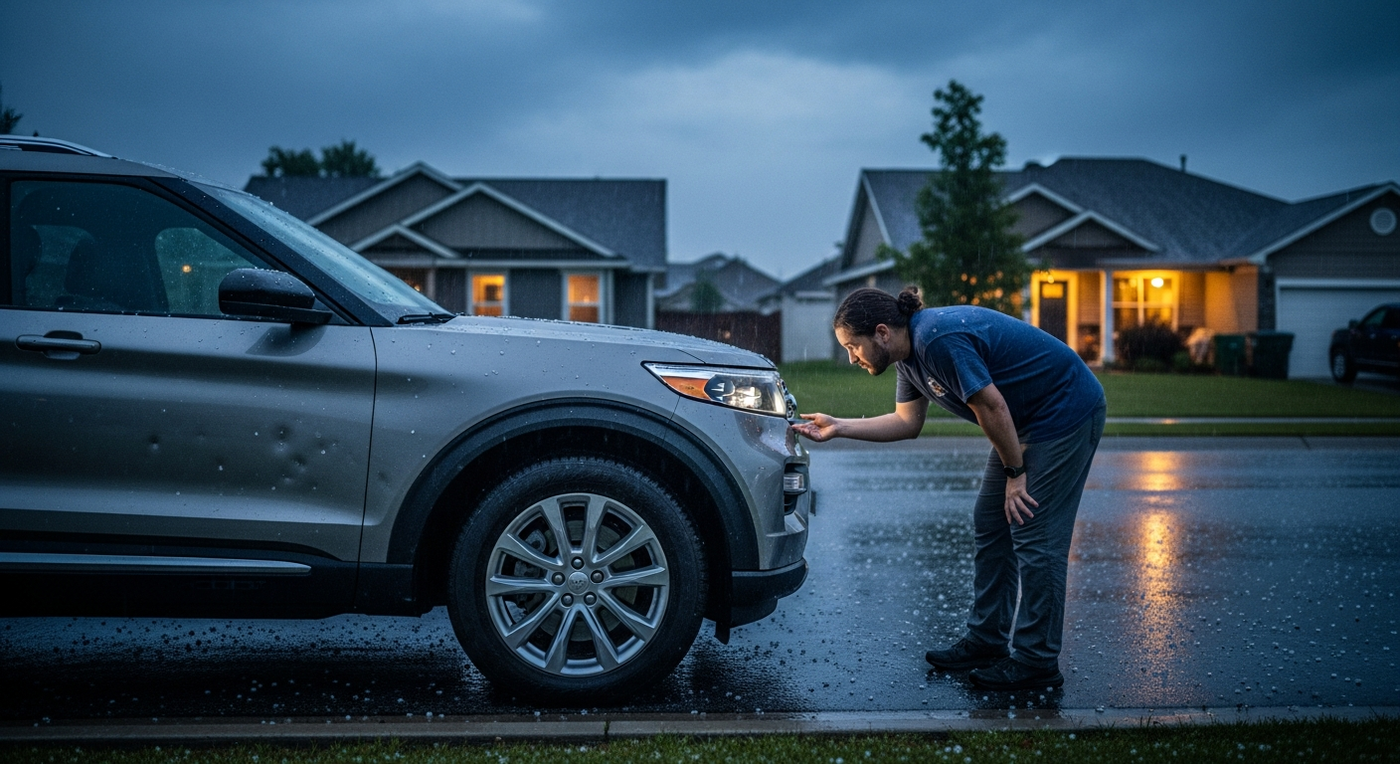
According to Insurance Information Institute data, hail damage claims can run into the thousands of dollars per vehicle. A single moderate hailstorm — the kind that drops quarter-sized stones for twelve minutes on a Tuesday afternoon — creates repair bills that dwarf a year's worth of parking premiums. The covered garage stops being an expense and becomes the cheapest insurance policy you'll buy all month.

The airports where this calculation matters most

Not every airport sits in hail's crosshairs equally. Denver International, Dallas/Fort Worth, Oklahoma City, and Kansas City airports all occupy the statistical bullseye of Storm Prediction Center hail reports from April through August.

DIA presents the starkest choice. Pikes Peak and Mt. Elbert Economy lots offer the cheapest rates — roughly $8-9 daily — but zero overhead protection. The parking garage jumps to around $23 daily, but your vehicle sits under six levels of concrete while storms roll across the Front Range. That $14 daily premium equals $98 for a week-long trip.

Compare that to what happens in the economy lot: a single hailstorm with golf ball-sized stones typically creates damage requiring hood replacement, roof panel work, and complete windshield replacement. Body shops in the Denver metro area generally quote these repairs in the $4,000-7,000 range, and that's before rental car costs while your vehicle spends weeks in the shop.

DFW's Terminal D garage offers similar protection with one advantage: proximity to Terminals A, B, and C means shorter shuttle times when you're racing to make a connection. The garage rate runs roughly $10-12 more per day than remote lots, but Terminal D's position on the airport's north side places it directly under the same concrete that protects arriving aircraft during severe weather.

When the forecast makes the decision for you

Here's the simplest decision rule I've found: check the Storm Prediction Center's extended outlook before you book parking. If Day 3 or beyond shows enhanced risk or higher for severe weather in your airport's region during your travel dates, the garage stops being optional.

The SPC issues these outlooks twice daily, and they're surprisingly accurate three to four days out. An enhanced risk means organized severe weather is likely — the kind of setup that produces widespread hail across metro areas. Your car sitting in an open lot during enhanced risk is roughly equivalent to leaving your laptop on the sidewalk during a rainstorm and hoping for the best.

Most people miss this entirely because they check weather for their destination, not their departure airport. You're thinking about Phoenix's forecast while your Subaru is about to spend Thursday afternoon under a supercell in Denver.

$4,000-7,000

Typical hail repair cost

$98

Week of garage parking

2+

weeks

Body shop wait times

10-15

%

Premium increase post-storm

The coverage gap your auto policy won't mention

Comprehensive coverage pays for hail damage, but your insurance company doesn't send you a thank-you note for preventing claims. They just raise everyone's rates after a major hail event.

After the May 2017 hailstorm that hit Denver's metro area, auto insurance premiums in the region increased by an estimated 10-15%, even for drivers whose vehicles weren't damaged. The insurance industry spreads the cost of catastrophic hail seasons across all policyholders in affected regions.

This creates a perverse incentive: you pay marginally higher premiums whether your car gets hit or not, so why spend extra on garage parking? Because deductibles exist. Most comprehensive deductibles run $500-1,000, and filing a claim — even a no-fault hail claim — can affect your policy in ways that aren't immediately obvious. Some insurers track total claims over three-year periods, and multiple claims can shift you into higher-risk rating categories.

The garage parking premium is money you spend once. The deductible is money you lose. The rate increase is money you pay for years.

What frequent travelers actually do

I asked a United pilot based at DIA how he handles parking during hail season. His answer: "I don't park at the airport between April and July unless I'm using the garage.

He drives to the airport, checks the daily rate board, and if garage parking is full or prices have spiked during peak travel, he turns around and takes a rideshare. His calculation: roughly $45 each way for Uber versus potentially hundreds of dollars to fix a cracked windshield, plus the day off work to sit at a glass shop.

Flight attendants I've talked to use similar logic, with one addition: they check hail forecasts the same way they check their trip schedules. If the SPC outlook shows severe weather during their layover, they'll specifically request the covered employee lot rather than the closer surface lot.

These aren't weather nerds or insurance obsessives. They're people who've watched coworkers deal with hail damage enough times to do the math.

Airport parking hail Key Questions

The Terminal E exception at DFW

Dallas/Fort Worth's Terminal E garage deserves specific mention because it's both the newest parking structure and the one positioned directly in the path of storms moving northeast from the Red River region.

Terminal E opened in 2022, and its garage design includes wider spaces than older DFW structures — helpful when you're trying to avoid door dings in addition to hail. The daily rate runs approximately $24, compared to roughly $10 for remote lots. For a typical business trip of three to four days, that's an extra $42-56.

But Terminal E's location matters more than its amenities. Storms approaching DFW from the southwest — the most common severe weather track during spring — hit Terminal E first. The open remote lots sit directly exposed to these storms, while Terminal E's garage provides seven levels of overhead protection.

The terminal also connects directly to the Skylink train, meaning you avoid the shuttle bus entirely. During severe weather, those shuttle buses stop running. If you land during a thunderstorm, you're either waiting in the terminal or sprinting to your car in the remote lot. Neither option is appealing when hail is falling.

Verified Sources

  1. iii.org

    iii.org

    Referenced in article via iii.org.

  2. spc.noaa.gov

    spc.noaa.gov

    Referenced in article via spc.noaa.gov.

  3. spc.noaa.gov

    spc.noaa.gov

    Referenced in article via spc.noaa.gov.

Back to Insurance & Costs