Comparison

Your Hail Insurance Premium Depends More on Your Zip Code Than Your Weather

Comprehensive coverage in the most hail-prone states varies by over 100%, driven less by storm frequency than by vehicle density, repair costs, and claim patterns.

Your Hail Insurance Premium Depends More on Your Zip Code Than Your Weather
Hail Protector Editorial / GeminiComparison

The Premium Paradox: Why Kansas Pays Less Than Texas

A driver in Wichita, Kansas—which sits squarely in the heart of Hail Alley—typically pays around $150-180 annually for comprehensive coverage. Move 400 miles south to Dallas, and that same coverage jumps to $300-350 per year, based on industry rate surveys. Yet both cities experience severe hail with roughly similar frequency. The difference isn't the weather. It's everything that happens after the hail stops.

Texas leads the nation in total hail insurance payouts, but not because storms are larger or more frequent. The Dallas-Fort Worth metroplex alone concentrates over 7 million people and their vehicles into a geographic area smaller than many rural Kansas counties. When a single supercell crosses DFW, it can generate claims from tens of thousands of vehicles in an afternoon. That claim density—not hail size—drives premiums upward.

According to Insurance Information Institute data, insurers paid out roughly $14 billion in hail claims in 2023, with Texas accounting for nearly a third of that total despite representing only about 9% of the national population.
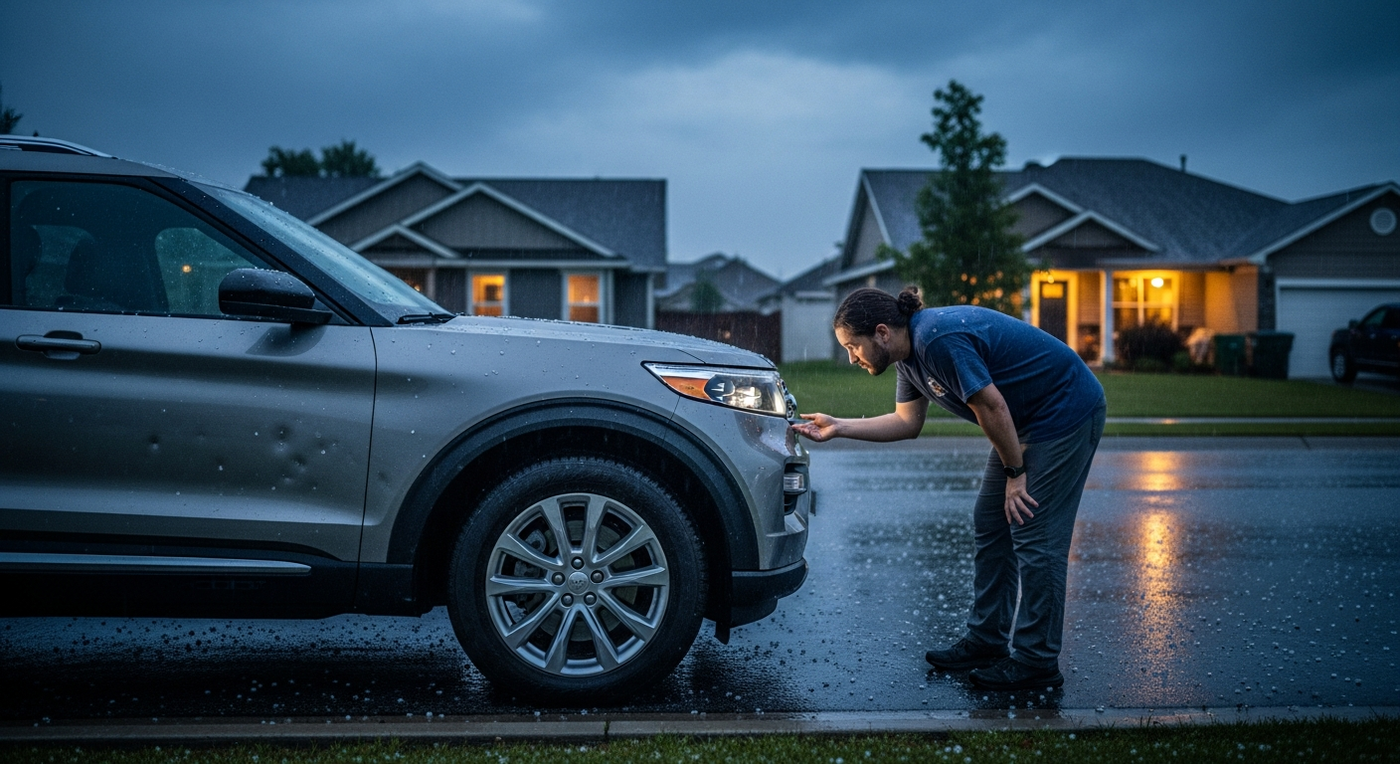
The Ten States Where Hail Hits Hardest (and What You'll Pay)

Here's how comprehensive insurance premiums typically stack up across the most hail-prone states, based on industry rate surveys and insurer filings.

Texas: $300-350/year. Urban claim concentration in DFW, Houston, and San Antonio drives costs. A single May 2024 hailstorm in the DFW area generated an estimated $2 billion in insured losses, according to Insurance Information Institute data.

Colorado: $240-280/year. The Front Range corridor from Colorado Springs to Fort Collins sees premium inflation from both hail frequency and high vehicle values. Denver's luxury SUV market amplifies per-claim costs.

Nebraska: $200-240/year. Omaha and Lincoln see consistent hail activity, but lower vehicle density keeps premiums below Texas levels. Rural areas often pay less than urban zones despite similar storm exposure.

Kansas: $150-200/year. Despite sitting in Hail Alley's core, lower population density and fewer high-value vehicles moderate premiums. Wichita rates run roughly half of Dallas equivalents.

Oklahoma: $210-250/year. Oklahoma City and Tulsa drive state averages upward. The state experiences hail on roughly 50-70 days per year according to Storm Prediction Center climatology data, but claim costs remain below Texas levels.

South Dakota: $180-220/year. Sioux Falls accounts for most claims. The state's small population means a single severe event can spike regional premiums the following year.

Wyoming: $170-210/year. Cheyenne sees regular hail, but the state's small population and older vehicle fleet keep premiums moderate. Many drivers carry higher deductibles to reduce costs.

<strong>Missouri:</strong> $220-260/year

Missouri: $220-260/year. Kansas City and St. Louis push state averages higher. The I-70 corridor sees concentrated hail activity during spring and early summer.

Iowa: $190-230/year. Des Moines and the eastern corridor have seen premiums climb roughly 15-20% annually over the past three years as insurers adjust to increasing claim frequency.

Minnesota: $200-240/year. The Twin Cities metro drives most claims. Interestingly, Minnesota sees fewer hail days than Kansas but pays higher premiums due to urban concentration and vehicle values.

$14B

Total hail payouts (2023)

33%

Texas share of claims

100%+

Premium variation across states

Tens

of thousands

Vehicles hit in single DFW storm

Why Iowa and Minnesota Are Seeing the Steepest Increases

If you're in Des Moines or Minneapolis, you've probably noticed your comprehensive premium climbing faster than your neighbors in Omaha or Wichita. That's not your imagination. Iowa and Minnesota represent what insurers call "emerging risk zones"—states where historical hail data suggested moderate risk, but recent claim patterns tell a different story.

Between 2020 and 2024, both states experienced a cluster of severe hail events that caught insurers off-guard. They'd priced policies based on decades of data showing hail as an occasional nuisance, not an annual expectation. When claims suddenly spiked, premiums had to catch up. Iowa premiums increased approximately 15-20% annually from 2022 through 2024, compared to roughly 5-8% in established high-risk states like Texas and Colorado, where rates were already elevated.

This creates an uncomfortable reality: drivers in newly hail-prone areas often see faster rate increases than those in traditional Hail Alley states, even when their total risk remains lower.

The Metro Effect: Why City Drivers Pay More for the Same Storm

Population density matters more than storm severity. A hailstorm dropping golf-ball-sized ice across rural Barton County, Kansas might generate a few hundred claims. That same storm crossing suburban Overland Park produces several thousand claims. Insurers price for the worst-case scenario, which in hail insurance means urban corridors.

This explains why comprehensive premiums in Omaha typically run $50-70 higher than in rural Nebraska counties with identical hail frequency. The storm doesn't change. The number of $35,000 SUVs per square mile does.

Colorado illustrates this perfectly. Fort Collins and Colorado Springs see similar hail patterns, but Colorado Springs premiums typically run roughly 10-15% lower because the city has fewer luxury vehicles and a slightly less dense population. Denver drivers pay the most—not because hail is worse, but because a May hailstorm there can hit tens of thousands of vehicles before the storm even leaves the metro area.

Option Tradeoffs

Pros

  • Lower annual costSave $75-100 yearly on premiums
  • Works in low-frequency areasMakes sense if claims happen every 5-7 years
  • Reduces minor claim temptationDiscourages filing for small damage amounts

Tradeoffs

  • Higher out-of-pocket riskPay extra $500 when damage occurs
  • Poor math in hail hotspotsTakes 7+ years to break even on savings
  • Hurts most when you need itLarger upfront cost during expensive repairs

High deductibles work best in moderate-risk states like Kansas or South Dakota. In Texas or Colorado metros where hail strikes every 2-3 years, stick with $500 deductibles despite higher premiums.

What Actually Drives Your Premium (Beyond Geography)

Your state matters, but your specific premium depends on factors that vary wildly even within the same city.

Your vehicle's value and age. A 2024 Tesla Model Y typically costs roughly $8,000-12,000 to repair after severe hail damage. A 2015 Honda Civic might run $3,000-4,000. Insurers price accordingly. If you're driving a high-value vehicle in a hail-prone metro, expect premiums in the top range for your state.

Your deductible. Raising your comprehensive deductible from $500 to $1,000 typically reduces premiums by approximately 15-25%. In high-risk states, many drivers carry $1,000 or even $2,000 deductibles specifically for hail coverage.

Your claims history. File a hail claim, and your premiums may increase approximately 10-20% at renewal, even though hail is technically a no-fault event. Insurers view claim frequency as a risk indicator regardless of cause.

Your credit score. In most states, insurers use credit-based insurance scores to set rates. Two identical drivers in identical vehicles on the same Dallas street can pay premiums that differ by $100 or more based on credit-based insurance scores.

Your garaging location. Some insurers price down to the zip code or even census tract. Parking in a covered garage versus a driveway can reduce premiums, though not all insurers offer this discount.

Verified Sources

  1. Insurance Information Institute

    Insurance Information Institute

    National hail claim payout totals and industry loss data

  2. Storm Prediction Center

    Storm Prediction Center

    Hail day frequency and climatology statistics by region

Back to Insurance & Costs