Comparison

What You'll Actually Pay for Hail Coverage in Every Hail-Belt State

Comprehensive insurance in Colorado costs roughly $230-280 annually for a typical sedan, while the same coverage in Kansas runs about $180-220 — differences that matter less than you'd think when a single storm can total your car.

What You'll Actually Pay for Hail Coverage in Every Hail-Belt State
Hail Protector Editorial / GeminiComparison

The Baseline: What Comprehensive Coverage Costs Where Hail Falls

In Texas, comprehensive coverage for a 2022 Honda Accord with a $500 deductible typically runs around $18-24 per month. That same vehicle in Oklahoma typically costs roughly $15-21 monthly. Colorado drivers typically pay approximately $19-28 monthly. Nebraska typically sits around $14-19. Kansas typically averages about $15-22.

These figures assume a clean driving record, no prior claims, and a vehicle valued between $25,000-30,000. The spread within each state reflects urban versus rural rating territories — Denver costs more than Fort Morgan, Dallas more than Amarillo. But here's what matters: the difference between the cheapest and most expensive hail-belt state is typically only $120-150 annually. One hail claim wipes out a decade of that difference.

Wyoming and Montana, despite their hail exposure, often show lower comprehensive rates — typically around $12-17 monthly — because of lower population density and fewer total claims. South Dakota typically falls in a similar range, around $13-18 monthly. These northern states see intense hail, but the sheer number of vehicles at risk is smaller, which affects insurer pricing models.
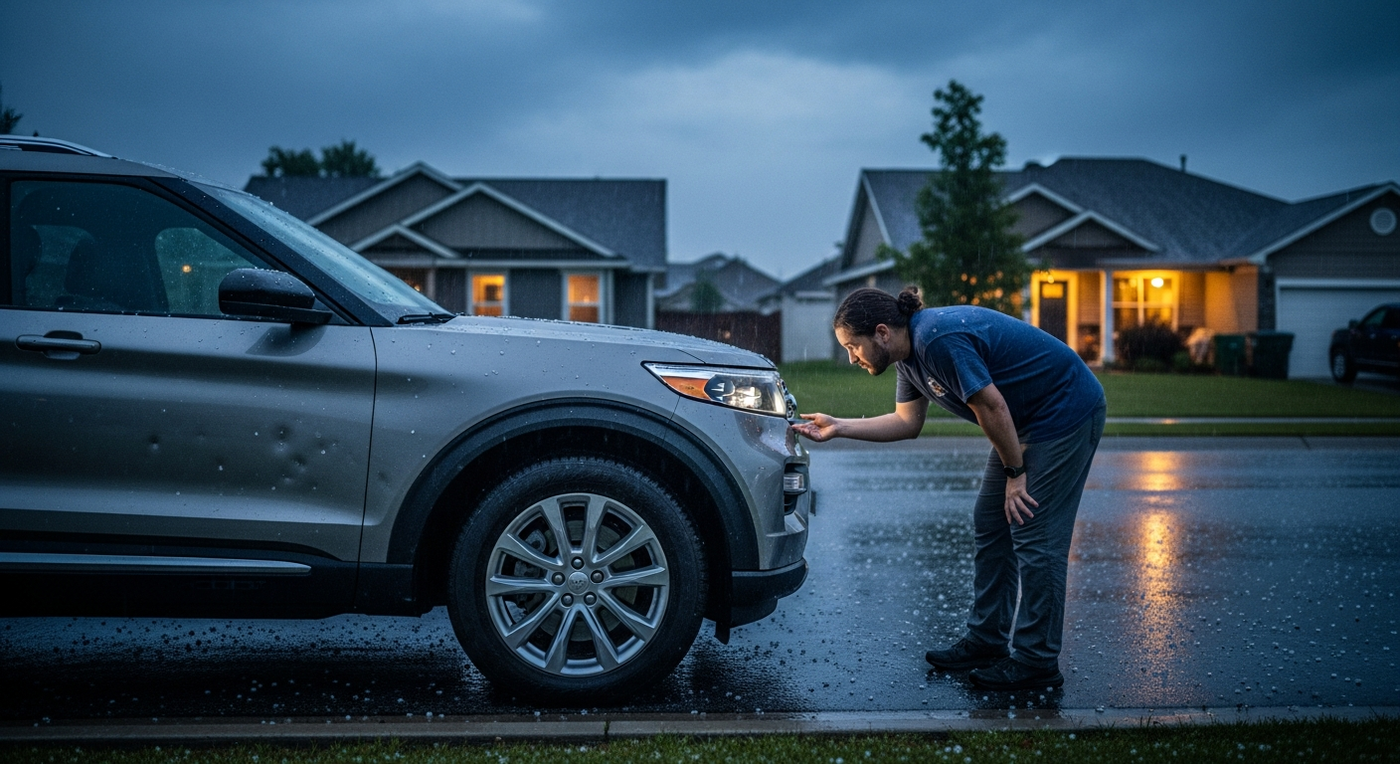
The Deductible Math That Actually Matters

Choosing a $1,000 deductible instead of $500 saves you money every month, but the annual savings vary wildly by state. In Texas, that deductible jump typically reduces your premium by around $5-8 monthly — approximately $60-96 annually. In Colorado, where hail claim frequency runs higher according to Insurance Information Institute data, the same deductible change typically saves approximately $8-12 monthly, or around $96-144 per year.

Here's the gamble: if hail damages your car and you have a $1,000 deductible, you're paying the first thousand dollars out of pocket. If you'd kept the $500 deductible and paid an extra $80 annually for it, you'd break even after about six years of premium payments. But hail doesn't wait six years. It happens Tuesday afternoon while you're at work.

Oklahoma presents an interesting case. The state's comprehensive rates typically sit in the middle of the pack — around $180-250 annually for typical coverage — but its claim frequency is among the highest. Insurers have adjusted pricing upward in specific ZIP codes around Oklahoma City and Tulsa, where some drivers now pay premiums closer to Colorado levels despite lower statewide averages.

Why Some States Cost More Than Others

Colorado's higher comprehensive rates reflect mathematical reality: more hail days, more expensive vehicles (the state's median vehicle value runs higher than Kansas or Nebraska), and more urban concentration along the Front Range where hail meets high vehicle density. When a supercell drops baseball-sized hail on the Denver Tech Center, thousands of vehicles get damaged simultaneously. Insurers price for that risk.

Texas shows extreme variation within its borders. The Panhandle — Amarillo, Lubbock, Childress — sees frequent severe hail, but comprehensive rates there often run lower than Dallas or Houston because vehicle values and repair costs are lower. A $4,000 hail repair in Dallas might cost around $2,800 in Amarillo for the same damage. Geography matters, but so does the local economy.

Most people assume hail frequency drives pricing, but repair costs matter just as much. According to National Severe Storms Laboratory research, hail damage costs have increased approximately 50% over the past decade even as hail frequency has remained relatively stable. Why? Vehicles have more complex body panels, more sensors embedded in bumpers and mirrors, more technology that breaks when ice falls from the sky. A 2015 sedan might need around $3,200 in hail repairs; a 2024 model with the same dent pattern could run approximately $5,800 because of camera recalibration and sensor replacement.

$60-144

Annual savings: higher deductible

$4,000-$8,000

Typical hail repair cost

50%

Damage cost increase (decade)

$12-28

/mo

Comprehensive premium range

The Full State-by-State Breakdown

Texas: Comprehensive coverage typically costs around $215-290 annually for a standard sedan with $500 deductible. Houston and Dallas rate higher than rural areas. The state's size creates massive pricing variation — El Paso rates differ substantially from Wichita Falls.

Oklahoma: Roughly $180-250 annually. Oklahoma City's "hail alley" reputation has pushed rates upward in metro areas, while rural counties remain cheaper despite equal or greater hail exposure.

Kansas: About $180-260 annually. Wichita rates higher than western Kansas towns, though the western part of the state actually sees more severe hail events according to storm data.

Colorado: Approximately $230-335 annually, the highest in the hail belt. Front Range ZIP codes pay premium prices. Mountain communities often pay less despite severe weather because of lower vehicle density.

Nebraska: Around $170-230 annually. Omaha and Lincoln rate higher than the Sandhills, where hail falls frequently but fewer vehicles exist to damage.

South Dakota: Roughly $155-215 annually. Sioux Falls costs more than rural counties, but the state's overall rates remain among the lowest in hail-prone regions.

Wyoming: About $145-210 annually. Low population density keeps rates down despite significant hail risk in eastern counties.

Montana: Approximately $140-200 annually, the lowest among major hail-belt states. Billings and Great Falls rate higher than eastern Montana, where hail is common but people are scarce.

The Full State-by-State Breakdown (Continued)

New Mexico: Roughly $160-230 annually. Albuquerque's rates reflect urban repair costs, while eastern plains counties pay less despite frequent severe weather.

North Dakota: Around $150-210 annually. Fargo rates higher than western counties, following the pattern of urban premium versus rural risk.

These ranges assume no prior claims, good credit (in states where credit affects rates), and a vehicle valued between $20,000-35,000. Your actual rate depends on your specific vehicle, exact location, claims history, and insurer. Some companies specialize in hail-belt states and price more aggressively; others avoid the risk and charge accordingly.

Option Tradeoffs

Pros

  • $500 deductibleLower out-of-pocket when damage occurs
  • Urban garage parkingReduces exposure, justifies higher deductible
  • Maintaining coverageOne claim recoups decades of premiums

Tradeoffs

  • $1,000 deductibleTakes 6+ years to break even on savings
  • Outdoor parkingFull storm exposure without protection
  • Dropping coverage16-32 years needed to self-fund one repair

Lower deductibles make financial sense in hail-belt states unless you have consistent covered parking. The premium difference is modest compared to repair costs.

What Happens When You Drop Coverage

Drivers who remove comprehensive coverage to save $15-25 monthly are making a specific bet: I won't experience hail damage during the period I'm uninsured. That bet pays off until it doesn't.

A typical hail claim in the central plains runs around $4,000-8,000 for repair. Severe damage that requires panel replacement rather than paintless dent removal can reach approximately $10,000-15,000. Total losses — where repair costs exceed vehicle value — happen more often than most people realize, especially with older vehicles where a $12,000 repair bill totals a car worth $14,000.

Here's the math that matters: if you pay $250 annually for comprehensive coverage and drop it to save money, you'd need 16-32 years without a hail claim to save enough to pay for one typical repair. Nobody gets 32 years of hail-free luck in Oklahoma.

Verified Sources

  1. NOAA Storm Prediction Center

    NOAA Storm Prediction Center

    Official convective outlook archive and risk categories.

Back to Insurance & Costs