Seasonal Guide Seasonal Briefing

March Storm Prep Checklist: What to Do Before Hail Season Starts If You Park Outside in the Great Plains

The difference between a protected vehicle and a totaled one often comes down to decisions made in March, not minutes before a storm cell arrives.

March Storm Prep Checklist: What to Do Before Hail Season Starts If You Park Outside in the Great Plains
Hail Protector Editorial / GeminiSeasonal Guide

Why March Is Your Last Calm Window

Storm Prediction Center data shows April through June accounts for roughly 70% of annual severe hail reports across Kansas, Oklahoma, and Nebraska. March sees scattered activity, but it's the month when preparation still feels optional rather than urgent. By mid-April, you're reacting instead of planning.

The preparation window closes faster than most people realize. Once severe weather becomes routine, the infrastructure you need—covered parking spots, quality hail blankets, reliable alert systems—often gets claimed by others or becomes unavailable during the hours you need it most.

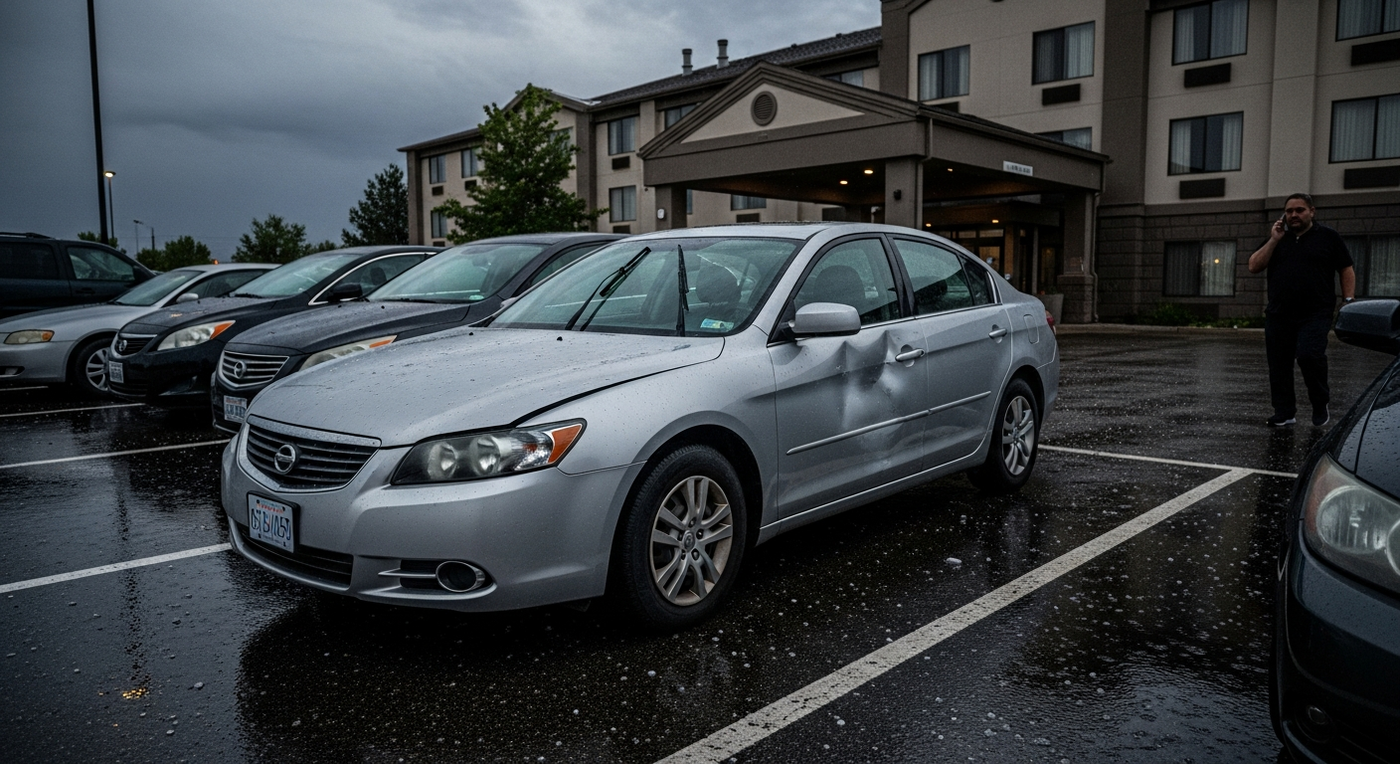
The Three-Part Foundation

Effective storm season preparation rests on three distinct pillars: knowing where your vehicle can go when warnings issue, ensuring you'll actually receive those warnings, and having physical protection ready to deploy. Each pillar requires different actions, and all three need to be in place before the first supercell of the season forms.

Identify Your Covered Parking Options Now

Walk through this exercise before you need the answer: it's 4:47 PM on a Wednesday, you're at work, and the National Weather Service issues a severe thunderstorm warning with golf ball-sized hail for your area in 23 minutes.

Most people discover during that moment they have no answer. March is when you create one.

Scout parking garages within a 10-minute drive of your workplace and home. Call them. Ask about hourly rates, whether they accept payment by app, and if they have height restrictions. Some garages near office districts offer storm-day rates during severe weather season—typically around $5-10 for temporary shelter—but you won't know unless you ask now.

Identify friends, family, or neighbors with garages. Have an explicit conversation: "Can I text you during storm warnings to use your garage if you're not home?" Assumptions about access create problems when hail is seven minutes out.

For rural areas without garage infrastructure, note the locations of car washes with covered bays, truck stops with canopies, and underpasses (though these create their own risks and should be last-resort options). The goal is a mental map of covered spaces in every direction from your regular locations.

Inspect or Acquire Physical Protection

If you already own a hail cover, pull it out of storage and check for tears, missing straps, or degraded elastic. UV exposure and time break down materials. A cover that worked fine two years ago may have deteriorated in your trunk.

If you're buying new protection, understand what you're purchasing. Inflatable covers create a cushioned dome over the vehicle—effective but requiring several minutes to deploy and an air pump. Blanket-style covers drape over the car and secure underneath—faster to deploy but less protection for horizontal hail. Foam padding systems offer the most protection but typically cost several hundred dollars and take the longest to install.

For most Great Plains residents parking outside, a multi-layer blanket-style cover represents the practical middle ground. Look for products with at least three layers of padding and secure anchor points. Quality options typically range from approximately $150-300 and will survive multiple seasons.

Here's what almost no one considers: practice deploying whatever protection you choose. Time yourself. Do it in your driveway on a calm Saturday morning. Most covers require 3-5 minutes for first-time deployment but under two minutes once you've done it several times. Those minutes matter when storms can move at speeds of 40 mph or more.

70

%

Hail reports April-June

23

min

Typical warning lead time

3-5

min

First-time cover deployment

The Forgotten Piece: Know Your Insurance Position

Call your insurance agent—actually call, don't just review your policy—and ask two specific questions: What's my comprehensive deductible, and does my policy include diminished value coverage?

Comprehensive deductibles for hail damage commonly range from approximately $250 to $1,000. If yours is $1,000 and you're looking at $1,200 in hail damage, you're paying nearly everything out of pocket anyway. That math changes your preparation calculus. A hail cover in the $300 range can become worthwhile insurance when your deductible is high.

Diminished value matters for newer vehicles. Even after repairs, a car with hail damage history sells for less. Some policies cover this loss; most don't. Knowing whether yours does affects how aggressively you protect the vehicle versus accepting damage and filing a claim.

Create Your Storm-Day Protocol

Decision Pivot

Download a weather alert app if you haven't already. Then—and this is the step most people skip—trigger a test alert to confirm it actually makes noise.

The Coordination Problem

If you share a vehicle with a partner or family member, both people need to know the protocol. The worst scenario is both of you assuming the other person moved the car, or both trying to execute different plans simultaneously.

Designate primary responsibility. Establish a communication system: "I'm handling the car" texts that require confirmation. Discuss scenarios where the primary person might be unavailable—in a meeting, on a flight, out of cell range—and who takes over.

For families with multiple vehicles and limited covered parking, prioritize now. Which car gets the garage? Which gets the cover? Which one accepts the risk? Making this decision during a storm warning creates resentment. Making it in March creates clarity.

What Most People Get Wrong

The biggest preparation mistake is optimizing for the perfect storm scenario—the widely forecast, slow-moving system with six hours of advance notice—rather than the messy reality of how severe weather actually arrives.

Many significant hail events develop quickly from storms that weren't forecasted to be severe. The warning time may be only 15 minutes, not two hours. You're not home; you're running errands. Your phone battery might be at 11%. The parking garage you planned to use is full because everyone else had the same idea.

Effective preparation accounts for chaos and failure. It includes backup plans and accepts that some storms will catch you unprepared despite your best efforts. The goal isn't perfect protection—it's raising your odds from 20% to 80%.

Decision Tradeoffs

Pros

  • Inflatable coversMaximum cushioning from dome structure
  • Blanket-style coversQuick setup under two minutes
  • Foam padding systemsBest impact resistance available

Tradeoffs

  • Inflatable coversRequires air pump and longer setup
  • Blanket-style coversLess effective against sideways hail
  • Foam padding systemsCosts hundreds, slowest installation

Multi-layer blankets balance speed, cost, and protection for most situations.

The March Advantage

Everything described above takes approximately 30-45 minutes of actual work: some phone calls, a parking garage reconnaissance mission, testing an app, practicing with a cover. The return on that time investment is the elimination of panic-mode decision making during dozens of storm events over the next four months.

Do it now, while storm preparation still feels theoretical.

Verified Sources

  1. Storm Prediction Center

    Storm Prediction Center

    severe weather climatology and hail report data

Back to Storm Prep