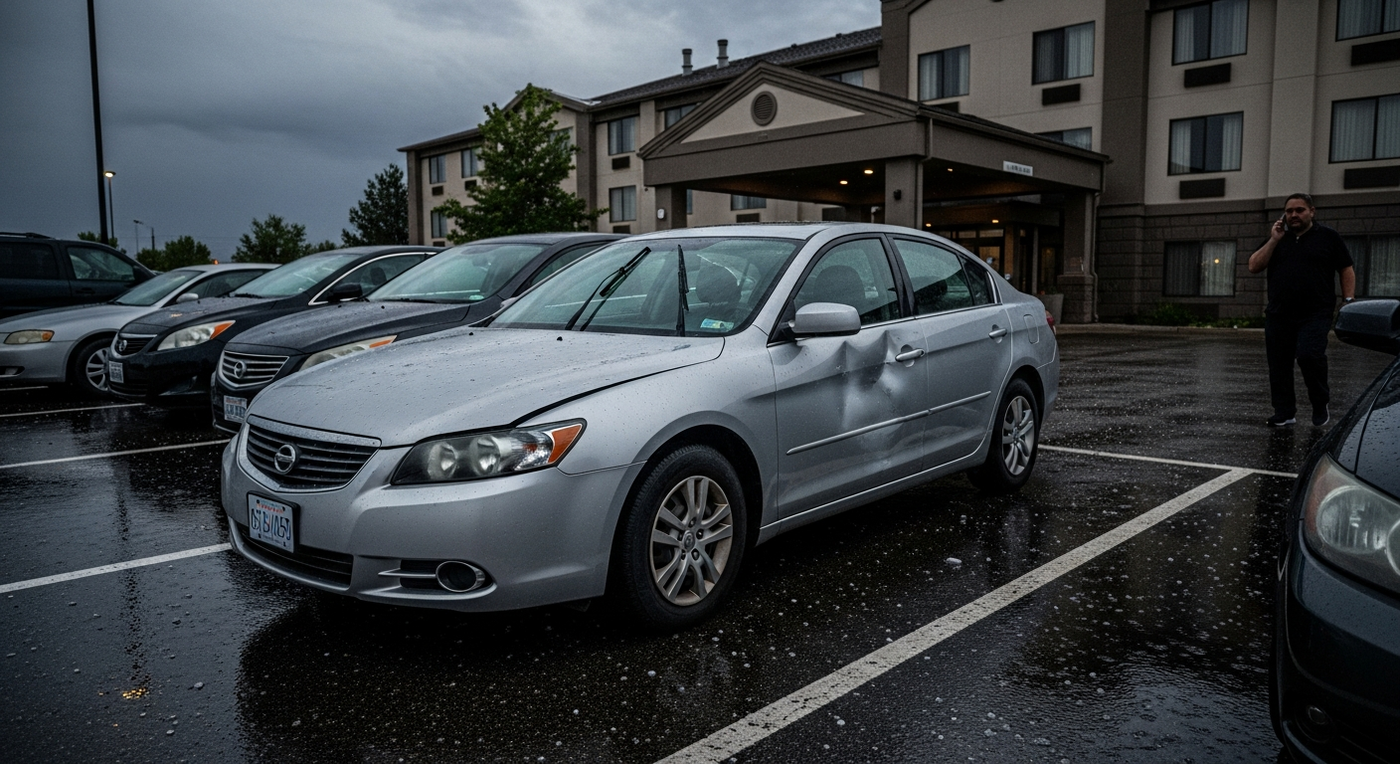
The Western Initiation Zone: Where Storms Begin
Weatherford, Azle, and the western Fort Worth suburbs occupy the position where Great Plains dryline storms first encounter the DFW metroplex. The dryline—the boundary between dry desert air from the west and humid Gulf air from the southeast—typically sets up 50-100 miles west of Fort Worth during spring afternoons. When these air masses collide, thunderstorms explode vertically with remarkable speed.
These western communities see hail events earlier in the day than eastern suburbs, often between 3 PM and 7 PM, because they're closest to where storms initiate. The hail tends to be smaller on average—roughly one to two inches in diameter—because updrafts haven't yet reached peak intensity. But frequency compensates for size. Weatherford experiences measurable hail roughly 3-5 times per year, compared to 1-2 times annually for far eastern suburbs like Rockwall or Terrell.
Parker County, which includes Weatherford, filed more than 12,000 hail damage claims following the March 2023 outbreak alone, according to the Texas Department of Insurance. Many of those properties filed again in 2024. The cumulative effect creates insurance market strain—some carriers have reduced their exposure in western DFW ZIP codes or increased deductibles specifically for wind and hail coverage.
Fort Worth's western neighborhoods—Benbrook, White Settlement, western portions of the city proper—occupy a transitional zone. They're far enough east that storms have begun organizing, but close enough to initiation that they catch nearly every system. The May 2024 events dropped hail across these communities on May 12, May 28, and June 4—three significant events in four weeks, all following similar southwest-to-northeast tracks.