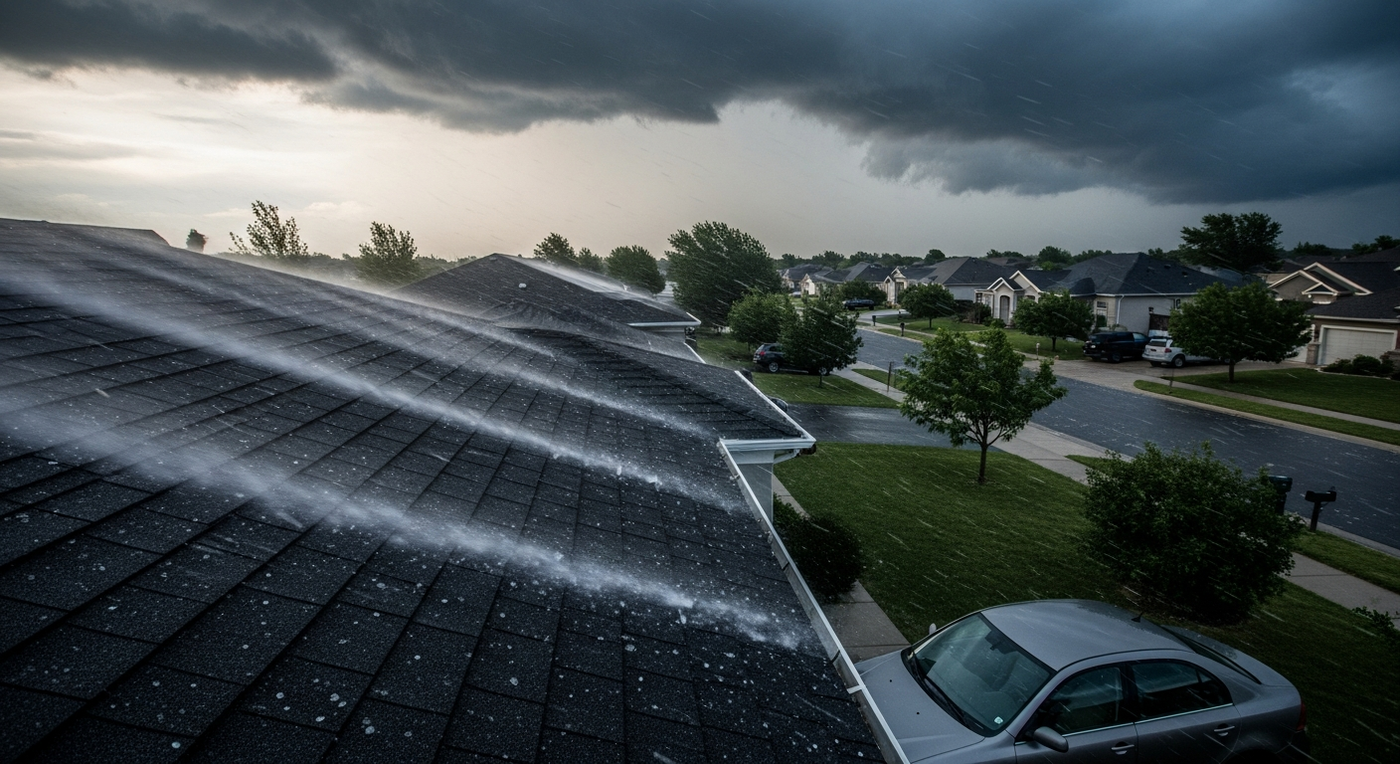
The atmospheric recipe reaches full strength
May occupies a unique position in North America's seasonal cycle. The polar jet stream maintains sufficient amplitude to generate strong upper-level divergence, but it's positioned far enough north that surface temperatures across the Plains support robust convection. Gulf of Mexico moisture return is fully established — dewpoints in the 60s and low 70s typically penetrate into Kansas, Nebraska, and South Dakota by mid-May. Daylight duration has increased enough to generate substantial Convective Available Potential Energy (CAPE), frequently exceeding 3,000 J/kg across the central Plains during peak heating.
Here's what most people misunderstand about hail formation: size isn't just about updraft strength. It's about residence time in the growth zone. May thunderstorms frequently develop in environments with approximately 50-70 knots of deep-layer shear, creating supercells with tilted updrafts that keep hailstones suspended in the optimal temperature range (-10°C to -30°C) for extended periods. The stones make multiple passes through liquid water zones, accreting successive ice layers. A May supercell over the central Plains can maintain this structure for several hours, cycling hailstones through the growth process repeatedly.
The jet stream position matters more than most forecasters acknowledge publicly. In May, the polar jet typically resides between approximately 40°N and 45°N latitude — far enough north to allow surface heating, but close enough to provide the upper-level support necessary for explosive storm development. By July, the jet retreats into Canada, and while moisture and instability increase, the upper-level forcing weakens. April features a more vigorous jet, but surface temperatures often limit CAPE development, and Gulf moisture hasn't fully established its northward reach.
According to National Severe Storms Laboratory research, the largest hailstones — those exceeding 2.75 inches in diameter — show an even stronger May concentration than the overall hail population. These vehicle-destroying stones require not just strong updrafts but persistent ones, and May's atmospheric profile supports that persistence better than any other month.