Regional Report Minnesota Hail Report

Minnesota's Hail Problem: How the Twin Cities Joined the Severe Weather Belt

The northern edge of America's hail zone is moving, and Minneapolis-St. Paul now sits squarely in its path.

Minnesota's Hail Problem: How the Twin Cities Joined the Severe Weather Belt
Hail Protector Editorial / GeminiRegional Report

$200M

2023 Minnesota hail claims

12

weeks

Concentrated severe hail window

Majority

of

Claims involve aging roofs

The Geography of Minnesota Hail

Not all of Minnesota faces equal risk. The state's hail climatology reveals a distinct southwest-to-northeast gradient, with the highest frequency corridor running from the Iowa border through Mankato, the Twin Cities, and into western Wisconsin. This isn't coincidence—it's topology meeting thermodynamics.

Southern Minnesota's relatively flat terrain offers no barriers to severe storm development. When warm, humid air surges northward from the Gulf of Mexico during summer months, it encounters the region's agricultural landscape with minimal disruption. The Red River Valley and southwestern counties see frequent severe weather, but those storms often lack the extreme updraft strength needed to produce the largest hailstones. The Twin Cities metro occupies a sweet spot—or perhaps a sour one—where Gulf moisture, adequate instability, and favorable upper-level wind patterns converge with just enough frequency to make damaging hail a recurring threat rather than a once-a-decade event.

The I-35 corridor from Albert Lea through Lakeville and into the northern metro has become particularly prone to intense hail events. Part of this reflects simple population density—more people means more reports—but storm surveys consistently show that the most destructive hailstorms track through this zone. The 2023 Carver County event followed a path that earlier storms had traced in 2020, 2018, and 2016, each time producing stones large enough to total vehicles and punch through roofing materials.

Here's what most people get wrong: they assume hail size correlates directly with storm duration. In Minnesota, the opposite often holds true. The most destructive hailstorms are frequently fast-movers, intense cells that race across the metro in thirty minutes or less. These storms produce hail efficiently because their updrafts can be exceptionally strong—sometimes exceeding 100 mph—that hailstones grow rapidly before falling out. A slow-moving thunderstorm might drop pea-sized hail for an hour; a fast supercell might pummel a neighborhood with golf-ball hail for eight minutes and move on. The latter causes exponentially more damage.

Lake Superior exerts a moderating influence on northeastern Minnesota, suppressing the most extreme instability, which partly explains why Duluth sees far fewer severe hail events than the Twin Cities despite sitting at a similar latitude. The Iron Range and North Shore remain largely outside the primary hail corridor, though not immune—a notable exception occurred in August 2016 when a complex of severe storms produced significant hail across St.

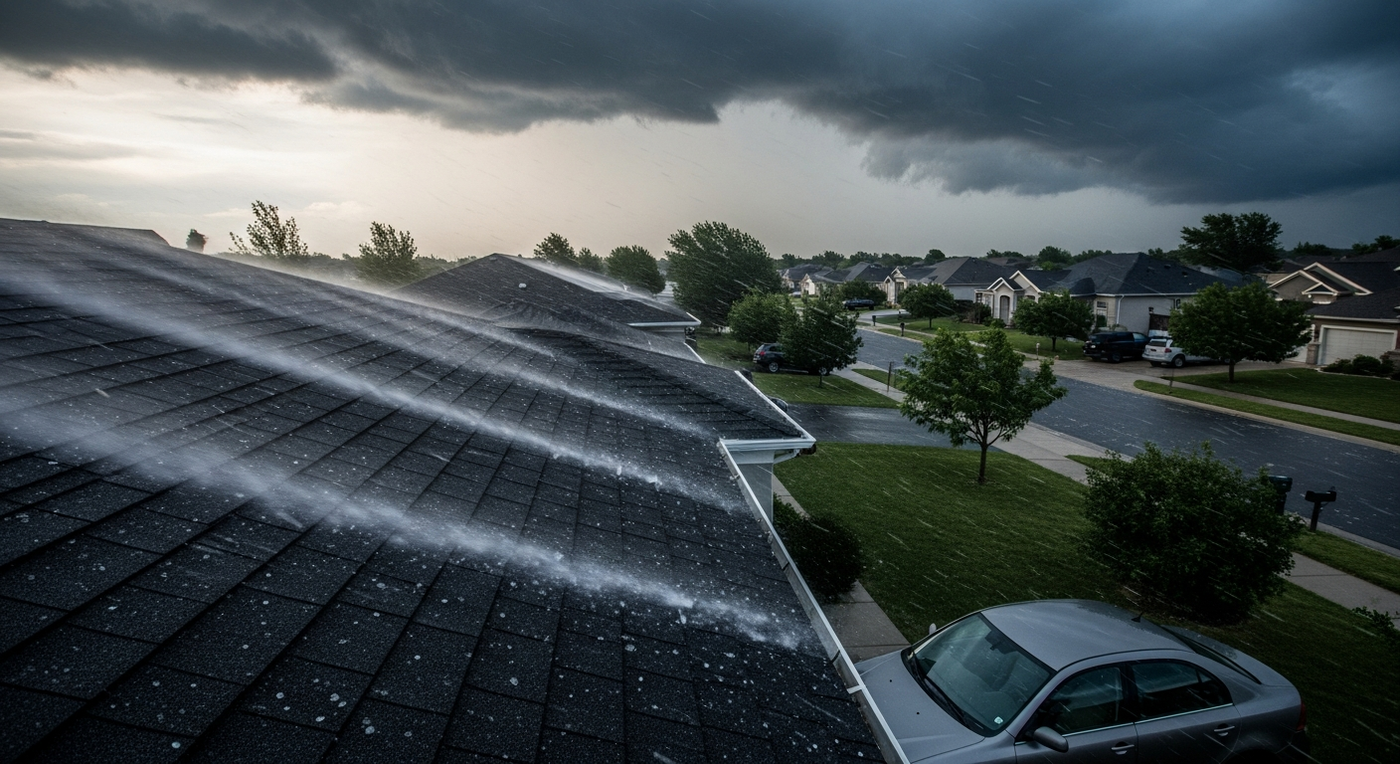
What This Means for Property Owners

Minnesota homeowners and business owners now face hail risk profiles similar to those in established severe weather markets, but without the same cultural awareness or preparedness infrastructure. In Oklahoma or Colorado, spring means clearing gutters, documenting roof age, and reviewing insurance coverage. In Minnesota, that mindset hasn't caught up to the meteorological reality.

The insurance industry has noticed. Premiums for property coverage in the Twin Cities metro have climbed over the past five years, with hail claims cited by insurers as a primary driver. Minnesota insurers paid out roughly $200 million in hail-related claims during 2023 alone, with the July event accounting for a substantial portion, according to Insurance Information Institute data. Some carriers have begun requiring roof inspections for older homes before issuing or renewing policies in high-risk ZIP codes.

Timing matters enormously. A hailstorm in late May might catch property owners before they've scheduled annual roof inspections or gutter maintenance. Debris-filled gutters can't drain properly during the torrential rain that accompanies severe thunderstorms, leading to water intrusion that compounds hail damage. Loose or aging shingles that might have survived another year become vulnerable when hail impacts arrive before routine maintenance.

The state's construction patterns create additional vulnerability. Many Twin Cities homes built during the 1970s through 1990s feature architectural shingles with twenty-to-thirty-year lifespans, meaning a significant portion of the metro's housing stock is approaching or past the point where roofing materials lose impact resistance. A roof that could have withstood golf-ball hail when new might fail under the same conditions fifteen years later. Industry data suggests that a majority of hail claims in the Twin Cities metro involve roofs older than twelve years, though age alone doesn't determine whether damage occurs—maintenance history and initial installation quality matter just as much.

Vehicle damage presents its own complications. Unlike wind or flood damage, hail impacts are often cosmetic rather than mechanical, creating a gray area for insurance claims. A car with a dimpled hood and cracked windshield remains drivable, but repair costs can run several thousand dollars. Some vehicle owners in Minnesota have begun parking in covered structures during peak hail months—June through August—as a preventive measure, a behavior common in Colorado but relatively new to the Upper Midwest.

Commercial property faces heightened exposure. The Twin Cities metro's extensive warehouse and distribution infrastructure, much of it featuring metal roofing, sits directly in the path of the primary hail corridor. Metal roofs resist penetration better than asphalt shingles, but they dent, and those dents can compromise protective coatings and accelerate corrosion. Agricultural operations in southern Minnesota face similar challenges, with hail capable of destroying entire crop fields in minutes during the narrow growing season window.

The state's lake-heavy geography offers no protection—another misconception. Some property owners assume proximity to water moderates severe weather, but Minnesota's lakes are too small to significantly alter storm dynamics. A supercell thunderstorm tracking across Hennepin County won't weaken because it crosses Lake Minnetonka; if anything, the additional moisture can enhance storm intensity.

One bright spot: Minnesota's building codes, updated periodically to reflect changing risk profiles, now incorporate impact-resistant roofing standards in some jurisdictions. New construction in the metro increasingly features Class 4 impact-rated shingles, which can withstand significantly larger hail impacts than standard materials. The upgrade typically adds roughly ten to fifteen percent to roofing costs, but can reduce insurance premiums and extends roof lifespan in hail-prone areas.

The question isn't whether Minnesota will continue experienc

The question isn't whether Minnesota will continue experiencing significant hail events—the atmospheric patterns driving the trend show no signs of reversing. The question is whether property owners, insurers, and policymakers will adapt to a risk that, until recently, seemed like someone else's problem. For the Twin Cities metro, hail season now demands the same attention that coastal regions give to hurricane season: preparation, documentation, and the understanding that June through August brings not just summer weather, but the potential for thousands of dollars in damage delivered in minutes.

Minnesota s growing

Verified Sources

  1. Storm Prediction Center

    Storm Prediction Center

    Severe weather report climatology and hail frequency data

Back to Hail Science