Explainer Deep Dive

The Hail Belt Is Moving East: What Three Decades of Storm Data Reveals About America's Changing Severe Weather Map

Thirty years of hail reports show the zone of maximum risk has shifted hundreds of miles eastward, placing millions of Americans in a threat zone they didn't occupy a generation ago.

The Hail Belt Is Moving East: What Three Decades of Storm Data Reveals About America's Changing Severe Weather Map
Hail Protector Editorial / GeminiExplainer

The Meteorological Mechanics Behind the Migration

The eastward creep isn't random. It reflects fundamental changes in where the atmosphere's ingredients for severe thunderstorms most frequently align during the critical March-through-June hail season.

Hailstorms require a specific recipe: strong updrafts to suspend growing hailstones, sufficient moisture, atmospheric instability, and wind shear—the change in wind speed and direction with height that organizes storms and keeps them alive. The magic happens where all these elements overlap. For most of the 20th century, that overlap zone most consistently materialized over the central and southern High Plains, where dry air aloft from the desert Southwest met Gulf moisture along a sharp boundary, while the jet stream provided the necessary shear.

Research published in climate and atmospheric science journals through the early 2020s points to shifts in the average springtime position of the jet stream and associated storm tracks, though the specific mechanisms driving these changes remain an area of active investigation. The jet stream—that river of fast-moving air in the upper atmosphere—has shown a tendency to set up farther east during peak severe weather season than it did in previous decades, according to NOAA climate data. When the jet shifts east, so does the zone where its wind shear combines optimally with surface-based instability and moisture.

There's also the moisture factor. The warm sector of storm systems—that wedge of warm, humid air ahead of a cold front where severe storms thrive—has been extending farther northeast more frequently. NOAA climate data indicates that dew points during springtime severe weather setups have been running higher farther north and east than historical averages would predict. Higher dew points mean more atmospheric fuel, and when that fuel sits beneath favorable upper-level dynamics in places like central Missouri or central Illinois, you get explosive thunderstorm development.

The result is that the "sweet spot" for severe hail production has been sliding off the High Plains and onto the prairies and into the Midwest. Cities that once sat on the periphery of maximum hail threat now find themselves closer to the bullseye.
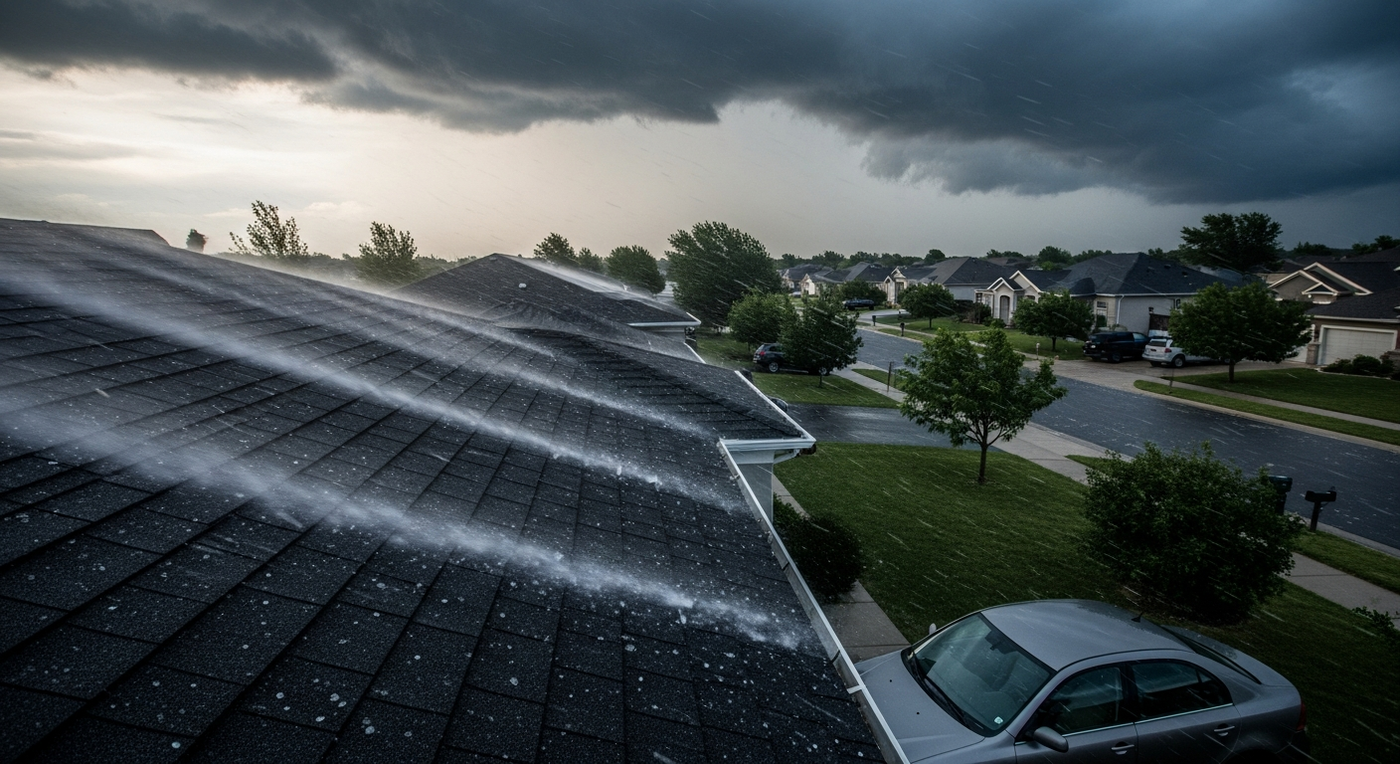
What This Means for Millions Who Thought They Were Outside Hail Alley

Kansas City offers a case study in shifting risk. Historically, the metro area saw significant hail events, but with less frequency than areas to its west and southwest. Analysis of hail reports from the past fifteen years shows Kansas City now experiences large hail with a frequency that appears more characteristic of what Wichita or Oklahoma City saw in the 1990s. The April 2024 hail event that devastated portions of the metro—with stones reportedly exceeding three inches in some locations—would have been a statistical outlier three decades ago. Now it fits a pattern.

St. Louis tells a similar story. The city has always been in a severe weather zone, but hail specifically was more of an occasional concern than a defining hazard. Recent years have changed that calculus. The metro area has seen multiple major hail events in the past decade, with storms producing widespread damage to vehicles, roofs, and crops across the region. Insurance claim data reflects this new reality, with hail-related losses in the St. Louis area climbing substantially when comparing the 2010s to the 1990s, according to Insurance Information Institute data.

Indianapolis and the broader Indiana corridor have perhaps seen the most dramatic relative change. Northern Indiana, in particular, was never considered prime hail territory. Yet the state has experienced several major hail outbreaks in recent years, including swaths of significant hail across the I-70 corridor and northward. The March 2023 outbreak that produced baseball-sized hail across portions of central Indiana would have been extraordinarily rare based on 20th-century climatology, though precise historical comparisons are complicated by changes in reporting methods. Based on 21st-century patterns, it was well within the realm of expected variability.

Here's what most people get wrong about hail risk: they assume it's static, that the maps showing hail frequency drawn from 20th-century data still accurately represent current threat levels. They don't. If you're making decisions about roof materials, vehicle storage, or insurance coverage based on where hail used to happen most often, you're working with outdated information. The geography of risk has fundamentally changed.

The insurance industry is beginning to catch up, but slowly. Premium structures for hail coverage in places like Missouri and Illinois have increased in recent years, but they may not yet fully reflect the shift in underlying risk. According to Insurance Information Institute data, hail claim frequencies in the Midwest have been rising faster than premium adjustments in many markets, suggesting that actuarial models are still incorporating older climatological assumptions. This lag creates a window where coverage may be more affordable than the actual risk warrants—a window that's likely to close as insurers update their models with more recent loss data.

200-300

miles

Eastward displacement of peak activity

2+

inches

Significant hail threshold diameter

1991-2020

period

Timeframe of documented shift

The Forecast for the Forecast

Climate projections suggest this eastward trend may continue, though the science here comes with appropriate uncertainty. Modeling future severe weather patterns is notoriously difficult because hail forms at scales smaller than global climate models can resolve. You can't directly simulate a hailstone in a climate model. Instead, researchers look at the larger-scale environmental conditions that favor severe thunderstorms and make inferences about how hail risk might change.

Those larger-scale projections generally indicate continued shifts in jet stream patterns and moisture availability that would support the eastward migration trend. Some research suggests the zone of maximum severe weather activity—including hail, tornadoes, and damaging winds—could continue drifting toward the Mississippi and Ohio River valleys. Other studies urge caution, noting that natural variability in atmospheric circulation patterns could reverse or stall the trend.

What's not in dispute is what has already happened. The observational record is clear: the past three decades have seen a measurable, sustained shift in where America's most intense hail activity concentrates. Whether that continues, accelerates, or reverses will depend on complex atmospheric dynamics that scientists are still working to fully understand.

For now, the practical takeaway is straightforward. If you live anywhere from eastern Kansas through Missouri, Illinois, Indiana, or even into Ohio and Kentucky, you're in a hail zone that's more active than it was when your parents or grandparents lived there. The storms haven't just gotten more frequent in these areas—they've gotten more intense, producing larger hail more often. The old maps don't apply anymore.

The hail belt has moved. It's time risk assessments, building codes, and insurance models caught up with where it's actually located now.

Back to Hail Science