Explainer Deep Dive

The Hail Season That Never Ended: Why August Storms Hit Harder Than You Think

While spring supercells dominate headlines, late-summer mesoscale convective systems quietly produce some of the most widespread hail damage of the year — and most drivers have already packed away their car covers.

The Hail Season That Never Ended: Why August Storms Hit Harder Than You Think
Hail Protector Editorial / GeminiExplainer

The Northern Plains Never Got the Memo About Summer Ending

The conventional wisdom places hail season squarely in spring — April through June, when warm Gulf moisture collides with lingering cold air aloft. That's accurate for Texas, Oklahoma, and Kansas. But the northern hail belt operates on a different calendar entirely.

According to Storm Prediction Center climatology data, South Dakota's peak hail month is June, but July and August combine to produce a substantial portion of the state's annual significant hail reports. North Dakota follows a similar pattern. Nebraska sees its hail frequency drop after June, though late-season storms may be less frequent without necessarily being weaker.

The meteorology explains why. Late summer maintains the essential ingredient for severe thunderstorms: instability. Surface temperatures across the northern Plains routinely reach the upper 80s and low 90s in August, with dewpoints typically in the upper 60s providing ample moisture. What changes is the upper-level pattern. The jet stream retreats northward, so individual supercells become less common. But mesoscale convective systems — those sprawling complexes of thunderstorms — thrive in this environment.

MCS events are the workhorses of late-season hail. They form in the evening as daytime heating destabilizes the atmosphere, then propagate eastward overnight as organized lines or clusters. Unlike the discrete supercells that produce tornado warnings and wall-to-wall media coverage, MCS complexes look less dramatic on radar. They appear as broad areas of moderate reflectivity rather than the tight hooks and bounded weak echo regions that get meteorologists excited. This visual difference matters because it shapes public perception of risk.

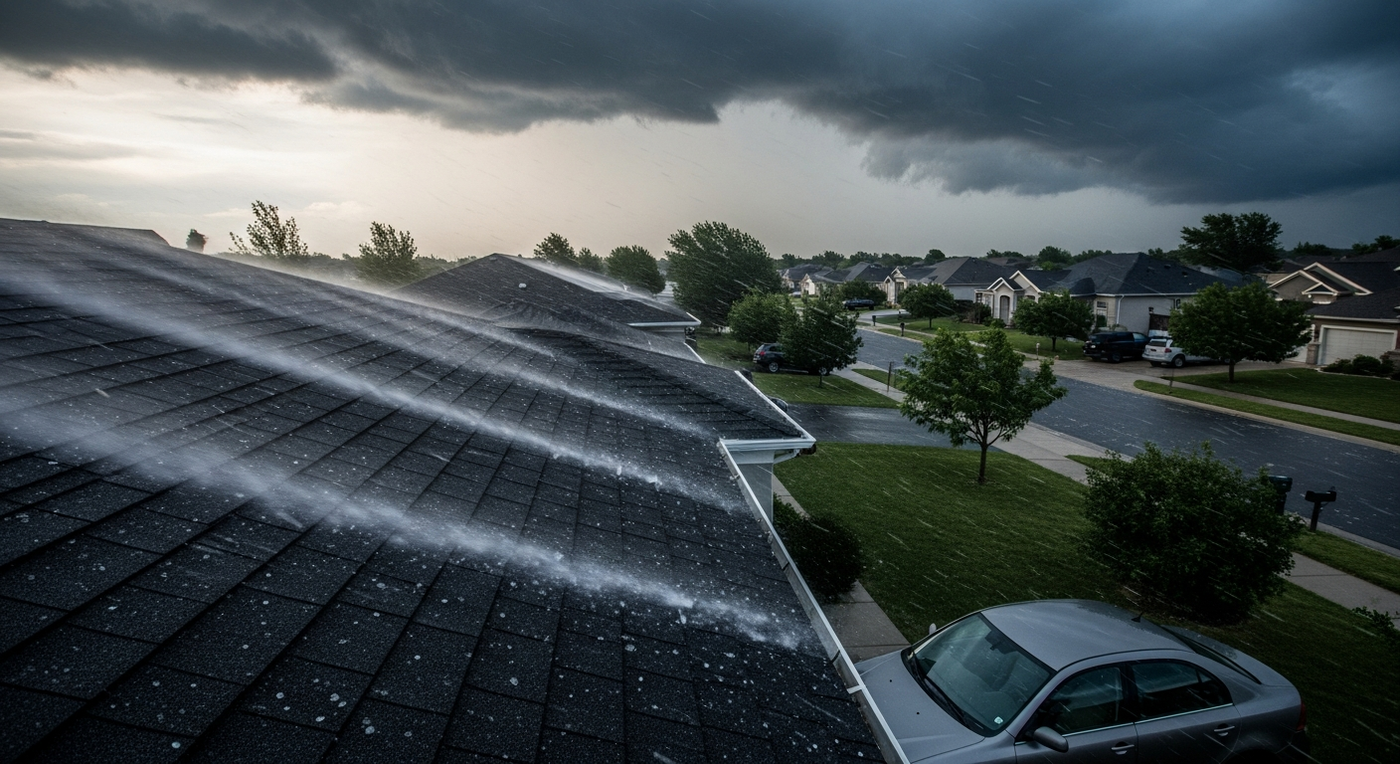
A supercell in May generates warnings, alerts, and social media posts. An MCS in August generates a severe thunderstorm warning that most people sleep through. But both can drop golf ball-sized hail on parked cars.

Minnesota illustrates this disconnect perfectly. The state's hail season extends well into August, with mesoscale systems frequently tracking across the southern and western counties. Yet by early August, most Minnesota drivers have mentally filed hail under "spring problem, now solved." The car covers come off. The garage space gets reclaimed for summer equipment. And then a nocturnal MCS rolls through at 2 AM, and suddenly everyone remembers that weather doesn't follow the school calendar.
Substantial

%

South Dakota hail: July-August

200

mi

August 2020 damage swath

The Complacency Window

Here's what most people get wrong about hail risk: they treat it like tornado risk, assuming it peaks in spring and disappears by Independence Day. But hail follows atmospheric instability, and instability doesn't vanish in summer — it just relocates and reorganizes.

The psychological shift happens gradually. In May, drivers in Sioux Falls or Fargo check radar obsessively before leaving cars outside. They deploy covers, park in garages, and plan errands around storm timing. By June, the vigilance continues but with slightly less intensity. July brings the first lapses — a cover left in the trunk, a radar check skipped because the morning looked clear.

August is when complacency fully sets in. The mental model says summer storms are just rain and lightning, not hail. The spring severe weather season has "ended" in the collective consciousness, even though the atmospheric conditions that produce hail remain firmly in place across the northern Plains and upper Midwest.

This complacency window creates the perfect conditions for widespread vehicle damage. Not because August storms are necessarily more severe than June storms, but because far fewer people take precautions. A hail event that would have resulted in thousands of protected vehicles in May instead catches those same vehicles exposed in parking lots and driveways in August.

Insurance claim patterns reflect this reality. Late-season hail events often generate higher total claim volumes than comparable spring events in the same geographic area, simply because the exposure rate is higher. More vehicles are parked outside. Fewer people seek shelter when warnings are issued. The protective behaviors that limit damage in spring have been abandoned by late summer.

The timing also creates a secondary problem: repair backlogs. Body shops and paintless dent repair specialists that worked through the spring hail season often reduce staffing in late summer, expecting demand to decline. When a significant August MCS produces widespread damage, the repair queue can stretch for months. A driver who gets hail damage in early August might face repair delays extending weeks or even months beyond the storm itself.

Mesoscale Systems and the Geography of Surprise

The structural differences between spring supercells and late-summer MCS events matter for more than just radar aesthetics — they fundamentally change where and how hail falls.

Supercells are precision instruments. They're discrete storms with well-defined updrafts and specific hail trajectories. If you're five miles south of a supercell's track, you might get nothing. This creates a patchwork damage pattern: one neighborhood gets hammered while the next subdivision over sees only rain.

MCS complexes work differently. They're sprawling, often covering areas the size of entire states. The hail doesn't fall from a single rotating updraft but from multiple embedded cells within the larger system. This creates a broader, more diffuse damage pattern. Instead of intense damage in a narrow corridor, you get moderate damage across a wide region.

For drivers, this distinction is crucial. You can't dodge an MCS the way you might avoid a discrete supercell. If the complex is moving through your area, you're in the threat zone. The hail might not be as large as what a supercell produces, but the geographic extent means far more vehicles are at risk.

The northern Plains and upper Midwest see this pattern repeatedly in August. A large MCS forms over eastern Montana or western South Dakota in the evening, then tracks eastward overnight, producing scattered hail reports across hundreds of miles. No single location gets catastrophic damage, but the cumulative impact across the region can exceed that of a more dramatic spring supercell outbreak.

Mesoscale convective systems account for a substantial portion of total hail reports in the northern Plains during July and August, even as the overall frequency of hail days decreases compared to spring months, according to NOAA's Severe Weather Data Inventory. The systems are less frequent but individually more expansive.

This geographic spread also complicates the warning process. A supercell generates a discrete severe thunderstorm warning for a specific county or portion of a county. An MCS might prompt warnings for a dozen counties simultaneously, creating alert fatigue. When your phone buzzes with a severe thunderstorm warning at midnight for the third time in a week, the natural human response is to silence the alert and go back to sleep. That's exactly when hail is most likely to damage your vehicle.

The overnight timing of MCS events compounds every other risk factor. Drivers can't move their cars to shelter because they're asleep. They can't deploy covers because they don't know the storm is coming. And even if they wake up to the sound of hail hitting the roof, it's often too late — by the time you're awake and dressed, the hail core has passed.

What Actually Works in Late Summer

The solution isn't complicated, but it requires abandoning the mental model that treats hail as a spring-only problem.

For drivers in the northern Plains and upper Midwest, August demands the same vigilance as May. Check radar before bed, not just before leaving the house. If overnight storms are forecast and you have garage space, use it. If you don't have a garage, keep a car cover accessible and be willing to deploy it at 11 PM when the evening forecast shows convective development.

The specific threat pattern shifts in late summer, which means the protective strategy should shift too. Spring hail often arrives in the afternoon or early evening, giving you time to react during waking hours. August hail frequently arrives overnight or in the early morning hours. This timing difference makes proactive measures — parking in a garage before bed, deploying a cover in the evening — more effective than reactive measures.

Weather alert settings matter more in August than May. A severe thunderstorm warning at 3 PM in May will wake nobody, because nobody is sleeping. A severe thunderstorm warning at 3 AM in August will only wake people who have configured their phones to override silent mode for weather alerts. That configuration difference determines whether you have any chance to protect your vehicle during an overnight MCS.

The broader lesson is about risk perception and calendar thinking. Hail season in the northern Plains doesn't end on June 30. It gradually tapers through August and into early September, with the character of the threat changing but not disappearing. Treating August as "safe" because it's not May is a category error that can cost drivers substantial repair expenses.

One final detail worth noting: late-season hail often occurs during harvest season across agricultural areas of the Dakotas, Nebraska, and Minnesota. This means more farm equipment is parked in fields, more grain trucks are on the road, and more commercial vehicles are exposed. The vehicle damage from August MCS events isn't limited to personal cars — it extends to the commercial fleet that keeps rural economies functioning. A single widespread hail event in late summer can damage combines, grain carts, and semi trucks across multiple counties, creating repair backlogs that extend well into autumn.

The northern Plains hail season is long, and its final chapter arrives when most people have stopped reading.

Verified Sources

  1. NOAA Storm Prediction Center

    NOAA Storm Prediction Center

    hail climatology and seasonal patterns

  2. ncei.noaa.gov

    ncei.noaa.gov

    Referenced in article via ncei.noaa.gov.

Back to Hail Science