Explainer Deep Dive

The Hail Swath: Why Damage Corridors Are Narrow and How Understanding Them Changes Your Parking Strategy

A supercell's hail damage typically follows a narrow path just a few miles wide and tens of miles long — meaning strategic parking decisions can meaningfully reduce your exposure.

The Hail Swath: Why Damage Corridors Are Narrow and How Understanding Them Changes Your Parking Strategy
Hail Protector Editorial / GeminiExplainer

Why Hail Falls in Corridors, Not Circles

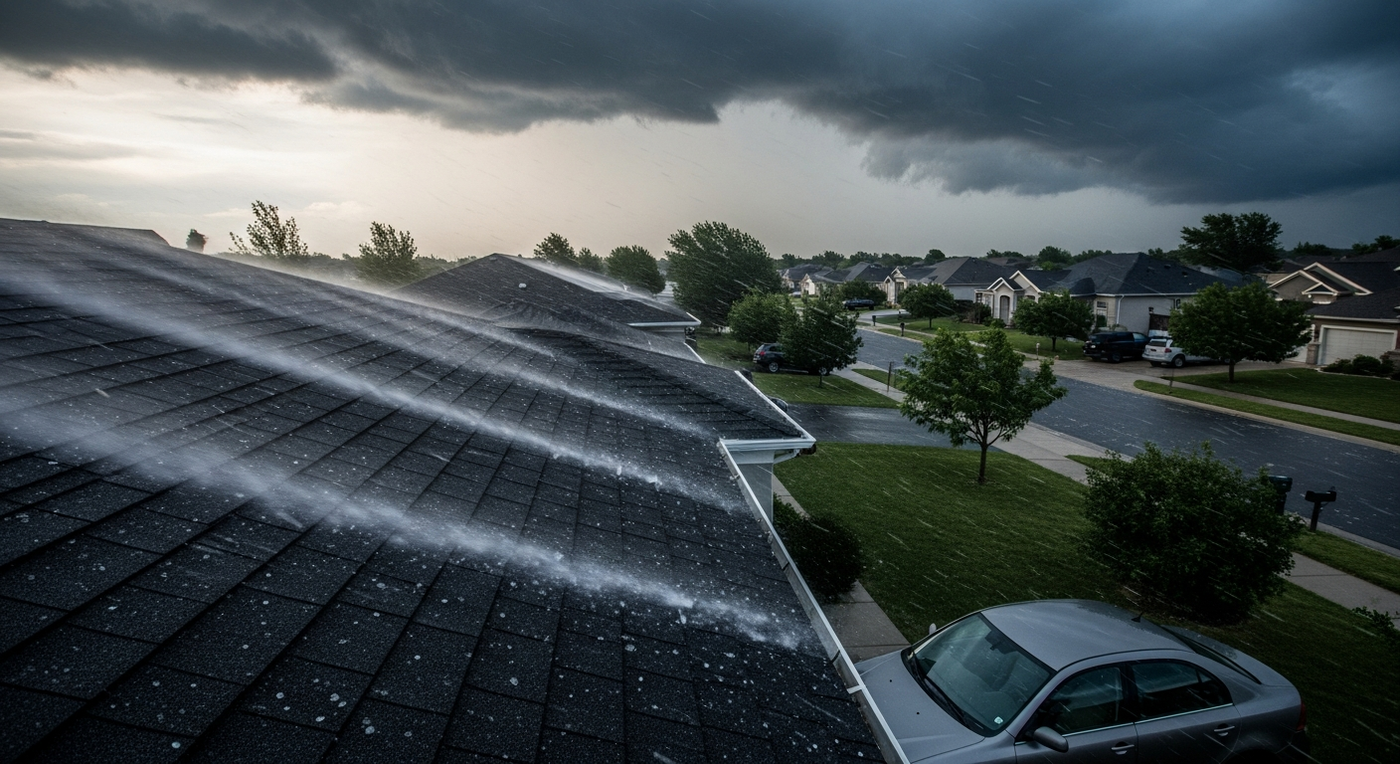
The narrow swath exists because hail doesn't fall from the entire storm — it falls from a specific part of the supercell's rotating updraft. The mesocyclone, that spinning column of rising air at the storm's core, typically measures roughly two to six miles in diameter. Hailstones grow as they cycle through this updraft, carried upward by winds that can exceed 100 mph according to National Severe Storms Laboratory research, then falling back down only to be lofted again. When they finally become too heavy for the updraft to support, they fall in a concentrated area directly beneath or slightly downwind of the updraft core.

The storm's forward motion then smears this falling hail across the landscape. A supercell moving at roughly forty miles per hour produces a narrower swath than one crawling along at approximately fifteen mph, simply because the fast-moving storm spreads the same volume of hail over a longer, thinner path. According to National Severe Storms Laboratory research, the swath width correlates strongly with both the mesocyclone diameter and the storm's speed of movement — faster storms, narrower damage.

The swath also has internal structure. The most intense damage typically occurs along the right-front quadrant of the supercell's path (relative to its direction of travel), where the strongest updraft exists and the largest hailstones form. The left edge of the swath often receives smaller hail or escapes damage entirely. This asymmetry matters because it means the difference between total-loss damage and minor dings can literally be a matter of which side of the street you chose.

What most people get wrong is assuming that being "in the path" of a severe thunderstorm warning means equal risk everywhere within the warned area. A typical severe thunderstorm warning polygon covers hundreds of square miles. The actual hail swath might affect roughly fifteen square miles of that total. Your odds of damage depend entirely on whether you're in those specific fifteen square miles, not the broader warned area.

How Swath Geometry Changes Parking Decisions

If you know storms are approaching from the southwest — the most common direction in the central United States during spring and summer — parking on the north or northeast side of a substantial building provides meaningful protection. Not because the building shields you from hail (it won't, unless you're directly against the wall), but because you're positioning yourself away from the likely damage corridor.

Consider a shopping mall with parking on all four sides. Storms approaching from the southwest will likely track northeast. If the hail swath passes over the mall, the southwest and south parking areas face maximum exposure — they're directly in the path. The northeast lot might escape entirely if the swath is narrow enough, or receive only the weaker left edge of the damage zone. This isn't speculation; it's geometry. The storm moves in a line, the damage follows that line, and your position relative to that line determines your exposure.

The same logic applies to parking garages. A partially covered garage with open sides still offers directional protection. Parking on the side away from the approaching storm reduces your chances of being in the core swath. Even a carport with a roof but no walls provides value if you position your vehicle on the protected side, though the benefit diminishes quickly with fast-moving storms that can drive hail at sharp angles.

Timing matters as much as position. If you have fifteen minutes before a warned supercell arrives, driving three miles perpendicular to the storm's forecast track might move you completely out of the potential swath. Driving three miles parallel to the track — say, fleeing ahead of the storm — keeps you in the same risk zone, just delaying when you encounter it. Storm motion vectors, available in most weather apps, show you which direction to move to exit the path rather than just postponing the encounter.

The catch is that swath prediction isn't precise. Meteorologists can forecast that a supercell will affect a general area, but pinpointing the exact three-mile-wide corridor where hail will fall remains beyond current capabilities. Storms wobble, intensify, weaken, and occasionally produce multiple swaths as they cycle through periods of strengthening and collapse. A storm tracking northeast might suddenly jog east for ten minutes, shifting the damage path by several miles. You're playing probabilities, not certainties.

But probabilities matter. If you park randomly, you have whatever chance the overall warned area presents — maybe a few percent, maybe twenty percent or more depending on swath width and warning polygon size. If you deliberately position yourself away from the most likely damage corridor, you reduce that probability. Not to zero, but meaningfully lower. Over a lifetime of severe weather seasons, those incremental decisions accumulate.

1–5

miles

Typical swath width

10–50

miles

Typical swath length

$2.3

billion

Denver 2017 insured losses

The Speed Factor Nobody Talks About

Storm speed doesn't just affect swath width — it affects whether you have time to react at all. A supercell racing along at roughly fifty mph covers a mile every seventy-two seconds. From the moment you see the warning to the moment hail arrives, you might have only a few minutes. That's enough time to move your car from an exposed parking lot to under a gas station canopy, but not enough to drive across town to a parking garage.

Slow-moving storms, paradoxically, create both more time to prepare and wider damage swaths. A supercell crawling northeast at approximately fifteen mph might take thirty minutes to cross a city, giving you ample warning to relocate your vehicle. But that same slow movement spreads the hail over a broader area. According to Storm Prediction Center analysis, slow-moving supercells in weakly sheared environments can produce swaths exceeding eight miles wide as the hail-producing region remains nearly stationary while stones fall for an extended period.

The worst-case scenario combines slow movement with rapid intensification. The storm sits over an area long enough to drop multiple waves of hail, with later waves often producing larger stones as the updraft strengthens. Slow-moving supercells can exemplify this pattern — moving at roughly twelve mph while intensifying, dropping large hail over the same neighborhoods for extended periods. The swath width can approach six miles or more, and damage severity may increase with each successive wave.

Fast-moving storms offer less reaction time but more defined edges. If you're outside the swath initially, you're likely to stay outside it. If you're inside, the damage happens quickly and moves on. The psychological difference matters: with a fast storm, your decision window is narrow but your outcome becomes clear within minutes. With a slow storm, you might spend considerable time wondering whether to move your car, watching the radar, trying to guess whether the swath will expand to include your location.

Reading the Landscape After the Storm

The day after a major hail event, the swath becomes visible from space. Satellite imagery shows a distinct corridor of damaged vegetation — crops flattened, tree canopies stripped, grass beaten down — that traces the storm's exact path. The edges are sharp. On one side of a road, trees are defoliated. On the other side, untouched. This isn't metaphorical; the boundary can literally run down the centerline of a street.

Insurance adjusters learn to recognize these patterns because they determine claim validity. A homeowner reporting hail damage in an area clearly outside the documented swath faces additional scrutiny. The swath doesn't lie — if your neighborhood shows no damaged roofs, no stripped trees, no dented cars except yours, something doesn't add up. Conversely, being inside the swath doesn't guarantee damage; a car parked in a garage escapes while neighbors' vehicles in driveways get destroyed. But the swath defines the zone of possibility.

The narrow geometry also explains why hail damage reports can seem contradictory. Social media fills with photos of smashed windshields and dented hoods while other residents in the "same storm" report light rain and distant thunder. They're not lying or exaggerating — they're just on opposite sides of a three-mile-wide corridor. The storm was enormous, but the hail was local.

This creates problems for weather warnings. A severe thunderstorm warning must cover the entire potential path, which means warning far more people than will actually experience hail. The false alarm ratio — warnings issued where no severe weather occurs — runs high not because forecasters are wrong about the storm, but because the damage occupies such a small fraction of the warned area. You can't warn just the three-mile-wide swath because you don't know precisely where that swath will form until the hail is already falling.

The practical implication: treat warnings as defining a zone of possibility, not certainty. Within that zone, your specific actions — where you park, whether you move your car, which side of a building you choose — influence your outcome. The storm's path is largely predetermined by atmospheric dynamics beyond anyone's control, but your position within or outside that path remains negotiable up until the moment hail starts falling.

Understanding swath geometry won't eliminate hail damage, but it transforms the decision from pure chance to calculated risk. Three miles matters. Which side of the building matters. Direction of approach matters. The storm will do what it does, following the physics of rotating updrafts and wind shear and instability. Your car, though, doesn't have to be directly underneath when it happens.

Verified Sources

  1. Storm Prediction Center

    Storm Prediction Center

    Storm motion analysis and forecasting techniques

Back to Hail Science