The Premium Savings Illusion
Insurance companies price deductibles based on national claim patterns, not regional hail exposure. The premium difference between a $500 and $1,000 comprehensive deductible reflects average claim frequency across all policyholders—including millions of drivers in hail-free zones. If you live in Seattle, where severe hail is nearly nonexistent, the higher deductible is free money. If you live in Wichita, you're being offered a discount that doesn't account for your actual risk.
This creates an adverse selection problem in reverse. The insurance company isn't losing money—they've priced the deductible options correctly for their entire book of business. But individual policyholders in high-hail regions are making decisions based on premium savings that don't reflect their local claim probability. The discount is real, but it's subsidized by drivers in low-risk areas who also choose high deductibles.
The behavioral economics make it worse. Premium payments are visible and frequent—you see the charge every month or every six months. Deductibles are invisible until you need them. Humans consistently overweight certain, immediate costs (monthly premiums) and underweight uncertain, future costs (out-of-pocket deductibles). We'll pay $100 more per year to avoid a $500 expense that might happen in three years, but we won't pay $100 more per year to avoid a $500 expense that will definitely happen in three years. The framing changes the decision, even though the math doesn't.
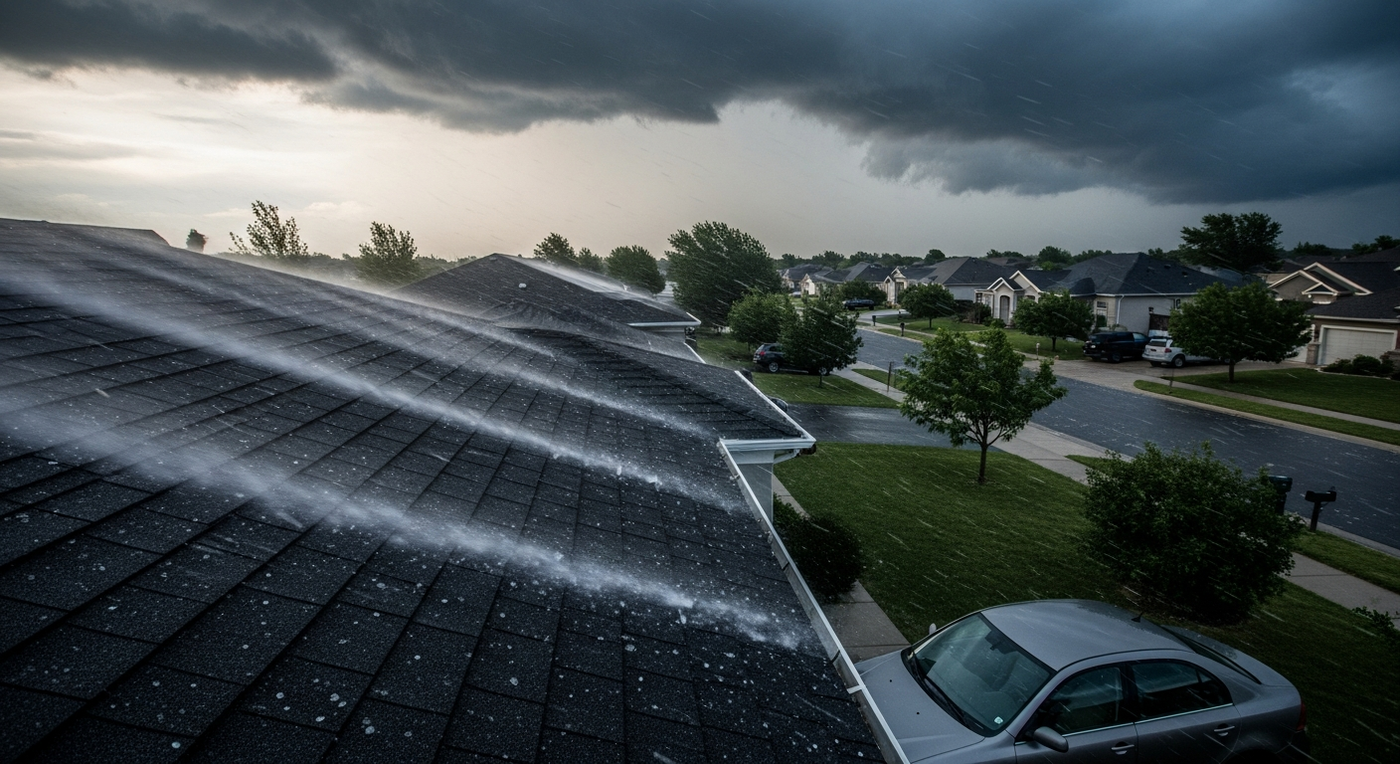
Some drivers compound the error by raising deductibles on older vehicles. The logic seems sound: a twelve-year-old sedan with 140,000 miles isn't worth much, so why pay for expensive coverage? But hail damage doesn't depreciate with your vehicle. A storm that causes approximately $4,000 in damage to a new truck causes roughly the same dollar amount of damage to an old sedan—the repair costs are nearly identical. If your vehicle is worth approximately $6,000 and hail damage totals around $4,500, you're filing a claim regardless of the deductible. The $1,000 deductible just means you net $500 less from the settlement.
The only scenario where higher comprehensive deductibles make financial sense in hail country is if you have guaranteed indoor parking. A vehicle garaged 24/7 faces negligible hail risk—the exposure drops to near zero. But "I usually park in the garage" doesn't count. You're at the grocery store during the storm, or visiting family, or at the airport for a week. The vehicle spends enough time outdoors that the risk remains material.
According to Storm Prediction Center climatology data, the central United States experiences approximately 5,000 to 6,000 hail reports annually, with significant clustering in the southern and central Plains during spring and early summer. Those reports represent individual storm cells, each affecting multiple square miles. If you park outdoors in this region for a decade, the question isn't whether you'll experience hail damage—it's when, and how many times.
The correct deductible strategy for hail-belt drivers is counterintuitive: choose the lowest comprehensive deductible your insurance company offers, even if it's $100 or $250. Yes, your premiums increase. But you're buying insurance against a high-frequency risk with expensive consequences. The premium difference is small relative to the out-of-pocket exposure, and the expected value math works in your favor. You're paying slightly more to avoid paying substantially more later.
That's not the advice you'll get from online insurance calculators, which optimize for premium savings without adjusting for regional weather patterns. It's not the advice you'll get from well-meaning friends in low-hail states, where raising deductibles genuinely saves money. But it's the advice that holds up when you're standing in a parking lot full of shattered windshields, watching adjusters photograph dimpled hoods, calculating how much this storm just cost you.