Why Nocturnal Storms Cover More Ground
Mesoscale convective systems—the organized complexes of thunderstorms that typically develop after sunset—behave fundamentally differently than the isolated supercells that form on sunny afternoons. According to Storm Prediction Center research on organized convective systems, MCSs often span 100+ miles in width and persist for 6-12 hours as they move across multiple states.
An afternoon supercell might be 15 miles wide. It produces a damage path, certainly—sometimes a devastating one—but it's geographically limited. A supercell crossing Oklahoma City affects the vehicles in its specific track. A nocturnal MCS crossing Oklahoma City affects vehicles across the entire metro area and three adjacent counties.
The overnight system drops hail across a continuous area rather than a narrow corridor. Major carriers report that a single large MCS event typically generates 3-5 times more vehicle claims than an afternoon supercell of comparable maximum hail size, simply because the affected area is so much larger. When hail falls across 2,000 square miles instead of 200, the mathematics of exposure change completely.
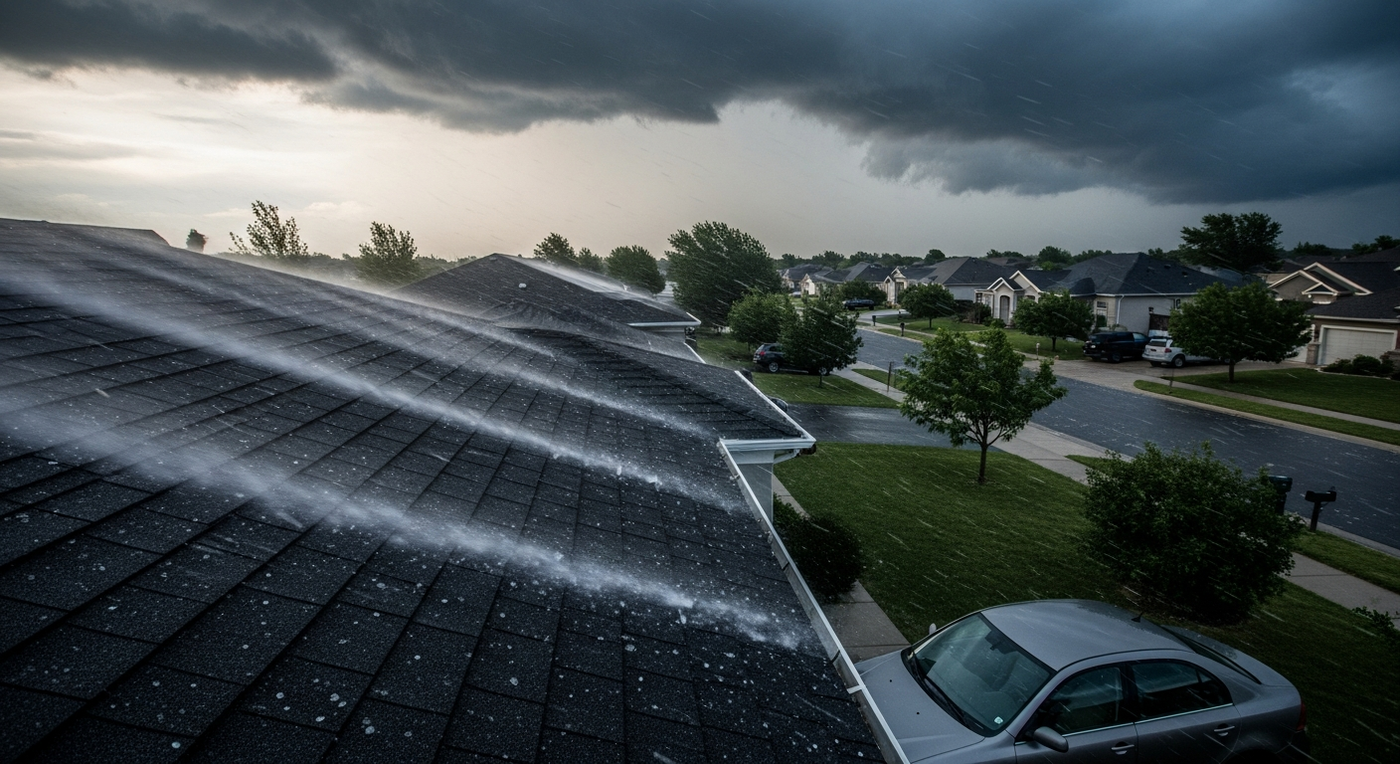
Here's what makes this particularly brutal for vehicle owners: MCSs often produce what meteorologists call "swaths" of hail—long, continuous areas where stones fall for 30-90 minutes as the system crawls eastward at 30-40 mph. Your car isn't hit by one five-minute burst. It's pelted for an hour straight while you sleep.
The hail size in these systems frequently sits in the "large" category—quarters to ping pong balls—rather than reaching the giant softball sizes that make news. But sustained bombardment by quarter-sized hail produces comprehensive damage: every body panel dimpled, every window at risk. The repair bill looks identical to giant hail damage, but it happened while you were unconscious.