Explainer Deep Dive

The Tennis Ball Test: Why Your Hail Cover's Foam Might Be Protecting Half as Well as You Think

Closed-cell foam loses impact absorption capacity through cumulative compression and UV exposure — after four to five seasons, protection may be significantly degraded even when the cover looks fine.

The Tennis Ball Test: Why Your Hail Cover's Foam Might Be Protecting Half as Well as You Think
Hail Protector Editorial / GeminiExplainer

The Uneven Fade

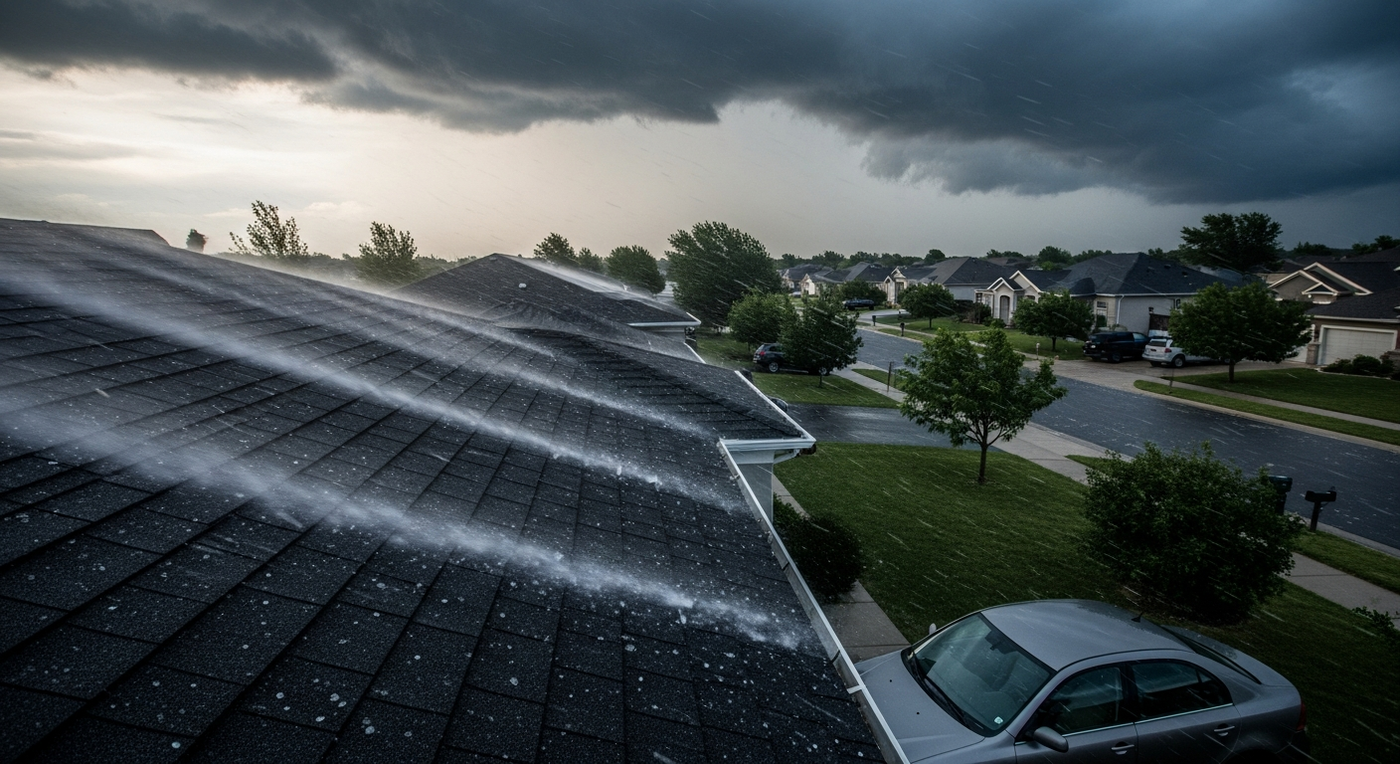
Not every square inch of a hail cover ages at the same rate. The center sections over the roof and hood take the majority of impacts during a hailstorm, experiencing more compression cycles than the edges that drape over the sides. These high-impact zones also tend to face directly upward during storage, maximizing UV exposure. Meanwhile, the portions that hang down along the doors and quarter panels often remain in shadow and experience fewer direct hits.

Testing samples from different areas of well-used covers reveals this pattern clearly. Materials science research on polymer foams suggests the center roof section of a four-year-old cover might show compression set — the permanent deformation that remains after load removal — of roughly 25-30%, while edge sections from the same cover typically show only 10-15%. The cover still looks uniform, but its protective capacity has become a patchwork.

The color fade that many owners notice isn't just cosmetic. The same UV radiation that bleaches the fabric is simultaneously degrading the foam underneath. Covers that have shifted from navy blue to pale gray have typically experienced significant UV exposure, and the foam beneath that faded fabric has likely suffered corresponding molecular damage. The visible color change serves as a rough proxy for invisible structural decline.

Storage method matters more than most people realize. A cover stuffed loosely in a mesh bag in the garage will degrade faster than one rolled tightly in an opaque storage sack kept in a dark closet. The difference isn't trivial — accelerated aging studies on similar foam materials suggest UV exposure equivalent to one summer of indirect garage sunlight can reduce impact resistance by an estimated 5-8%, comparable to a full season of actual use.

10-15

%

Annual capacity loss

50

%

Protection after 4 seasons

25-30

%

Compression set in roof zones

5-8

%

UV damage per summer

Most manufacturers avoid publishing specific replacement timelines because degradation depends heavily on usage patterns
The Four-Season Threshold

A Simple Field Test

Here's the counterintuitive part: you can get a reasonable estimate of your cover's remaining protective capacity with a tennis ball, a tape measure, and five minutes. The test works because impact absorption and rebound resilience are directly related — foam that has lost its ability to absorb energy will bounce objects back more readily than fresh foam.

Drop a tennis ball from exactly five feet onto your hail cover laid flat on concrete. Mark where it bounces back to and measure the height. Repeat the test on a new section of the same foam type if you have access to one, or use manufacturer specifications for rebound height (typically around 18-24 inches for quality closed-cell foam in similar applications). If your old cover is bouncing the ball back to 30 inches or higher, it's returning more energy than it's absorbing — a clear sign that the cellular structure has stiffened and collapsed.

The test isn't laboratory-precise, but it reveals functional degradation. Fresh foam compresses deeply and rebounds slowly, eating up the ball's kinetic energy. Degraded foam compresses less, rebounds faster, and acts more like a trampoline than a cushion. That trampoline effect is exactly what you don't want when hailstones are hitting at terminal velocity.

For a more subjective but still useful assessment, compare compression resistance by hand. Press firmly into the thickest part of your old cover, then into a new cover at the same location. The new foam should require noticeably more force to compress and should spring back immediately when released. Old foam compresses easily and may show a temporary depression. If you can compress your cover's foam to half its thickness with moderate hand pressure, it's likely lost substantial protective capacity.

The Four-Season Threshold

Most manufacturers avoid publishing specific replacement timelines because degradation depends heavily on usage patterns and storage conditions. A cover used twice in mild hailstorms and stored in climate-controlled darkness will outlast one used five times in severe storms and left in a hot garage. But materials science provides a framework.

Closed-cell foams used in protective applications typically retain approximately 85-90% of their original impact absorption capacity after one year of normal use, roughly 70-80% after two years, and an estimated 60-70% after three years. By the fourth or fifth year, even well-maintained covers often fall to around 50% of their original protective capacity.

The calculus changes if you've actually used the cover during severe hailstorms. A single event with golf-ball-sized hail creates more compression cycles than several seasons of storage and minor storms. Covers that have protected vehicles during major hail events — the kind that leave visible dents in cars without protection — have essentially done their job and absorbed damage themselves. The foam in these covers has experienced extreme compression that accelerates cell collapse.

Here's what most people get wrong: they assume that because the cover prevented dents, it's still fully functional. In reality, the cover prevented dents by sacrificing some of its cellular structure. It's like a crumple zone in a car — it worked exactly as designed, but it can't work the same way twice. A cover that's saved your vehicle from several thousand dollars in hail damage has likely lost an estimated 20-30% of its protective capacity in that single event.

The Replacement Math

A quality hail cover typically costs roughly $300-600 depending on vehicle size and foam thickness. Spread across four years, that's approximately $75-150 annually. A typical hail damage repair runs several thousand dollars, with paintless dent removal for moderate damage often starting around $2,000-3,000 and conventional body work for severe damage potentially reaching $5,000-8,000 or more.

The risk calculation is straightforward: continuing to use a significantly degraded cover means accepting substantially higher odds of damage during the next hailstorm. If your cover has lost half its protective capacity, it might still handle pea-sized hail fine but fail against quarter-sized stones that a fresh cover would have stopped. You won't know which scenario you're facing until the storm hits.

Replacement makes particular sense if you live in high-frequency hail zones. According to Storm Prediction Center climatology data, portions of Colorado, Wyoming, and the Texas Panhandle average 7-9 days per year with hail reports. In these areas, a cover isn't emergency equipment — it's a regularly used tool that wears out like any other.

Some owners extend cover life by rotating usage patterns. If you have garage space for one vehicle but two cars, alternating which car gets the cover during each hail season distributes wear across more years. Others keep an old cover as a backup for the second vehicle, understanding it provides reduced but non-zero protection. These strategies work, but they require acknowledging that the old cover isn't equivalent to a new one.

The foam itself is rarely recyclable through municipal programs because it's a mixed-material product with fabric bonded to foam. Some manufacturers have begun take-back programs, though these remain uncommon. Most covers end up in landfills, which makes the replacement decision feel wasteful. But a degraded cover that fails during a hailstorm creates its own waste — the damaged vehicle panels, paint materials, and energy involved in repair work.

What Comes Next

Foam technology continues to evolve. Some newer covers use multi-density foam with a harder outer layer and softer inner layer, designed to distribute impact forces more effectively and resist UV degradation better than single-density designs. Others incorporate UV-blocking additives directly into the foam polymer, slowing photodegradation. These improvements help, but they don't eliminate the fundamental physics — repeated compression and UV exposure will eventually degrade any foam structure.

The most practical approach is treating hail covers as consumable protective equipment with a finite service life, not permanent accessories. Mark your purchase date on the storage bag. Track how many times you've actually deployed the cover during hailstorms. Inspect it annually for compression set, color fade, and rebound characteristics. And when the tennis ball test or your thumb tells you the foam isn't responding like it used to, start budgeting for replacement before the next hail season arrives.

The cover that saved your vehicle three years ago has already earned its cost many times over. Asking it to perform indefinitely is optimistic thinking that works right up until it doesn't.

Verified Sources

  1. NOAA Storm Prediction Center

    NOAA Storm Prediction Center

    hail frequency climatology data

Back to Hail Science