Explainer Deep Dive

The Trunk Test: Why Your Hail Cover Is Quietly Degrading Between Storms

Summer heat and UV exposure destroy foam's protective properties faster than actual hailstorms — and most owners store their covers in the worst possible place.

The Trunk Test: Why Your Hail Cover Is Quietly Degrading Between Storms
Hail Protector Editorial / GeminiExplainer

160-180

°F

Black trunk summer temperature

15-25%

%

Annual foam capacity loss

60-70%

%

Protection after trunk storage

95%

%

Protection with proper storage

The Temperature Gradient Nobody Thinks About

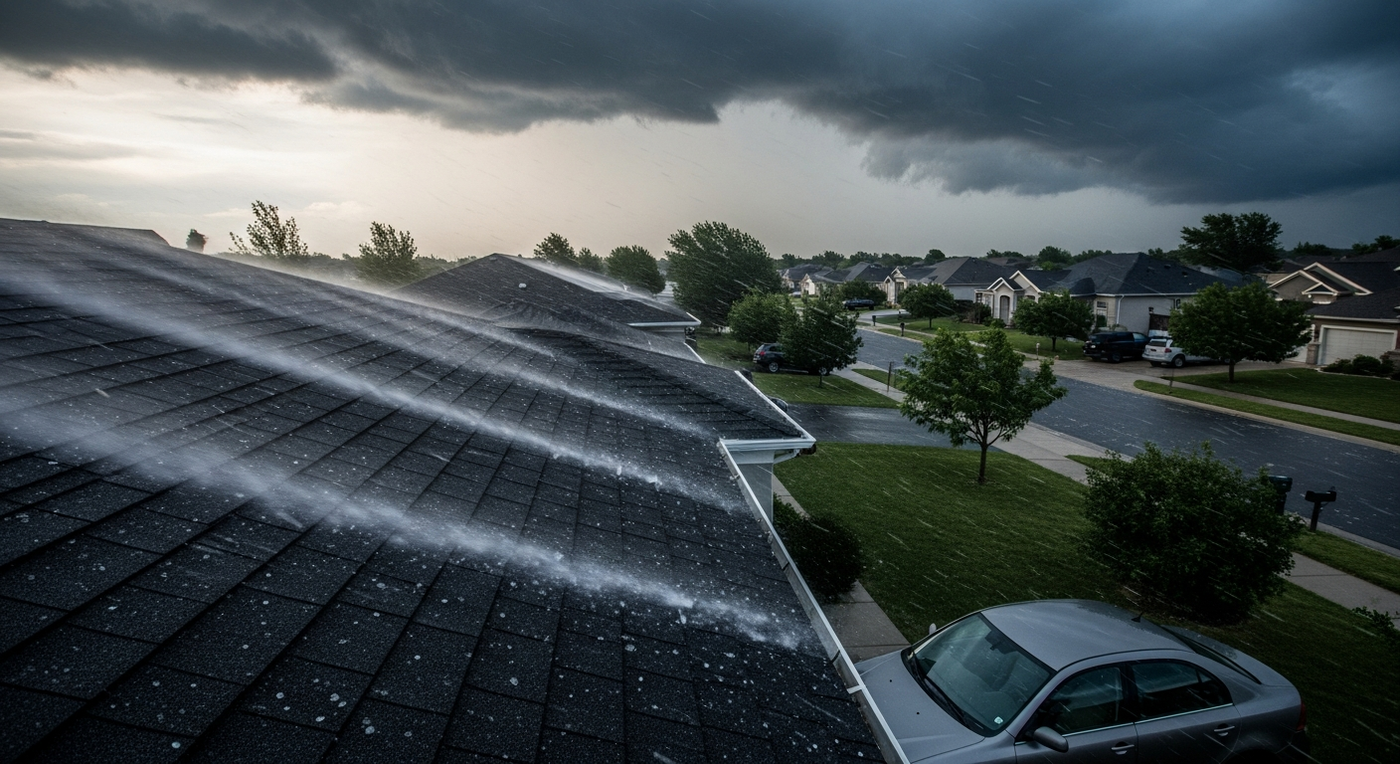
Here's what most people get wrong: they assume the problem is summer hailstorms, when the real damage happens between storms. A hail cover performs fine in 95°F ambient air during a storm because the event typically only lasts 10-20 minutes. But that same cover sitting in a closed trunk for three months straight, baking at temperatures that can reach 150°F or higher on hot afternoons? That's where the degradation accumulates.

The temperature inside a parked car trunk isn't linear with outside air temperature. National Weather Service data shows that interior vehicle temperatures can rise 40-50 degrees above ambient within an hour, and dark-colored trunks absorb even more heat. According to National Weather Service data, a 90°F day can create trunk temperatures around 140°F, while a 100°F day can push it to 150°F or higher. And unlike the passenger cabin, which might get ventilated when you open doors, the trunk stays sealed and heat-soaked.

This matters more in some regions than others. A cover stored in Minnesota typically experiences around 60-70 days above 85°F per year, while that same cover in central Texas may see 120+ days above 95°F, with trunk temperatures routinely exceeding the foam's thermal stability threshold. The cumulative exposure is what kills protection, not any single hot day.

Climate-controlled storage doesn't mean air conditioning — it just means avoiding temperature extremes. A basement typically stays around 60-70°F year-round. An attached garage might swing from 50°F to 85°F, which is generally acceptable for foam preservation. Even an outdoor shed with ventilation and shade is better than a trunk, because it doesn't create the sealed, heat-concentrating environment that accelerates polymer breakdown.
What Degradation Actually Looks Like

You can test this yourself. Take a piece of foam from a new hail cover and compress it between your fingers. It springs back immediately. Now try the same test with foam from a cover that's spent two summers in a hot trunk. The compression feels mushier, and the rebound is slower. That's permanent structural change at the molecular level.

The foam cells themselves are tiny air pockets surrounded by polymer walls. Heat causes those walls to thin and weaken. UV radiation — even the small amount that penetrates through fabric — breaks chemical bonds in the polymer chains. Over time, the foam loses cell structure integrity. It still looks like foam, but it's not performing like foam. When a hailstone hits, the weakened cells collapse more easily and recover more slowly, which means more impact energy transfers through to your car's paint and body panels.

Some manufacturers use UV stabilizers and heat-resistant additives in their foam formulations, but these only slow degradation — they don't prevent it. Hail damage claims have been rising partly because storms are producing larger hailstones, but also because protective equipment isn't being maintained properly. A degraded cover might stop 1.5-inch hail but fail against 2-inch hail that it could have handled when new.

The fabric outer layer degrades too, but differently. UV breaks down nylon and polyester fibers, making them brittle. You'll see this as fading or a chalky texture on the surface. But fabric degradation is cosmetic compared to foam degradation. The fabric's job is water resistance and abrasion protection — the foam does the actual impact absorption. A cover with faded fabric but intact foam is still functional. A cover with perfect fabric but degraded foam is just an expensive tarp.

Storage Location as Maintenance

Treating storage location as part of cover maintenance sounds obvious once you think about it, but most owners don't. They spend roughly $400-800 on a quality hail cover, use it twice, then throw it in the trunk and forget about it until the next storm warning. That's like buying a fire extinguisher and storing it next to the stove.

The best storage location is wherever you keep things you want to preserve: basement, closet, garage shelf. If trunk storage is unavoidable — maybe you live in an apartment or don't have garage space — at least move the cover inside during summer months when trunk temperatures peak. Three months of indoor storage during July-September can extend a cover's effective lifespan by a year or more.

Some owners use storage bags with reflective liners, which helps slightly by reducing heat absorption. But the bigger issue is ambient temperature, not direct sun on the cover itself. A reflective bag in a trunk that reaches 150°F is still exposing foam to destructive heat. The bag might keep the cover approximately 10-15 degrees cooler, which is better than nothing, but it's not a substitute for genuinely cool storage.

One approach: keep the cover in your trunk during active hail season (which typically runs April-June in most of the U.S.), then move it inside for summer and winter. This balances convenience with preservation. You have the cover accessible when you're most likely to need it, but you're not cooking it during the hottest months when hail risk is lower anyway.

Here's the counterintuitive part: cold doesn't hurt foam the way heat does. Freezing temperatures might make foam temporarily stiff, but it returns to normal flexibility when warmed. There's no permanent degradation from cold storage. So a cover in an unheated garage through a Minnesota winter is fine. That same garage in a Texas summer is a problem.

The economic argument is straightforward. A quality hail cover typically costs roughly $400-600 for a sedan, with higher prices for larger vehicles. Proper storage might extend its protective lifespan from three years to five or six years, representing approximately $100-200 per year in preserved value, just from keeping it in a closet instead of a trunk. And that doesn't account for the cost of hail damage if the degraded cover fails during a storm — repairs for moderate hail damage can easily run several thousand dollars.

Most manufacturers don't publish specific lifespan estimates because there are too many variables: storage conditions, frequency of use, intensity of storms, quality of materials. However, general guidance suggests that a well-maintained cover should provide full protection for approximately 4-6 years, while a poorly stored cover might be significantly degraded after just 2-3 years. The difference is almost entirely about heat exposure between uses.

Verified Sources

  1. National Institute of Standards and Technology

    National Institute of Standards and Technology

    Research on polymer foam degradation under heat and UV exposure

  2. weather.gov

    weather.gov

    Referenced in article via weather.gov.

  3. iii.org

    iii.org

    Referenced in article via iii.org.

Back to Hail Science