Explainer Deep Dive

What Hail Damage Actually Looks Like on Your Car: From Dimples to Write-Offs

Hail damage ranges from thumbnail-sized dents invisible from five feet away to shattered windshields and body panels beaten concave—here's how to assess what you're dealing with.

What Hail Damage Actually Looks Like on Your Car: From Dimples to Write-Offs
Hail Protector Editorial / GeminiExplainer

The Damage Most People Miss Entirely

Walk around your car after a hailstorm and you'll probably check the hood first. That's exactly backward. The roof takes the most direct hits—hailstones falling at terminal velocity with nothing to deflect them—but it's also the panel you never look at unless you're standing on a ladder. According to Insurance Information Institute data, a majority of hail claims include roof damage that owners didn't notice until an adjuster pointed it out.

Roof dents matter more than hood dents for a simple reason: they're almost impossible to repair perfectly. A skilled paintless dent repair (PDR) technician can access hood damage from underneath, but roof panels have headliner, insulation, and structural bracing in the way. What looks like twenty small dimples often means removing the entire headliner—a repair that can run into thousands of dollars even when the visible damage seems minor.
What Quarter-Inch Hail Actually Does

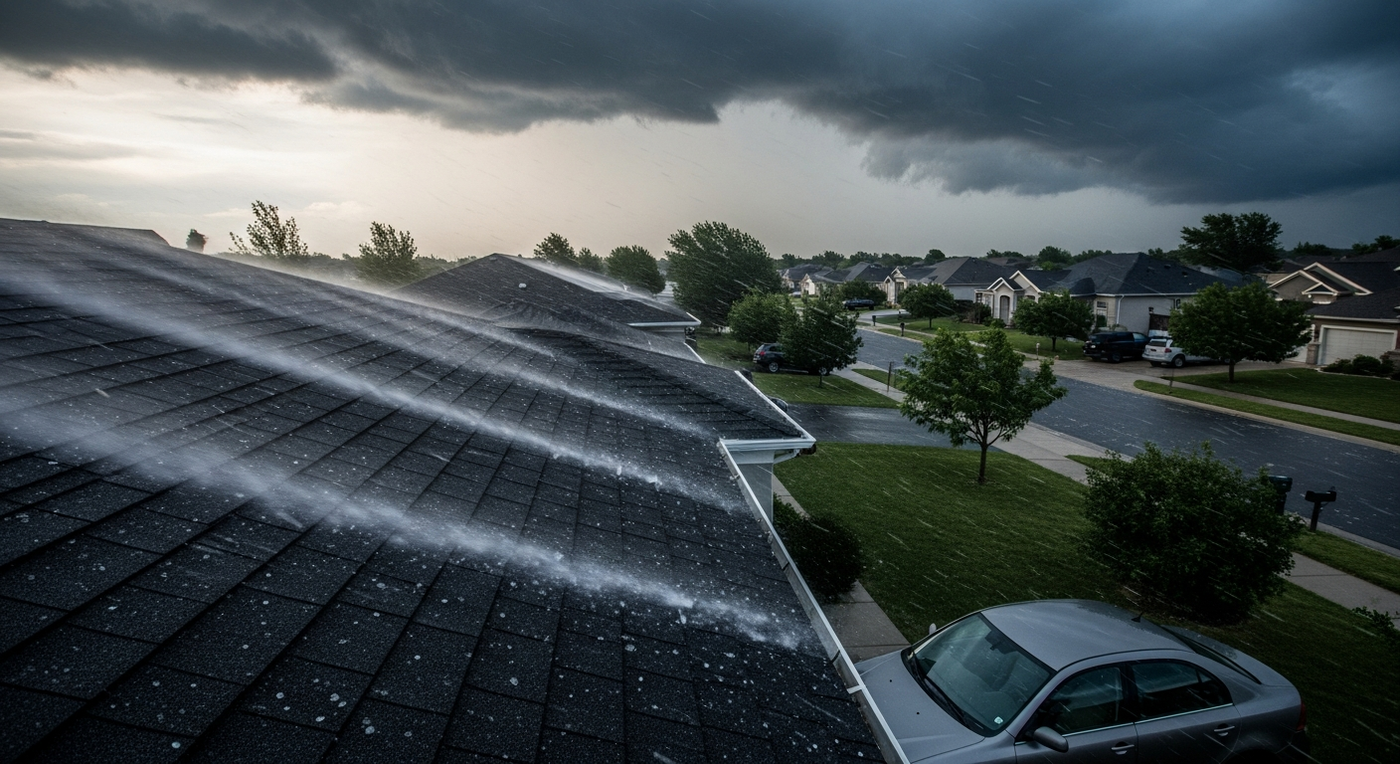
Hailstones smaller than an inch in diameter—what the National Weather Service calls "pea to quarter-sized"—usually leave evidence you have to hunt for. On horizontal surfaces like the hood or trunk, you'll see shallow depressions that catch light at certain angles. Run your hand across the panel slowly; you'll feel what you can't always see.

These small impacts rarely crack paint on modern cars. Factory paint systems have enough flex to absorb the deformation. What they do instead is create texture. A hood that was mirror-smooth now has a faint orange-peel appearance in direct sunlight. This is repairable damage—typically a PDR job running anywhere from several hundred to several thousand dollars depending on dent count—but it's not always obvious at first glance.

Here's what most people get wrong: they assume hail damage is binary. Either your car looks like a golf ball or it's fine. In reality, multiple shallow dents across a hood can cost you more than a few deep ones in the same area, because each dent requires individual manipulation. Repair pricing is based on count and access, not dramatic appearance.

The One-Inch Threshold

Once hailstones hit golf ball size—roughly one to one-and-a-half inches—the damage character changes completely. These impacts create defined craters with raised edges. Paint often cracks at the center point where the stone hit hardest. You'll see bright metal or primer showing through, sometimes just a pinpoint, sometimes a spiderweb of fractures.

Cracked paint transforms the repair equation. PDR only works when paint integrity is intact; once the finish is compromised, you're looking at conventional bodywork—filling, sanding, and repainting entire panels. A hood with numerous dents but no paint damage might cost roughly $1,800 to repair. The same hood with several cracked spots could run approximately $3,500 because now you're paying for paint matching and blending.

The raised edges around deeper dents—what technicians call "crown damage"—indicate metal that's been stretched beyond its elastic limit. This metal won't return to its original shape no matter how skilled the technician. It can be improved, sometimes dramatically, but perfect restoration requires replacing the panel entirely.

When Glass Gives Up

Windshields and windows fail differently than body panels. Modern automotive glass is designed to withstand impacts, but hail creates a unique stress pattern. A windshield might survive direct hits from inch-and-a-half hail but develop a bullseye crack from a smaller stone that hit at exactly the wrong angle.

Side windows and rear glass are tempered, meaning they're designed to shatter into small cubes rather than dangerous shards. Once they fail, they fail completely—you'll find a pile of glass pebbles in the seat and door panel. Windshields use laminated glass with a plastic interlayer, so they crack and star but rarely collapse entirely.

According to National Weather Service severe weather guidance, hailstones larger than two inches fall at speeds exceeding 60 mph. At that velocity, glass damage is nearly inevitable. The repair-versus-replace calculation for windshields is straightforward: cracks longer than six inches or damage in the driver's sight line means replacement. Everything else is repairable, though insurance companies often prefer replacement because it eliminates liability questions.

Majority

of

Claims include roof damage

60

mph

Two-inch hailstone impact speed

Majority

of

Value threshold for totaling

The Total Loss Line

Insurance companies declare vehicles total losses when repair costs exceed a percentage of the car's actual cash value—typically in the range of 70-80% depending on the state and insurer. For hail damage, this threshold arrives faster than most people expect.

A three-year-old sedan worth $18,000 hits total loss territory at roughly $12,600 to $14,400 in damage. If the roof needs replacement (typically $2,500-$4,000), both front fenders need conventional repair (roughly $1,800 each), the hood requires replacement (approximately $1,200 plus paint), and you need a new windshield (around $800), you're already at $8,100 to $10,600 before touching the doors, trunk, or quarter panels.

The counterintuitive reality: older cars with minor damage often get totaled while newer cars with dramatic-looking damage get repaired. A ten-year-old vehicle worth $6,000 can be totaled by roughly $4,500 in dents that would barely register as repairable on a $40,000 car.

What Totaled Actually Looks Like

Severe hail damage—the kind that results from baseball-sized stones or larger—creates body panels that look beaten with hammers. The metal develops a washboard texture. Hood and roof surfaces lose their fundamental shape, sagging between structural supports. Door skins show through-dents where the outer panel has been pushed into contact with the inner structure.

At this severity level, you'll often see paint missing in sheets rather than cracks. The impact energy is sufficient to delaminate the finish from the primer. Plastic components—mirror housings, bumper covers, grille assemblies—will be cracked or shattered outright. Aluminum hoods, increasingly common on modern vehicles, show permanent deformation that can't be repaired through PDR.

Structural damage enters the picture when hail is large enough or wind-driven with sufficient force. A-pillars (the roof supports beside the windshield) can develop stress cracks. Roof rails on SUVs and trucks bend or separate from their mounting points. This is where "total loss" becomes "unsafe to repair"—once structural integrity is compromised, the vehicle's crashworthiness is questionable even after repair.

The Damage You Can't Photograph

Hail doesn't just dent what you can see. Engine compartment damage often goes unnoticed until mechanical problems develop. Hail can crack plastic intake manifolds, damage radiator fins (reducing cooling efficiency), crack battery cases, or destroy wiring harness connectors. The hood protects against vertical impacts, but stones bouncing at angles can reach components underneath.

Antenna assemblies, roof-mounted sensors (for adaptive cruise control or automatic emergency braking), and sunroof mechanisms are particularly vulnerable. A cracked sunroof drain tube can lead to water intrusion weeks after the storm. Damaged parking sensors might fail intermittently, throwing error codes without obvious cause. These hidden issues underscore why thorough post-storm inspections matter even when surface damage appears minimal.

This hidden damage is why professional hail inspections include opening the hood and checking under plastic engine covers. What looks like a cosmetic-only event can include potentially hundreds or even thousands of dollars in mechanical repairs that won't become apparent until you're diagnosing a check engine light three weeks later.

The Paint Integrity Test

Here's the single most important assessment you can do yourself: look for any point where bare metal or primer shows through. Even a pinhole-sized paint breach changes the repair category from PDR to conventional bodywork.

Get the car into direct sunlight and examine every dented area at multiple angles. Paint cracks often appear as hairline fractures radiating from the impact center—easy to miss in diffuse light but obvious in harsh sun. Run your fingernail across suspicious areas; you'll feel the edge where paint has lifted even when you can't see it clearly.

The reason this matters: PDR pricing is relatively predictable based on dent count and location. Conventional bodywork pricing varies wildly based on shop rates, paint quality, and how many panels need blending. Two seemingly similar cars can have repair estimates that differ by several thousand dollars based solely on whether paint stayed intact.

What Insurance Adjusters Look For

When an adjuster inspects hail damage, they're counting dents but also assessing repairability. They check whether the car has been previously repaired (aftermarket paint reacts differently to PDR), whether panels are aluminum or steel (aluminum requires different techniques and typically costs more), and whether the owner has already attempted repairs (which can void coverage depending on your policy).

They'll measure dent depth using specialized gauges—anything deeper than approximately 3/8 of an inch typically requires conventional repair rather than PDR. They document every cracked paint spot because those drive the estimate up significantly. And they photograph the roof from a ladder, because that's where the determination between "expensive repair" and "total loss" usually gets made.

The adjuster's estimate isn't necessarily what you'll pay. It's what the insurance company has agreed to cover. If you choose a repair shop that charges more than the estimate allows, you're responsible for the difference unless you negotiate a supplement (additional payment for damage discovered during teardown).

Why Timing Changes What You See

Hail damage can actually worsen in the days after impact. Paint that initially looked intact may develop delayed cracking as the metal underneath continues to relax from the impact stress. This is particularly common with harder impacts that created significant deformation.

Moisture intrusion through compromised seals or cracked glass can lead to rust formation, especially on older vehicles or in humid climates. What started as cosmetic damage can become structural if water reaches unprotected metal and sits long enough to corrode.

This is why most insurance policies require prompt reporting. The longer you wait, the harder it becomes to distinguish fresh hail damage from pre-existing issues or subsequent deterioration. Adjusters are trained to spot rust patterns that indicate old damage, and they will deny claims that appear to have been sitting unreported for months.

Verified Sources

  1. Insurance Information Institute

    Insurance Information Institute

    hail claim statistics and damage patterns

  2. National Weather Service

    National Weather Service

    hailstone size classifications and terminal velocity data

Back to Hail Science