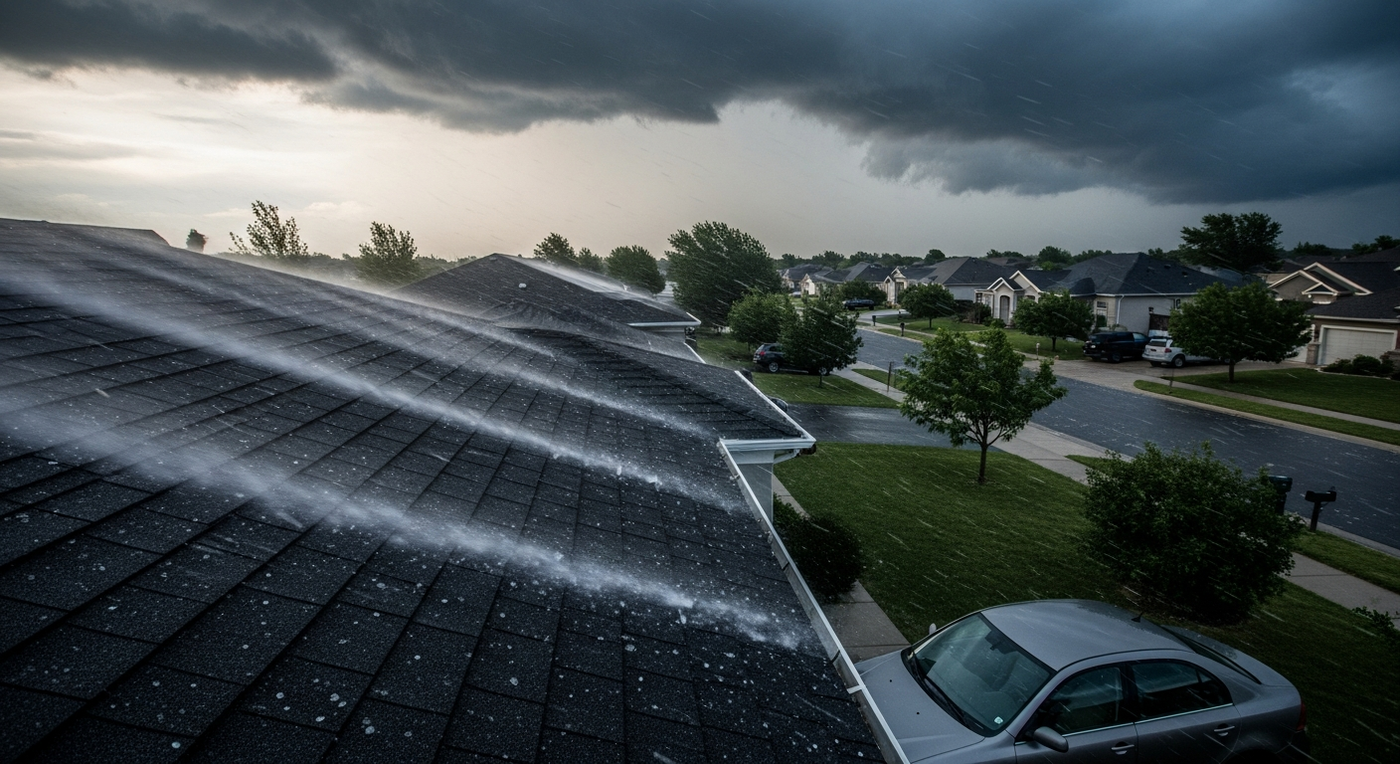
The I-35 Bullseye
If you drew a heat map of hail damage claims in Texas, it would look like someone spilled coffee along Interstate 35. The corridor from San Antonio through Round Rock, Temple, Waco, and into the DFW metroplex lights up year after year. This isn't coincidence. The dryline doesn't just prefer this region — it's drawn to it by topography.
West of I-35, the land rises gradually toward the Caprock Escarpment and the High Plains. This elevated terrain bakes under intense spring sunshine, heating the dry air streaming off the desert. East of I-35, the land slopes toward the Gulf coastal plain, where maritime air masses pool and stagnate. The highway itself runs along the transition zone, the seam where these two worlds collide. When the dryline forms, it often anchors itself right along this north-south corridor, sometimes for multiple consecutive days.
The timing matters as much as the location. Texas hail season kicks off in March — a full month before peak season in Kansas and Nebraska. By the time northern Plains states are dealing with their first severe weather outbreaks in May, Texas is often transitioning into early summer patterns. This extended season means Texas drivers face a longer window of vulnerability. A March hailstorm in the Austin metro can be followed by another in April, and another in May, each one targeting the same repair shops, the same dealership lots, the same parking garages.
The economic concentration makes the problem worse. DFW alone has approximately 7.6 million residents, many of them parking vehicles outdoors in sprawling suburban developments with minimal tree cover. When a supercell tracks northeast along the dryline — the favored storm motion in this setup — it can rake across hundreds of thousands of exposed vehicles in a single evening. The 2016 hailstorm that struck San Antonio caused an estimated $1.4 billion in insured losses, but that figure captures only part of the story. Thousands of vehicles were totaled outright. Body shops were booked solid for months. Some drivers waited half a year for repairs.