Seasonal Guide Seasonal Briefing

May Is America's Peak Hail Month: What 30 Years of SPC Data Says About the Most Dangerous 30 Days for Your Vehicle

Three decades of severe weather reports show May produces more hail events than any other month, with the jet stream position creating a perfect collision of warm Gulf moisture and cold Canadian air across the widest geographic area of the year.

May Is America's Peak Hail Month: What 30 Years of SPC Data Says About the Most Dangerous 30 Days for Your Vehicle
Hail Protector Editorial / GeminiSeasonal Guide

The Numbers Tell a Clear Story

According to Storm Prediction Center severe weather reports, May consistently generates the highest volume of hail reports in the United States. The 30-year climatology shows May averaging roughly 40% more hail events than April and nearly double the reports of June, based on SPC climatological data. This isn't a marginal difference—May stands alone as the month when atmospheric conditions align most favorably for hail production across the broadest swath of the country.

The peak typically arrives in the second and third weeks of May, when the jet stream occupies its optimal position for severe weather: far enough north to pull warm, humid air from the Gulf of Mexico deep into the Plains, but still strong enough to provide the wind shear necessary for rotating supercells. These are the storms that produce the largest hail and the most expensive vehicle damage.

40

%

More hail than April

2

x

June's total reports

~20

mi

Typical damage swath width

Why May Creates the Perfect Hail Factory

The jet stream's position in May creates what meteorologists call "maximum overlap." Cold air masses from Canada still have enough strength to push south, while surface temperatures across the Great Plains and Midwest climb into the 70s and 80s. This temperature contrast—cold air aloft, warm air at the surface—creates the instability that fuels severe thunderstorms.

But instability alone doesn't produce hail. You also need wind shear: changes in wind speed and direction with height that allow storms to rotate and organize into supercells. May delivers both ingredients simultaneously across a geographic area stretching from Texas to the Dakotas and east into Ohio and Tennessee. No other month matches this combination of widespread instability and strong upper-level winds.

The result is what insurance companies dread: multiple significant hail events spread across population centers during the same week. A single active pattern in mid-May can produce damaging hail from Oklahoma City to Omaha to Indianapolis within a 72-hour period, as SPC severe weather reports have documented.

May hail events tend to occur during late afternoon and evening hours, when most vehicles sit in workplace parking lots
What Makes May Hail Particularly Dangerous for Vehicles

What Makes May Hail Particularly Dangerous for Vehicles

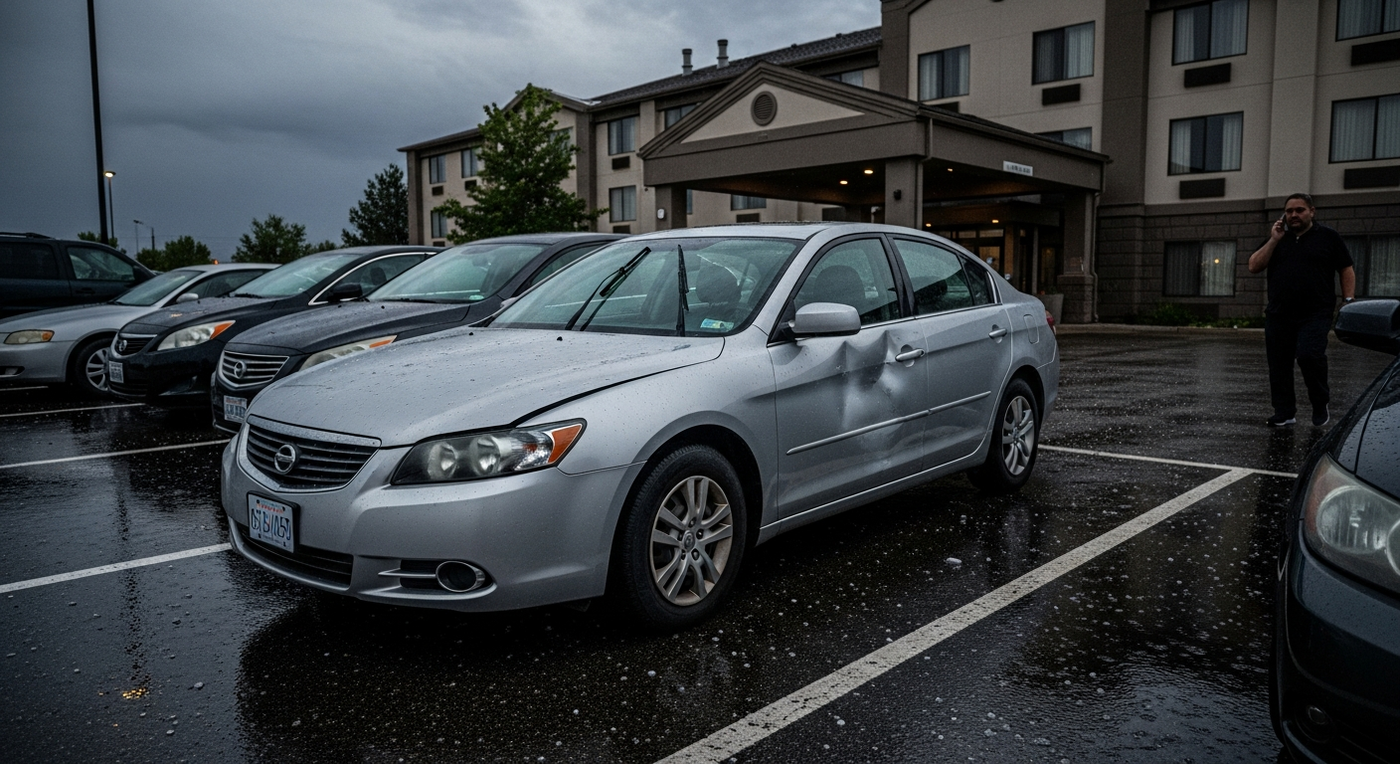
May hail events tend to occur during late afternoon and evening hours, when most vehicles sit in workplace parking lots or residential driveways rather than protected garages. The timing maximizes exposure. According to Insurance Information Institute data, hail claims spike dramatically in May compared to other severe weather months, with average claim costs typically running several thousand dollars per vehicle.

The size distribution also matters. May produces a higher percentage of "significant" hail reports—stones one inch in diameter or larger—compared to summer months. One-inch hail typically causes cosmetic damage to vehicles. Two-inch hail (golf ball size) routinely shatters windshields and dents hoods and roofs beyond economical repair. May delivers both sizes with disturbing frequency.

Here's what most people get wrong: they assume hail risk follows tornado risk. But hail's geographic footprint is far wider. A tornado might damage a path typically 200 yards wide. A single hail-producing supercell can drop damaging stones across a swath roughly 20 miles wide and 100 miles long. In May, when multiple supercells often form in clusters, the affected area can encompass entire metropolitan regions.

What the Data Means for Vehicle Protection

The concentration of hail risk in May creates a clear decision point for vehicle owners in hail-prone regions. If you're going to take protective measures—parking in a garage, using a car cover, or relocating your vehicle during severe weather warnings—May is the month that justifies the effort.

The SPC data shows the risk isn't evenly distributed across the month. The second and third weeks of May historically produce the highest concentration of significant hail reports. This two-week window represents the peak danger period for vehicles across the central United States.

For people considering hail-specific insurance coverage or comprehensive policies that cover hail damage, understanding May's outsized role in annual hail totals provides context for premium costs. Insurers price policies based on this same climatological data—they know May will generate claims, and they price accordingly.

The 30-year dataset also reveals that May's dominance isn't a recent trend or an artifact of changing climate patterns. Decade after decade, May emerges as the peak hail month. This consistency makes it predictable in aggregate, even though individual storm timing remains uncertain.

Verified Sources

  1. NOAA Storm Prediction Center

    NOAA Storm Prediction Center

    severe weather reports database and climatology

  2. NOAA Storm Prediction Center

    NOAA Storm Prediction Center

    Official convective outlook archive and risk categories.

  3. iii.org

    iii.org

    Referenced in article via iii.org.

Back to Storm Prep