Editorial Quick Answers

The Carfax Entry That Costs You $2,800: Why Hail Repair Documentation Matters More Than You Think

Dealers start their trade-in evaluation with your vehicle history report, and a comprehensive claim without supporting repair receipts typically triggers a larger deduction than the same claim backed by professional PDR documentation and warranty paperwork.

The Carfax Entry That Costs You $2,800: Why Hail Repair Documentation Matters More Than You Think
Hail Protector Editorial / GeminiEditorial

The First Thing the Dealer Pulls Up Isn't Your Car

Before the appraiser walks around your vehicle, they've already opened Carfax or AutoCheck on their desk computer. That comprehensive claim from the hailstorm two summers ago? It's right there in the report, timestamped and categorized. The dealer now has a disclosure obligation—they'll need to tell the next buyer about that claim when they resell your car. That obligation costs you money, even if the repair was flawless.

According to Carfax, comprehensive claims for weather damage typically reduce resale value by approximately 5-15% compared to an identical vehicle with a clean history. The range depends on severity, repair quality, and how well you can document what actually happened. A $25,000 trade-in with a hail claim might get valued at approximately $23,500 to $21,250 before the appraiser even looks at the paint.

What Repair Receipts Actually Do

Here's where most people misunderstand the dynamic. They assume hiding the repair is better than disclosing it. But the Carfax report already disclosed it for you. What you control now is the *story* that accompanies that disclosure.

Walk in with itemized receipts from a certified PDR shop, before-and-after photos, and a transferable warranty on the repair work, and you've just changed the conversation. The dealer still sees the claim, but now they see professional remediation with accountability. The deduction shrinks—often to the lower end of that 5-15% range—because the next buyer can be told "hail damage, professionally repaired with warranty" instead of just "hail damage claim on record.".

Conversely, show up with a Carfax claim and no documentation, and the dealer assumes the worst. Maybe you used a buddy's garage. Maybe the repair was incomplete. Maybe there's hidden damage. They'll deduct for the claim *and* add a risk margin for uncertainty. That margin can easily run several hundred to over a thousand dollars.

The First Thing the Dealer Pulls Up Isn't Your Car

The Absolute Worst-Case Scenario

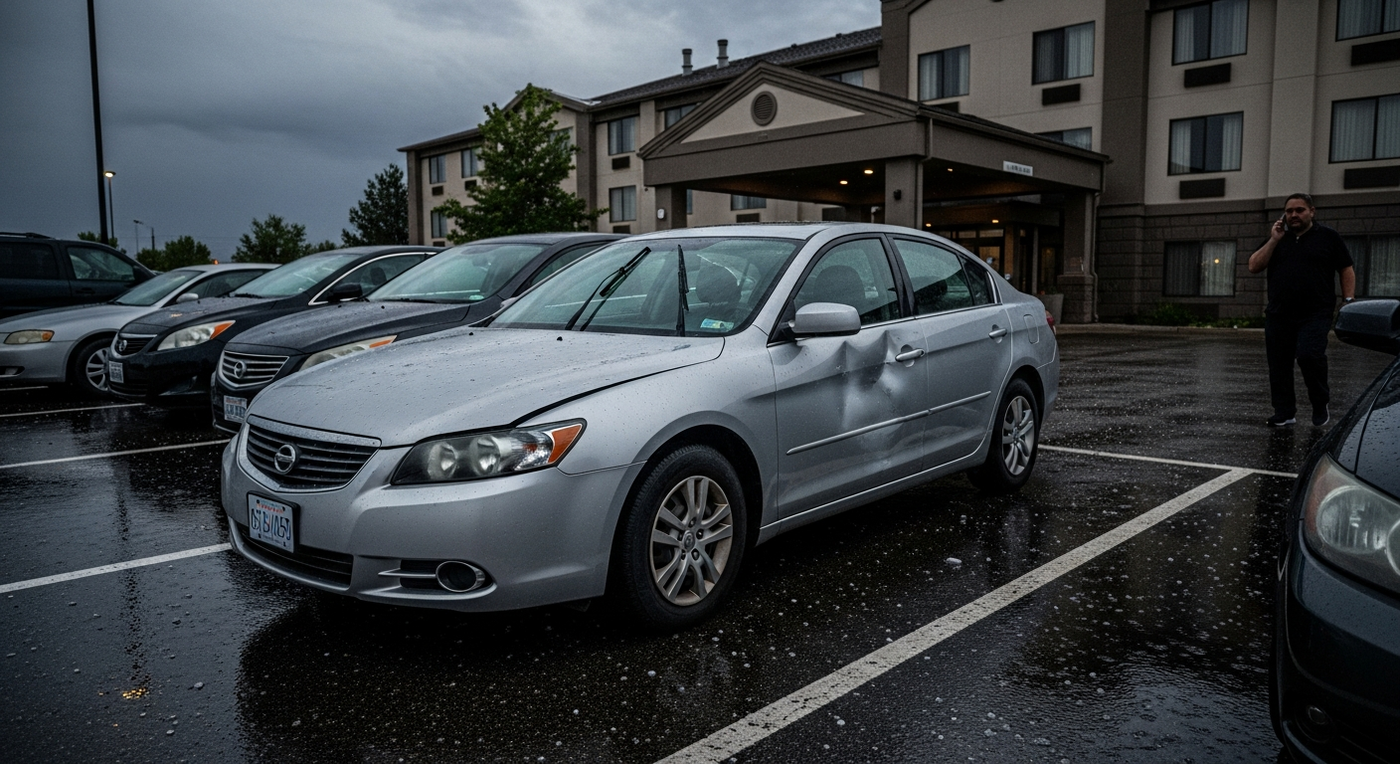
Unrepaired hail damage with no insurance claim creates a bizarre valuation trap. The dealer sees the dents during inspection. They know they'll need to repair them before resale. So they estimate the repair cost—typically around $2,200 for professional PDR work—and deduct that amount.

But they don't stop there. They add a risk buffer, because hail damage sometimes hides other issues: compromised seals, paint microfractures that'll rust, interior water damage if a window seal failed. Dealers typically deduct the full repair estimate plus an additional 15-25% risk margin on hail-damaged trade-ins. Your $2,200 repair problem just became approximately a $2,500-$2,750 deduction.

The truly frustrating part: if you'd actually paid for the repair before trading in, you'd have spent approximately $2,200 and received a trade-in offer only $1,250-$3,750 lower than clean value (that 5-15% on a $25,000 car). By skipping the repair, you lost more money than the repair would have cost. The math punishes procrastination.

5-15%

%

Value drop from hail claims

$2,800

Average undocumented repair penalty

15-25

%

Risk buffer on unrepaired damage

$300-500

Transferable warranty trade-in boost

Why Timing Your Trade-In Around Fall Sales Events Doesn't Help

Dealer incentives during year-end clearance events focus on moving *new* inventory, not increasing trade-in offers. The appraiser uses the same valuation software in November that they used in June. Your hail-damaged trade doesn't suddenly become more valuable because the dealer needs to hit a quota.

What *does* change: your negotiating position weakens when you're focused on the new car's price. Dealers know this. They'll move numbers around—inflate the trade-in value while reducing the discount on the new vehicle, or vice versa. The combined transaction is what matters, and hail damage gives them leverage in that equation.

The Carfax Paradox

Here's the counterintuitive detail most people miss: filing an insurance claim for hail damage actually protects your trade-in value better than paying out-of-pocket for repairs.

When you file a claim, the repair gets documented in insurance databases that feed into vehicle history reports. When you pay cash at a body shop, there's no automatic reporting mechanism. Three years later, you trade in the car and hand the dealer your receipts. They look at Carfax: no claim. They look at the receipts: roughly $2,400 in hail repair. Now they're wondering why you didn't file a claim. Was the damage worse than the receipts show? Were you hiding something from your insurer? Did the shop do unreported additional work?

The absence of a claim when receipts show major repair work creates suspicion. The presence of a claim with supporting receipts creates confidence. It's backward, but it's how dealers think.

What Actually Improves Your Position

Bring documentation that answers questions before they're asked. The ideal package includes.

The original insurance estimate, even if you didn't file a claim. It establishes baseline damage scope from an independent adjuster. The dealer knows what was broken.

Itemized repair invoices showing specific PDR techniques, panel-by-panel work, and materials used. Vague "hail repair - $1,800" receipts don't help much. Detailed invoices that list "right quarter panel - 14 dents removed via glue-pull PDR, left door - 8 dents removed via traditional PDR" demonstrate thoroughness.

Before-and-after photos with timestamps. Phone photos are fine. The dealer wants to see that the damage was real and the repair was complete.

Any warranty paperwork that transfers to the next owner. A lifetime PDR warranty that follows the car is worth approximately $300-500 in added trade-in value because it reduces the dealer's risk on resale.

Verified Sources

  1. NOAA Storm Prediction Center

    NOAA Storm Prediction Center

    Official severe-weather outlook reference.

Back to Storm Prep