Editorial Quick Answers

The Trade-In Paradox: Why Your Hail Repair Receipt Is Worth More Than You Think

Dealers deduct for damage they see in Carfax—but professional repair documentation can cut that penalty in half.

The Trade-In Paradox: Why Your Hail Repair Receipt Is Worth More Than You Think
Hail Protector Editorial / GeminiEditorial

The Carfax Flag Follows You Forever

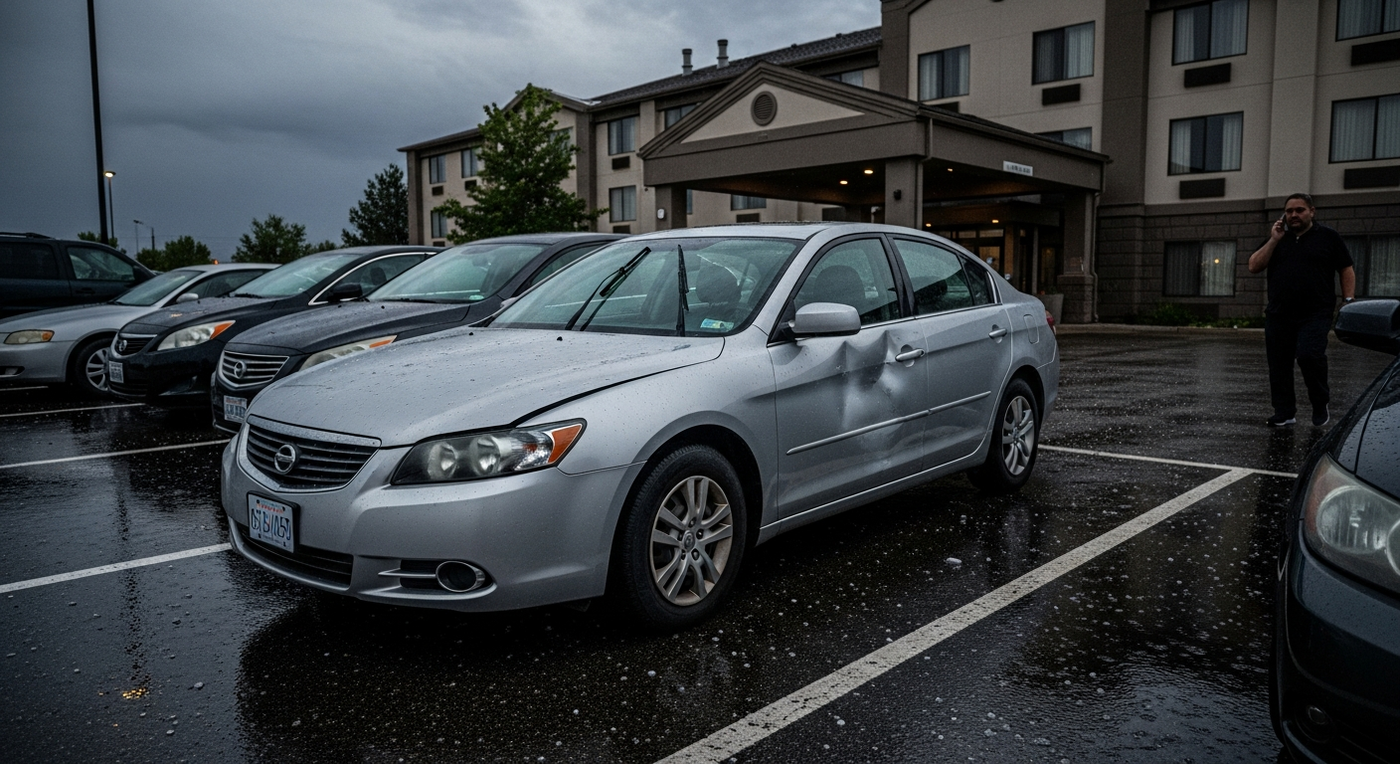
A 2023 Silverado with 32,000 miles pulls into a dealership lot. The truck looks immaculate. The sales manager pulls the vehicle history report and sees a comprehensive claim from June 2024—$4,800 paid by State Farm. No explanation, just the claim amount. The dealer's opening offer drops $2,200 below book value before anyone even looks at the paint.

This is the baseline reality of trading a hail-damaged vehicle: Carfax and AutoCheck capture insurance claims through data-sharing agreements with major carriers, and those flags reduce trade-in offers even when repairs are flawless. A comprehensive claim history typically reduces trade value by roughly 5-15% compared to a clean-history equivalent, because the dealer inherits a disclosure obligation when they resell the vehicle.

But here's what most drivers miss—*how much* the dealer deducts depends entirely on what you can prove about what happened next.

Documentation Transforms Liability Into Asset

Pull that same Silverado scenario, but this time the owner hands the sales manager a folder: itemized repair invoice from a certified PDR shop, before-and-after photos, a written warranty transferable to the next owner, and a detailed explanation that the damage was golf-ball hail, not a collision. The deduction shrinks—sometimes dramatically.

Dealers aren't afraid of previous damage. They're afraid of *unknown* damage. A Carfax entry with no supporting documentation creates questions: Was it really hail, or did the owner back into a pole and file a creative claim? Did a buddy "fix" it in his driveway with a heat gun? Is there hidden structural damage the appraiser missed?

Professional repair receipts answer those questions. When you can demonstrate the work was done by a shop with verifiable credentials, using proper techniques, with warranty coverage that follows the vehicle, you've converted a red flag into a neutral fact. The dealer still has to disclose the history, but they can now tell the next buyer exactly what happened and show proof of professional remediation.

The difference in trade value between "Carfax shows $4,800 claim, no details" and "Carfax shows $4,800 claim, here's the PDR invoice and warranty" typically runs roughly $1,000-1,500 on a mid-size truck or SUV.

The Carfax Flag Follows You Forever

The Unrepaired Disaster Scenario

Now the worst case: a driver with visible hail damage, no insurance claim filed, no repair receipts, hoping the dealer won't notice or won't care much.

They always notice. And they care a lot.

When a dealer sees unrepaired hail damage, they don't just deduct the cost of fixing it. They deduct the *estimated* cost of fixing it, plus a risk margin for whatever else might be wrong that they haven't found yet, plus a buffer for the fact that they'll have to disclose hail history to the next buyer even after repairing it themselves.

This triple-deduction typically exceeds the actual repair cost by approximately 40-60%. If professional PDR would have cost roughly $3,200, the dealer might deduct approximately $5,000-5,500 from their offer. They're pricing in uncertainty, and uncertainty is expensive.

Here's the perverse math: the driver who skipped the roughly $3,200 repair to "save money" loses approximately $5,000 at trade-in. The driver who paid for the repair and kept the receipt loses maybe $1,800. The repair-and-document strategy costs roughly $1,400 less than the do-nothing strategy, even though it required spending money upfront.

5-15%

%

Trade value reduction from claims

$1,000-1,500

Documentation premium on mid-size vehicles

40-60%

%

Dealer markup on unrepaired damage

What Dealers Actually Check

The valuation process follows a predictable sequence. First, the used car manager runs the VIN through their history report subscription—usually both Carfax and AutoCheck, since they sometimes capture different claims. Any comprehensive claim in the past 36 months triggers additional scrutiny.

Next comes the physical inspection. They're looking for paint texture differences (a sign of conventional bodywork rather than PDR), panel gaps, overspray on trim, or remaining dents. They'll run their hands over panels in bright light. On a sunny day, they'll check for wavy reflections that indicate filler or poor metalwork.

Then they check the documentation you've provided. A detailed invoice showing PDR-specific line items (glue pulling, blending, detail removal and reinstallation) carries more weight than a vague "hail repair - $4,200" receipt. Shops that include photos with their invoices give you additional credibility. Comprehensive insurance claims that show the carrier's own inspection report are even better—they prove a licensed adjuster verified the damage type.

Finally, they calculate. Most dealers use software that starts with auction data for similar vehicles, then applies deductions based on condition, history, and market factors. The history deduction is where your documentation matters—it's the difference between a standard penalty and a worst-case penalty.

The Warranty Transfer Detail Nobody Mentions

Here's a detail that surprises most people: some PDR shops offer warranties that explicitly transfer to subsequent owners. Not all shops do this, and not all warranties are created equal, but when you can hand a dealer a document stating "lifetime warranty against paint cracking or dent recurrence, transferable with vehicle sale," you've just solved their biggest resale concern.

The dealer can now advertise the vehicle as "professionally repaired with transferable warranty" rather than just "previous hail damage, repaired." That's the difference between a car that sits on the lot for weeks and one that moves quickly. Faster inventory turn means they can offer you more on trade.

When you're choosing a repair shop after hail damage, ask specifically whether their warranty transfers. If two shops quote similar prices but one offers a transferable warranty and the other doesn't, the transferable warranty can typically return roughly $800-1,200 in additional trade value years later. It's the cheapest upgrade you can buy.

Timing and Market Conditions

Fall trade-ins face specific market dynamics. Dealers are clearing space for incoming model-year inventory, which can work in your favor—they need your trade to make room. But they're also more cautious about taking vehicles with history into winter, when used-car sales slow and lot inventory ages.

A hail-damaged trade in October gets more scrutiny than the same trade in March, because the dealer knows it might sit until spring. If you're trading a vehicle with hail history in fall, documentation becomes even more critical. You need to overcome both the history penalty and the seasonal timing penalty.

The counter-intuitive move: if you have undocumented hail damage and you're planning to trade within six months anyway, it may be worth filing the claim and getting the repair done now, even though it creates a Carfax entry. The documented-repair penalty is smaller than the visible-damage penalty, and the gap widens in slower sales periods.

Verified Sources

  1. Insurance Information Institute

    Insurance Information Institute

    Comprehensive insurance claim data

  2. Carfax

    Carfax

    Vehicle history reporting methodology

Back to Storm Prep