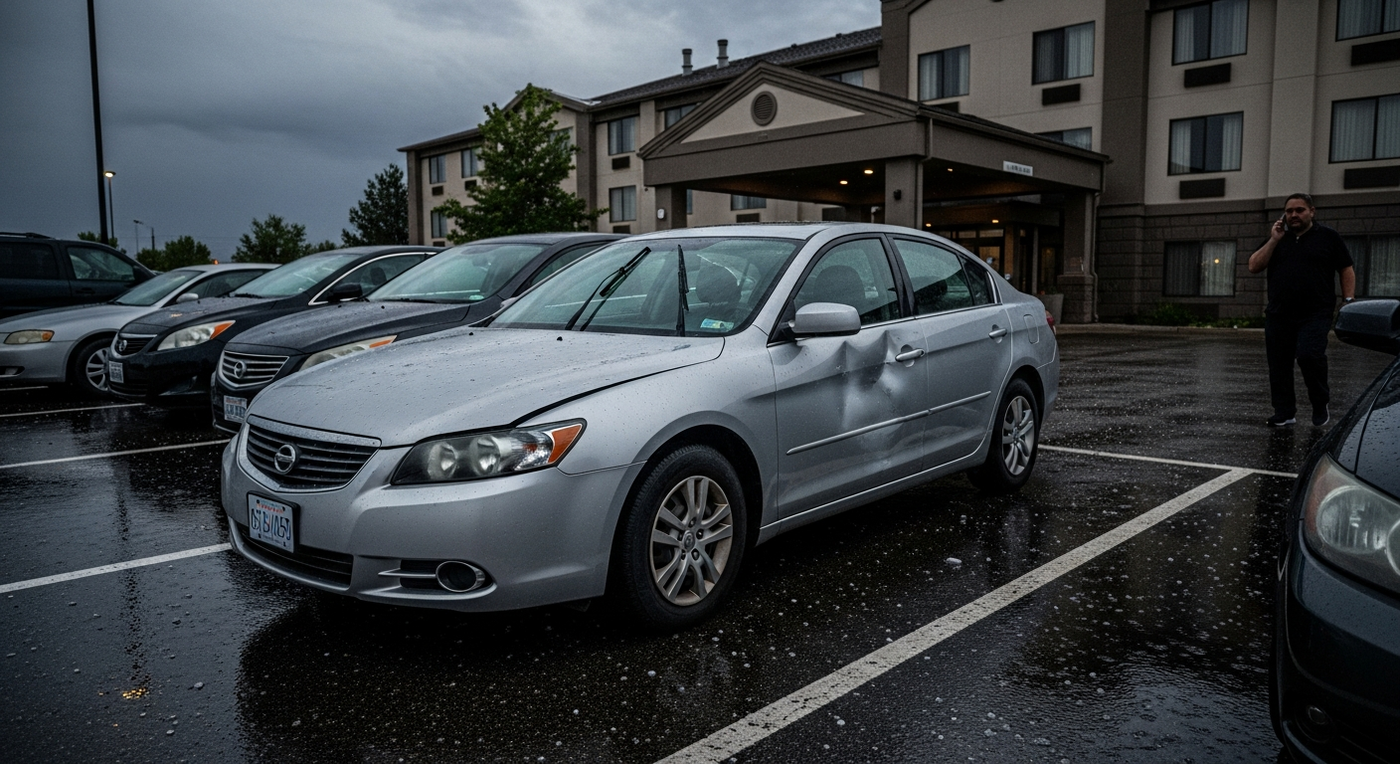
The Grid Method and the $47 Dent
When an adjuster crouches beside your hail-damaged hood with a tablet, they're typically using a grid-based counting system that divides each body panel into sections. The industry standard approach assigns a repair cost to each dent based on size and location—small dents on flat surfaces typically run around $30-$75 each for paintless dent repair, while larger dings requiring conventional bodywork can cost roughly $100-$200 per impact point. Multiply those figures across a roof with 40 dents, a hood with 25, and two quarter panels with 15 each, and you're looking at repair estimates that can quickly climb into the several-thousand-dollar range.
But here's what most people don't realize: the adjuster isn't just calculating repair costs. They're simultaneously running a second calculation—comparing that repair estimate against your vehicle's actual cash value (ACV). If the damage crosses roughly 70-80% of what your car is worth in its pre-storm condition, the insurer typically declares it a total loss and writes you a check for the ACV minus your deductible, then takes possession of the vehicle. You don't get to choose repair over totaling once that threshold is crossed.