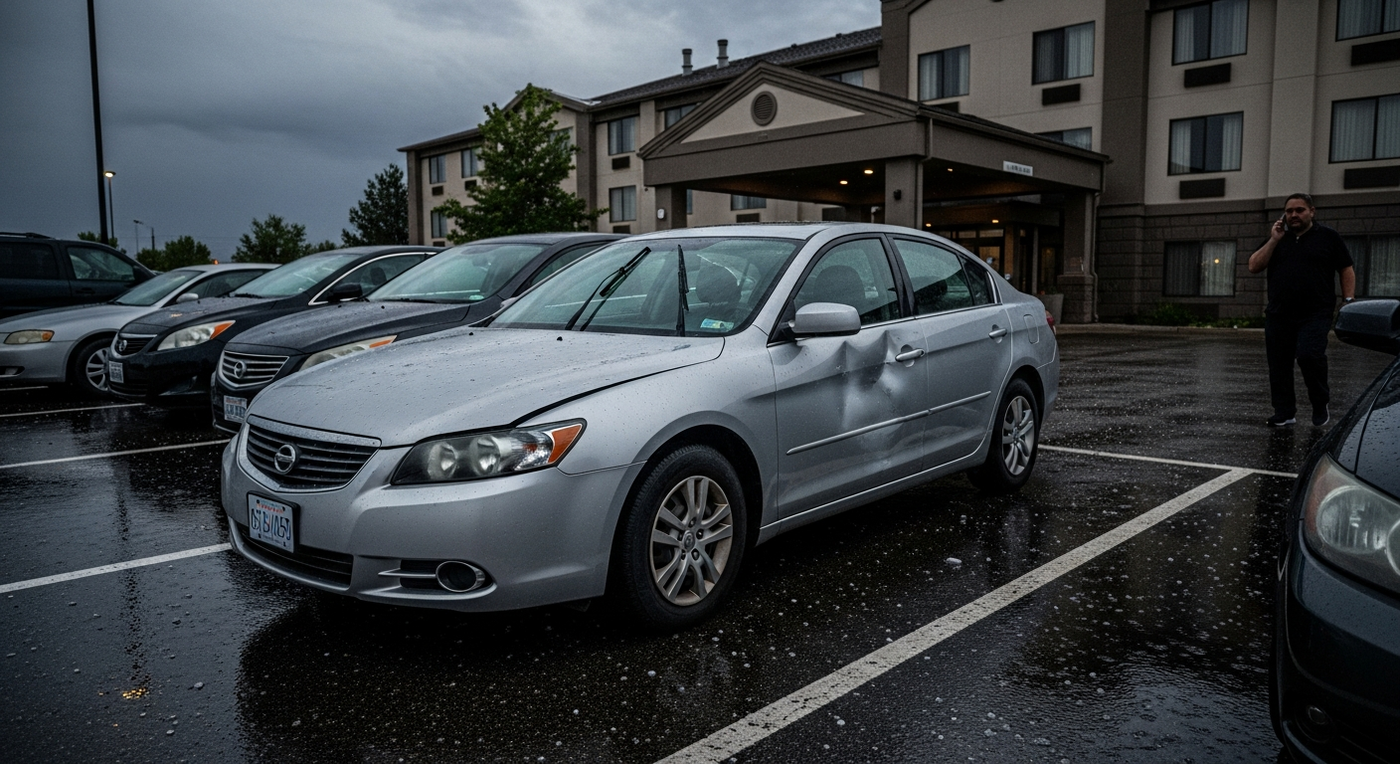
The Interstate Hail Belt Runs Straight Through Budget Hotel Territory
The Super 8 in Salina, Kansas sits directly on Interstate 70, offers free parking in an open asphalt lot with zero overhead coverage, and lies in the heart of what meteorologists call "Hail Alley." The Hampton Inn in Lamar, Colorado—same setup, different highway. The Holiday Inn Express in Wichita Falls, Texas. The Comfort Suites in Limon, Colorado. All share identical characteristics: convenient highway access, competitive rates, and parking lots that leave vehicles completely exposed to the sky during the most hail-active months of the year.
According to NOAA's Storm Events Database, the corridor from central Texas through Oklahoma, Kansas, and eastern Colorado records more severe hail days annually than any comparable region in North America. The same interstates that make these hotels convenient for travelers—I-35 running north-south through the Plains, I-70 crossing east-west through Kansas and Colorado, I-25 connecting Colorado and Wyoming—trace the exact geography where warm Gulf moisture collides with dry continental air and Rocky Mountain updrafts. You're not just parking at a hotel. You're parking in a meteorological collision zone.
The timing compounds the risk. Peak summer travel season overlaps precisely with peak hail season. May and June account for roughly 40-50% of annual hail reports across the central Plains, the exact months when families load up for road trips and business travelers crisscross the region. Most arrive after dark, check in without consulting weather forecasts, and wake to find their windshields starred or hoods dimpled.