Editorial Quick Answers

The Highway Hotel Hail Gamble: Why Your Parking Spot Matters More Than You Think

Open-lot hotel parking along major storm corridors turns your vehicle into a stationary target during the most hail-active hours of the day.

The Highway Hotel Hail Gamble: Why Your Parking Spot Matters More Than You Think
Hail Protector Editorial / GeminiEditorial

The Overnight Exposure Window

Most severe hail falls between 3 PM and 9 PM across the Great Plains, but a meaningful secondary peak occurs between midnight and 3 AM — precisely when hotel guests are asleep and unable to move their vehicles. According to Storm Prediction Center research, nocturnal hail events account for approximately 15-20% of significant hail reports in the central United States, and these overnight storms often catch travelers completely unaware.

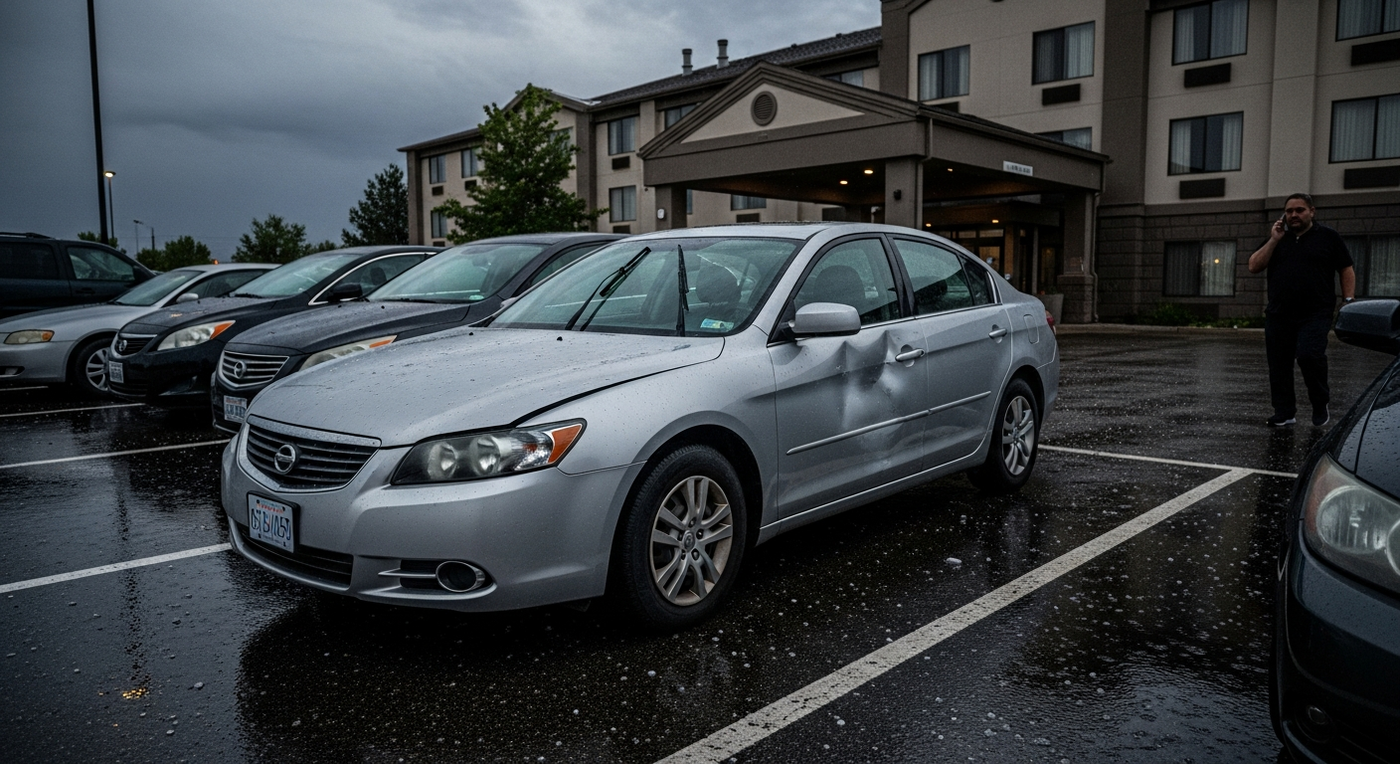
The typical highway hotel compounds this vulnerability. Most properties along Interstate corridors feature sprawling open lots with zero overhead protection, designed to maximize parking capacity rather than weather resilience. Your vehicle sits exposed on all sides for typically 8-12 hours, often parked in the same spot from early evening through the following morning — a static target during the entire window when storms can develop.
The I-35 and I-25 Corridors

Two interstate routes stand out for concentrated hail risk during travel season. Interstate 35 runs directly through the heart of Hail Alley, passing through Oklahoma City, Wichita, and Kansas City — three metropolitan areas with notably high hail frequency. Hotels clustered around exit ramps between the Texas-Oklahoma border and Des Moines sit squarely in the bullseye.

Interstate 25 through Colorado and Wyoming presents a different challenge. The corridor follows the Front Range, where upslope flow and afternoon heating create ideal conditions for severe thunderstorms.

Interstate 70 across Kansas deserves mention as well. The route crosses open prairie with minimal terrain disruption, allowing supercells to maintain intensity for hours. Hotels in Hays, Salina, and Junction City regularly appear in hail reports during spring and early summer.

The Simple Phone Call

Here's what most travelers miss: many hotels will accommodate a simple request to park near the building or under the entrance overhang if you call ahead. The porte-cochere at a typical highway hotel extends roughly 15-20 feet from the building, providing meaningful protection from hail driven at an angle. Even hail falling at an angle — which occurs in storms with strong winds — will strike only the outer portion of a vehicle parked tight against the building.

Front desk staff often have flexibility to assign rooms near covered areas or to reserve spots under overhangs for guests who ask. This costs you nothing beyond a two-minute phone call when you book. The key phrase: "I'm traveling through during storm season — do you have any covered parking or spots near the building I could request?".

Some properties maintain a small number of covered spaces for loyalty program members or accessible parking. If you explain you're concerned about hail damage, many managers will make an exception, particularly on nights when the hotel isn't fully booked.

15-20%

%

Hail events overnight

$3,000-$5,000

Average damage claim

2-10%

%

Premium increase after claim

When Garage Parking Pays for Itself

Hotels with parking garages typically charge approximately $10 to $25 per night for covered spots. This fee feels annoying when you're already paying for a room, but the math shifts dramatically when you check the Storm Prediction Center's convective outlook before your trip.

If the SPC shows a Slight Risk (level 2 of 5) or higher for your route, with hail mentioned specifically in the discussion, that $20 garage fee becomes cheap insurance. The average hail damage claim typically runs between $3,000 and $5,000 when you account for paintless dent repair, panel replacement, and glass damage. A single night of garage parking costs approximately 0.4% to 0.7% of a typical claim.

The calculation becomes even clearer for newer vehicles or those with large glass surfaces. Panoramic sunroofs, which have grown increasingly common on SUVs and crossovers, can cost approximately $2,000 to $3,000 to replace after hail damage. Paying $25 to protect a vehicle on a night with elevated hail risk isn't cautious — it's rational.

The Building Shadow Strategy

Most people don't think about building orientation when they park, but it matters during hail events. Thunderstorms in the Great Plains typically move from southwest to northeast or west to east, driven by prevailing upper-level winds. Hail falls at an angle determined by both the updraft tilt and ambient wind speed.

If you're parking in an open lot with no covered options, position your vehicle on the northeast or east side of the hotel building when possible. This places the structure between your car and the most likely storm approach direction. A four-story hotel provides meaningful wind shadow for vehicles parked within roughly 30-40 feet of the building on the lee side.

The same logic applies to other structures in the lot. Parking on the downwind side of the hotel's main entrance canopy, a maintenance building, or even a dumpster enclosure with solid walls provides some protection. You're not creating a hail-proof shelter, but you're reducing the exposed surface area of your vehicle.

What the Forecast Actually Tells You

The SPC convective outlook updates multiple times daily and provides specific guidance about hail size and coverage. Most travelers never look at it. The Day 1 outlook, issued by mid-morning, gives you actionable information for that afternoon and evening. The discussion section — the text below the map — often includes phrases like "large hail will be the primary threat" or "isolated significant hail" that tell you whether hail is the main concern or a secondary risk.

Pay attention to the probability contours. A 15% hatched area for significant hail (typically one inch diameter or larger) means the forecasters see meaningful potential for damaging stones.

The Day 2 outlook, issued each morning for the following day, helps you plan hotel choices along your route. If you see elevated hail risk in Kansas and you're driving I-70 westbound, you might choose to push through to Colorado that evening rather than stopping in Hays, or you might specifically book a hotel with garage parking in Salina.

Verified Sources

  1. Storm Prediction Center

    Storm Prediction Center

    Convective outlook interpretation and hail probability data

  2. spc.noaa.gov

    spc.noaa.gov

    Referenced in article via spc.noaa.gov.

Back to Storm Prep