Editorial Quick Answers

The Real Cost of Hail Damage Repair: Why Your Estimate Might Double

Paintless dent removal typically runs $30-75 per dent, but most hail-damaged vehicles have 40-100 dents — and that's before you factor in glass, surge pricing, or whether your panels can even be saved.

The Real Cost of Hail Damage Repair: Why Your Estimate Might Double
Hail Protector Editorial / GeminiEditorial

The Baseline: What Paintless Dent Removal Actually Costs

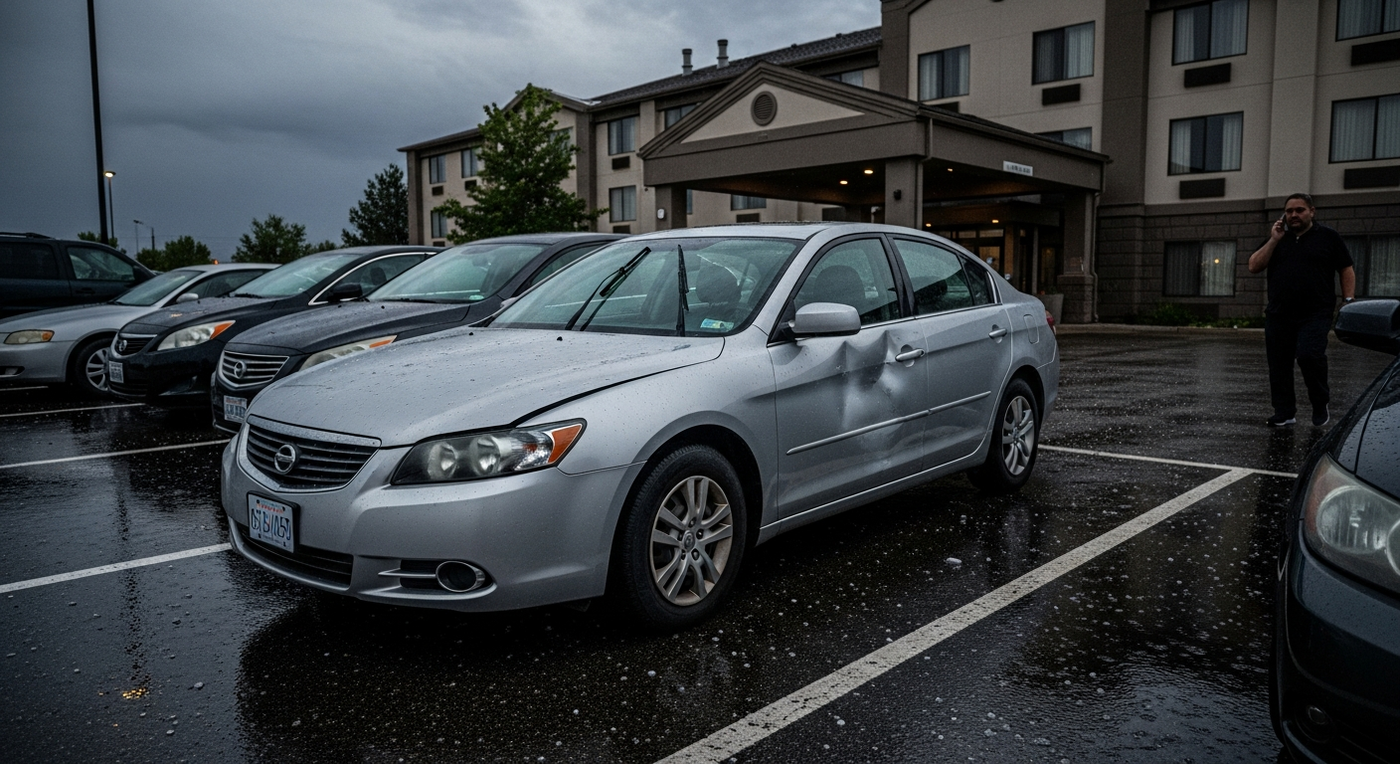
A golf ball-sized hailstone leaves a distinct dimple in sheet metal, and if the paint hasn't cracked, a technician can often massage it out from behind. This process — paintless dent removal, or PDR — represents the best-case scenario for your wallet.

Individual dents typically cost between $30 and $75 to repair, depending on location and depth. A dent on a flat hood panel? Easier access, lower cost. A dent where the roof meets the pillar? That's premium pricing because of the labor involved.

But here's what the per-dent math obscures: hailstorms don't leave one dent. The average hail-damaged vehicle typically has between 40 and 100 individual impacts. At roughly $50 per dent, you're looking at approximately $2,000 to $5,000 for PDR work alone — assuming every single dent qualifies for the technique.

The catch: PDR only works when paint remains intact and metal hasn't creased. Once you see exposed primer or a sharp fold in the panel, you've crossed into body shop territory, where costs multiply.
When Panels Need Replacement Instead

Severe hail — the kind produced by supercells with stones exceeding two inches — doesn't just dent panels.

Panel replacement costs vary wildly by vehicle. A hood for a 2015 Honda Civic might run approximately $400-600 for the part, plus several hundred more in labor and paint matching. That same repair on a 2022 Audi A6? The hood alone can exceed $1,000, and painting metallic or pearl finishes to match factory specs typically adds another $800-1,200.

Roofs present the worst-case scenario. Replacing a roof panel requires cutting spot welds, removing the entire headliner, and essentially rebuilding the upper structure of the vehicle. Roof replacements typically cost approximately $2,500 to $4,500, not including paint.

Here's what most people get wrong: you can't mix and match strategies. If three panels need replacement and four need PDR, you're paying for both a body shop's overhead and a PDR specialist's time. The combined bill often exceeds approximately $7,000-10,000, at which point the adjuster starts calculating whether your car's pre-damage value justifies the repair.

40-100

dents

Average per vehicle

$30-75

each

PDR cost per dent

$2,000-5,000

Typical PDR total

70-75%

%

Value threshold for totaling

The Glass Multiplier Nobody Mentions

Windshield replacement sounds straightforward until you realize modern vehicles treat glass as a structural component loaded with technology.

A basic windshield swap on an older vehicle without advanced driver assistance systems (ADAS) typically costs approximately $200-400 for the glass and installation. But if your 2020-or-newer vehicle has lane departure warning, adaptive cruise control, or automatic emergency braking, there's a camera mounted behind that windshield. Remove the glass, and you've disrupted the calibration.

ADAS recalibration requires specialized equipment and typically adds approximately $100-300 to the bill. Some systems need static calibration in a shop with specific target boards; others require dynamic calibration, which means a technician drives your car on particular road types at specific speeds while the system relearns its parameters.

Rear glass and side windows add up fast. A rear windshield with defrost lines typically runs approximately $250-450. Each door glass replacement typically costs approximately $150-300. A severe hailstorm that shatters a windshield and two side windows can easily add approximately $1,000-1,500 to a repair estimate before you've touched a single dent.

Why June Costs More Than March

Supply and demand doesn't pause for insurance claims. In the immediate aftermath of a major hail event, every damaged vehicle in a 50-mile radius converges on the same dozen body shops.

The math is brutal: a metro area might have 15 shops capable of handling hail damage. A single severe storm can damage thousands of vehicles in one afternoon. Even if every shop runs at maximum capacity, the backlog stretches for months.

This creates predictable price inflation. The same PDR repair that a shop quotes at approximately $1,500 in February — when business is slow — might carry a roughly $2,200 price tag in June after a major storm. Shops don't always advertise the surge pricing, but it appears in subtle ways: higher per-dent rates, reduced willingness to negotiate, or "priority scheduling fees" for customers who want their cars back before August.

Some shops bring in traveling PDR technicians from out of state after major events. These specialists follow the storm calendar — Texas in spring, Colorado in summer, the Midwest in between. They're skilled, but they also know they're the only option when local shops are booked solid. Their rates reflect that leverage.

What Insurance Actually Covers (and What It Doesn't)

Comprehensive coverage handles hail damage, but the check you receive depends on variables most people don't consider until they're sitting in the adjuster's office.

Actual cash value (ACV) policies pay what your car was worth immediately before the storm, minus your deductible. If your 2014 Subaru was worth $12,000 and you carry a $1,000 deductible, the maximum payout is $11,000 — regardless of whether repairs cost more. At that point, the insurer totals the vehicle and hands you $11,000 to find a replacement.

Replacement cost coverage exists but typically only for newer vehicles financed through specific lenders. Even then, it covers the cost to replace your car with a similar model, not necessarily the inflated repair bill.

Deductibles create perverse incentives. If you carry a high deductible to keep premiums low, and your hail damage estimate comes in just above that deductible, you're paying most of the repair cost out of pocket for minimal insurance benefit. Many people in this situation simply pocket the small insurance payout and drive a dimpled car.

Diminished value claims — compensation for the fact that a hail-repaired car sells for less than a clean title vehicle — exist in theory but rarely succeed in practice. According to the Insurance Information Institute, most states don't require insurers to pay diminished value on first-party claims, only third-party liability claims where someone else damaged your car.

The DIY Temptation and Why It Usually Fails

YouTube hosts thousands of videos showing people removing hail dents with toilet plungers, dry ice, or hair dryers and compressed air. Some of these techniques work on shallow dents in flat panels. Most just make things worse.

The physics seem simple: heat the metal to expand it, cool it rapidly to contract it, and the dent pops out. In reality, automotive sheet metal has memory, and hail impacts create stress patterns that extend beyond the visible dimple. Apply heat incorrectly, and you'll warp the panel. Use too much force with a plunger, and you'll crack paint that was previously intact — converting a $50 PDR job into a $400 body shop repair.

Professional PDR technicians use metal rods, specialized lighting, and years of experience reading how light reflects off curved surfaces. They're not just pushing dents out; they're massaging metal back to its original contour without disturbing the paint's molecular bond to the substrate.

The one DIY approach that occasionally makes sense: buying your own PDR kit for approximately $100-200 and practicing on a junk hood from a salvage yard. If you've got dozens of dents and patience, you might successfully repair many of them, then pay a pro for the remaining difficult spots. But this only works if you're willing to accept imperfect results and have genuinely minor damage.

Hail damage repair Tradeoffs

Pros

  • Immediate filingEstablishes clear timeline, no questions about when damage occurred
  • Delayed filingBetter shop availability, potential to combine with future storm damage under one deductible
  • Pre-committed fallbackReduces indecision under pressure.

Tradeoffs

  • Immediate filingMonths-long wait times, surge pricing, limited shop selection
  • Delayed filingRust development in humid climates, insurer scrutiny, second storm may never come
  • Ad-hoc parking relianceAdds delay and uncertainty during warnings.

File immediately in humid climates where rust spreads quickly. In dry regions, strategic waiting can save money if you're willing to gamble on another hail event.

Verified Sources

  1. Insurance Information Institute: Diminished Value

    Insurance Information Institute: Diminished Value

    recovery limitations on first-party claims

Back to Storm Prep