Seasonal Guide Seasonal Briefing

The Three December Appointments That Will Save Your Car Next Spring

Hail protection isn't something you buy when the sky turns green—it's something you schedule three months earlier when no one else is thinking about it.

The Three December Appointments That Will Save Your Car Next Spring
Hail Protector Editorial / GeminiSeasonal Guide

Why December Is When Hail Season Actually Begins

The Storm Prediction Center's climatology data shows hail season peaks between April and June across most of the United States, with May alone accounting for roughly a third of all annual hail reports. But the drivers who emerge from spring with undamaged vehicles don't start preparing in April. They start in December.

The winter months represent the only period when hail protection operates as a buyer's market rather than a seller's market. Car cover manufacturers maintain full inventory. Insurance agents have open calendars. Shipping times run days instead of weeks. Prices reflect normal supply and demand rather than panic premiums.

By the time the first severe thunderstorm watch arrives in March or April, this window has closed. You're competing with thousands of other drivers who just watched hail forecasts on the evening news and simultaneously decided they need protection. What cost $200 in January might cost significantly more in April, if it's available at all.
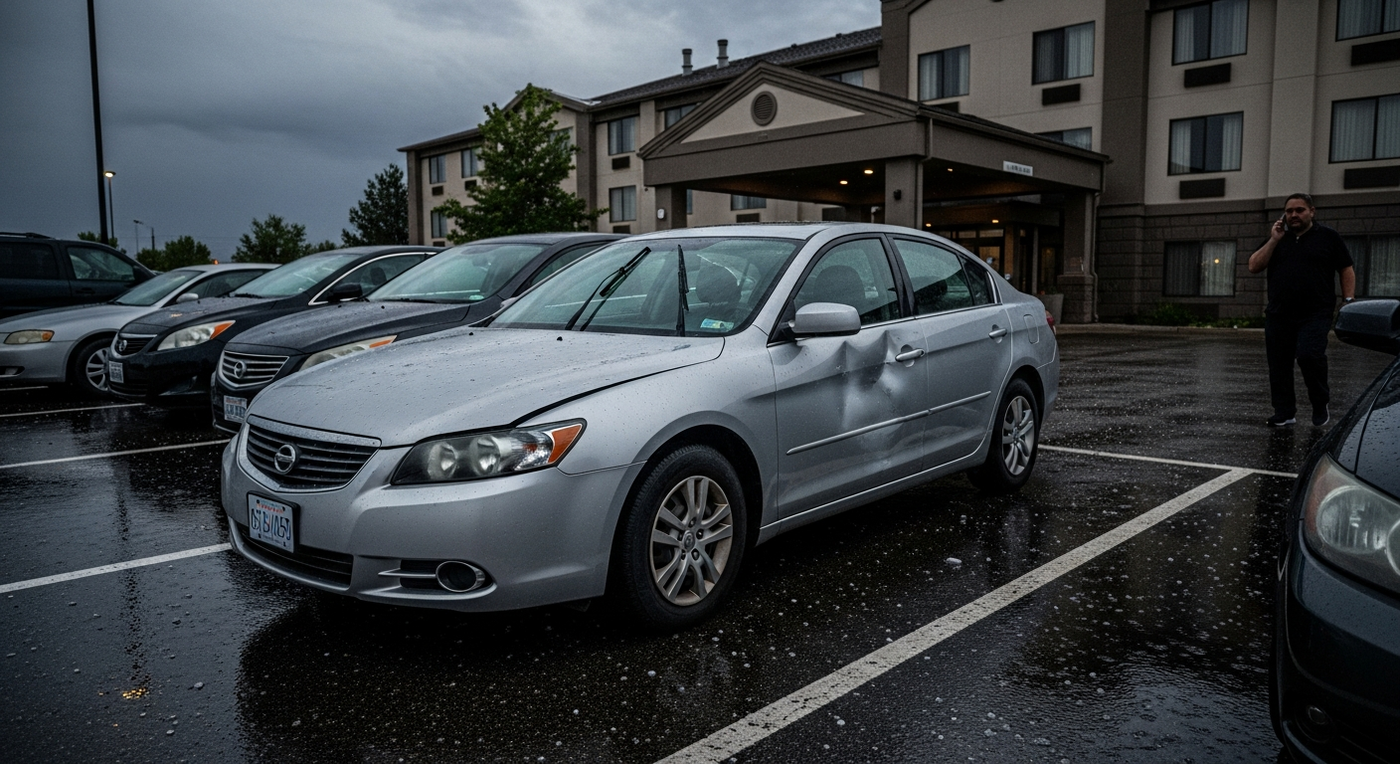
The Insurance Review You Should Schedule in January

Most drivers review their auto insurance only when renewing or after an incident. This creates a predictable problem: they discover their hail coverage gaps when filing a claim, not before the storm.

A January insurance review appointment serves a specific purpose. It gives you time to adjust deductibles, add comprehensive coverage if you currently carry only liability, or switch carriers entirely if your current policy treats hail damage unfavorably. These changes typically require at least one billing cycle to take effect—sometimes longer if you're switching companies.

Comprehensive coverage (which covers hail) typically costs roughly $200-400 annually for most drivers, but deductible choices dramatically affect out-of-pocket costs after damage occurs. A $500 deductible versus a $1,000 deductible might differ by only $50-100 in annual premium, but that choice determines whether you pay $500 or $1,000 before insurance covers a typical hail repair.

The January appointment also clarifies your insurer's specific claims process. Some companies allow you to choose your repair shop. Others require approved facilities. Some offer diminished value coverage. Others don't. Knowing these details in January means you're not learning them in a parking lot after a storm.

What to Buy (or Inspect) Before February

Car covers designed for hail protection fall into three categories: inflatable systems that create an air cushion around the vehicle, multi-layer padded covers that absorb impact, and portable carports that provide overhead shelter. Each addresses different scenarios.

Inflatable systems typically cost approximately $400-800 and work well for drivers with consistent access to power outlets—they require inflation before each storm. Multi-layer padded covers typically run $150-400 and function without power but demand several minutes of deployment time. Portable carports typically cost $300-1,500 depending on size and represent the only option that doesn't require advance warning.

Here's what most people get wrong: they buy the cover in April and never actually practice deploying it. A cover that takes seven minutes to install when you're calm and unhurried in your driveway might take fifteen minutes when you're rushing as a storm approaches. That difference matters when you have a twenty-minute warning window.

December and January purchases arrive with time to spare. You can practice installation on a Saturday morning. You can verify the cover actually fits your vehicle—manufacturers' size charts don't always account for side mirrors, roof racks, or aftermarket modifications. You can identify storage problems before they become urgent problems.

Inspection matters as much as purchase for drivers who already own protection equipment. Padded covers develop tears. Inflatable systems develop slow leaks. Carport frames corrode. A December inspection reveals these failures when you can still order replacement parts with standard shipping.

The Alert System You Should Configure in February

Storm alert apps have proliferated over the past decade, but their default settings rarely match what hail-season preparedness actually requires. Most send notifications for any severe thunderstorm warning in your county. That sounds useful until you realize it means alerts for storms fifty miles away while you're trying to sleep.

Effective hail alerts require geographic precision. You need notifications for storms within five miles of your specific location—close enough that you have time to act, but not so broad that you're responding to distant weather. Most apps allow this customization, but the setting isn't obvious.

February represents the ideal configuration window because spring weather provides test cases without actual risk. You can adjust notification radius, sound settings, and alert thresholds while watching how the system responds to early-season storms. If you're getting too many alerts, you can tighten the radius.

The National Weather Service issues severe thunderstorm warnings when storms produce wind gusts of at least 58 mph or hail at least one inch in diameter. But damage thresholds vary. Hail smaller than one inch rarely dents cars. Hail between one and two inches creates minor damage. Hail larger than two inches—roughly golf-ball size or bigger—causes significant damage regardless of vehicle age or paint condition.

Some alert systems allow you to filter by hail size rather than just "severe thunderstorm." This filtering prevents alert fatigue. You're not responding to every storm, only storms producing hail large enough to matter.

33%

%

Annual hail in May

$280

April panic pricing

$200

December normal cost

The Three-Month Preparation Timeline

December: Research and purchase. Compare car cover options, read reviews from drivers in hail-prone regions, and place orders while inventory remains full and shipping runs normally.

January: Schedule and review. Book an insurance policy review appointment. Practice deploying whatever protection system you purchased. Verify storage locations—garage space, trunk capacity, or wherever you plan to keep equipment between storms.

February: Configure and test. Set up storm alert systems with appropriate geographic and severity filters. Monitor early-season weather to verify alerts arrive with sufficient advance notice. Adjust settings based on actual performance.

March: You're done. You enter hail season with coverage you understand, equipment you've practiced deploying, and alerts calibrated to your specific needs. When the first severe weather outbreak arrives, you're executing a plan rather than improvising one.

Why This Matters More Than It Used to

Hail frequency has remained relatively stable over the past several decades, but vehicle repair costs have not. Modern cars incorporate more complex materials—aluminum body panels, advanced paint systems, integrated sensors—that cost more to repair or replace after hail damage.

The average hail damage claim has increased substantially over the past decade, even accounting for inflation. A repair that might have cost several thousand dollars fifteen years ago now typically runs higher for equivalent damage. Larger hail events can push costs to $8,000 or more, approaching or exceeding many vehicles' actual cash value.

This cost escalation makes preparation more valuable than it was for previous generations of drivers. The financial consequence of being unprepared has grown while the cost of preparation has remained relatively modest.

What Happens If You Wait Until March

March preparation is still better than April preparation, but it operates under different constraints. Car cover inventory begins tightening as other drivers reach the same conclusion. Shipping times extend from three-to-five days to seven-to-ten days or longer. Insurance policy changes might not take effect before the first major outbreak.

More significantly, March preparation compresses your practice window. You might receive your car cover only days before needing to deploy it in actual conditions. You might configure your alert system during an active weather pattern rather than during calm conditions when you can think clearly about settings.

The drivers who wait until they see a hail forecast are operating in crisis mode from the beginning. They're making decisions under time pressure, paying premium prices, and hoping equipment arrives before weather does.

Decision Tradeoffs

Pros

  • Inflatable systemsComplete vehicle cushioning, best protection level
  • Padded coversNo power needed, moderate cost, portable
  • Portable carportsNo storm warning required, always ready

Tradeoffs

  • Inflatable systemsNeeds outlet access, highest price, requires advance setup
  • Padded coversManual deployment takes time, needs warning
  • Portable carportsExpensive, requires space, frame maintenance

Choose based on your warning time and power access—inflatables for garages, covers for driveways, carports for zero-notice protection.

The Actual Cost of December Preparation

A complete hail preparation program—comprehensive insurance review, quality car cover, and configured alert system—typically requires roughly $200-500 in direct costs plus several hours of time across three months.

That investment protects against repair bills that can range from several thousand dollars for moderate damage to $10,000 or more for severe damage. The math isn't complicated.

But the real value isn't just financial. It's the difference between watching storm forecasts with a plan versus watching them with dread. It's knowing that when severe weather arrives, you're not scrambling to find protection or wondering whether your insurance will cover repairs. You're simply executing steps you practiced months earlier.

December feels early for hail preparation. That's exactly why it works.

Verified Sources

  1. Storm Prediction Center

    Storm Prediction Center

    Hail climatology and seasonal patterns

Back to Storm Prep