Regional Report

When Does Hail Season Start? A State-by-State Guide to Peak Months

Hail season begins in February along the Texas Gulf Coast and doesn't end until September in Montana — there is no single national hail season, only a northward-moving wave of peak risk that shifts roughly 200 miles per month.

When Does Hail Season Start? A State-by-State Guide to Peak Months
Hail Protector Editorial / GeminiRegional Report

The First Hailstones Fall While Snow Still Covers the North

On February 18, 2023, a supercell dropped golf ball-sized hail across suburban Houston while Minneapolis recorded eight inches of fresh snow the same afternoon. This isn't unusual. According to NOAA Storm Prediction Center data, the Texas Gulf Coast sees its first significant hail events in late February most years, marking the beginning of a six-month progression that won't reach the Canadian border until midsummer. The question "when does hail season start?" has no single answer because hail follows the sun — and the specific atmospheric instability that comes with it — northward across the continent in a predictable but regionally staggered pattern.

Understanding your state's specific window matters more than knowing national averages. A Colorado driver who assumes "spring" means the same thing as it does in Georgia will miss the fact that their highest risk arrives in mid-May, not March.
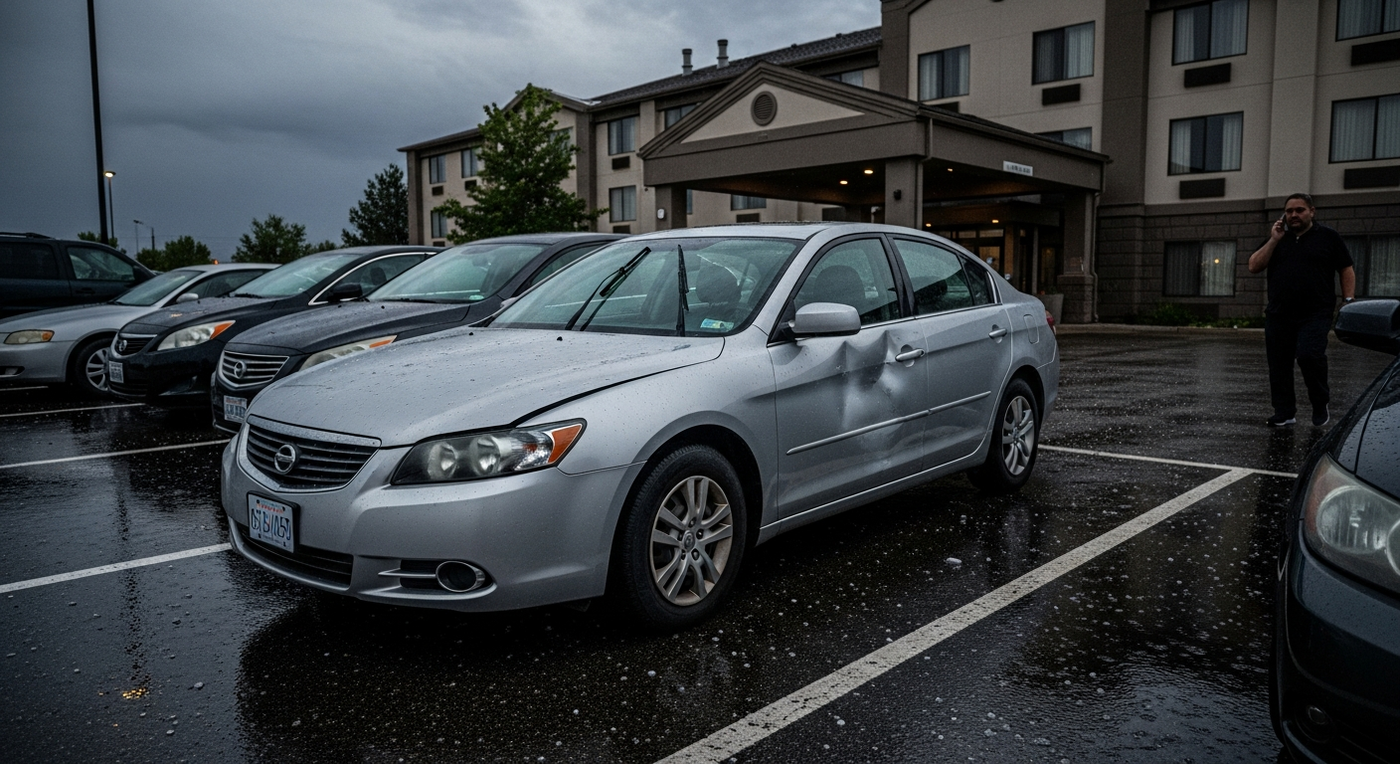
The Gulf Coast: February Through April

Southern Texas experiences its first hail episode typically in mid-to-late February, when Gulf moisture collides with the season's first strong cold fronts. The I-35 corridor from San Antonio through Austin to Dallas sees peak activity in March and early April. Louisiana and southern Mississippi follow a similar timeline, with March representing the highest-risk month.

Florida is the outlier. Despite its position in the Deep South, the peninsula generates relatively little severe hail — the marine environment suppresses the kind of extreme instability that produces large stones. When Florida does see hail, it's usually small and concentrated in the northern panhandle during March.

The Southern Plains: March Through May

Oklahoma's hail season effectively begins in early March and peaks sharply in April and May. The state sits in what meteorologists call the "hail alley" sweet spot — far enough north to get powerful jet stream dynamics, far enough south to tap Gulf moisture, and blessed (or cursed) with topography that does nothing to disrupt supercell formation.

Kansas follows approximately three weeks behind, with May representing the statistical peak. According to Insurance Information Institute claims data, Kansas consistently ranks in the top three states for hail damage severity, with a significant concentration of damage occurring during a six-week window from late April through early June.

Arkansas and Missouri see their highest activity in April, while the Texas Panhandle — despite being geographically southern — behaves more like Kansas, with a May peak.

The Central Plains: May and June

Nebraska, Iowa, and South Dakota experience a compressed but intense hail season centered on May and early June. The northward retreat of the polar jet stream during these months positions the strongest upper-level winds directly over the region just as surface temperatures climb into the 80s. This combination — technical term: "steep lapse rates with strong deep-layer shear" — is hail's favorite recipe.

Wyoming and eastern Colorado see peak activity in May, though the Front Range urban corridor from Fort Collins to Colorado Springs extends that window into June. Denver's hail season is surprisingly narrow: a substantial majority of significant hail events occur during a seven-week period from mid-May through June.

Here's what surprises most people: hail is more common in Colorado than in Tornado Alley states, but Colorado's hail falls in a more predictable pattern. Oklahoma might see severe hail in March, May, or even October. Colorado sees it in May and June, full stop.

200

miles

Monthly northward shift

60%

%

Kansas damage in 6 weeks

70%

%

Denver events in 7 weeks

The Northern Plains: June Through August

Montana, North Dakota, and northern South Dakota don't experience significant hail until June. The season peaks in July — the only region in the Lower 48 where midsummer represents maximum hail risk rather than maximum heat.

This late-season pattern extends into the northern Rockies. Idaho's highest hail frequency occurs in June and July, concentrated in the Snake River Plain and the panhandle region near Coeur d'Alene.

Minnesota and Wisconsin straddle the transition zone. Southern portions of both states see May activity, but the northern counties don't experience peak risk until late June and July. The Great Lakes themselves suppress some hail formation — the cooler water temperatures stabilize the lower atmosphere — but once storms move inland, they can intensify rapidly.

Hail Season Migration Pattern

  1. February

    Gulf Coast Begins

    Texas coastal areas see first significant hail while northern states remain frozen

  2. March-April

    Southern Plains Peak

    Oklahoma, Arkansas, and I-35 corridor experience maximum activity

  3. May

    Central Plains Maximum

    Nebraska, Kansas, Colorado Front Range hit peak risk window

  4. June-July

    Northern Tier Active

    Montana, Dakotas, Minnesota reach highest hail frequency

  5. August-September

    Season Ends North

    Final events in northern Rockies and Canadian border states

The Midwest and East: April Through June

Illinois, Indiana, and Ohio experience a broad hail season from April through June, with May typically representing the peak. These states see fewer individual hail days than Plains states but often experience more widespread events — a single squall line can drop damaging hail across multiple states in one afternoon.

Pennsylvania, New York, and New England see their highest risk in May and June. Hail occurs less frequently here than in the Plains, but when it does fall, it often catches drivers off guard. Northeastern states show higher claim rates per hail event, likely because fewer drivers have experience recognizing threatening sky conditions.

The Mid-Atlantic (Virginia, Maryland, the Carolinas) sees scattered hail from March through June, with April and May representing the slight peak. Georgia follows a similar pattern, though the southern third of the state trends earlier, aligning more with the Gulf Coast timeline.

The West: Scattered and Elevation-Dependent

Nevada, Utah, and Arizona don't have a traditional "hail season" in the Plains sense. These states see hail primarily during monsoon season (July and August) and typically at higher elevations. Phoenix might go years without significant hail, while Flagstaff — 5,000 feet higher — sees it multiple times each summer.

California's Central Valley experiences occasional hail in March and April, usually associated with strong Pacific storm systems. The coastal regions rarely see hail at all.

The Pacific Northwest (Washington and Oregon) gets most of its hail during spring months, March through May, but the stones are typically small — pea-sized or smaller — and the events are brief.

The Outliers and Exceptions

Alaska sees hail, but it's rare and small. Hawaii sees even less — the tropical maritime environment simply doesn't support the atmospheric profiles that generate large hail.

Some states have pronounced secondary peaks. Texas, for instance, sees a smaller hail maximum in October and November when fall cold fronts return. Oklahoma occasionally experiences significant hail events in October. These autumn events are less frequent than spring storms but can be equally damaging.

Why the Northward Progression Happens

The pattern exists because hail requires three ingredients simultaneously: moisture, instability, and wind shear. In February, only the Gulf Coast has all three. By March, the jet stream has retreated far enough north that Oklahoma and Arkansas enter the zone. By May, the strongest dynamics have shifted to Kansas and Nebraska. By July, Montana finally has warm enough surface temperatures to generate the instability that southern states experienced four months earlier.

Think of it as a roughly 2,000-mile-long assembly line that takes six months to complete one cycle. The sun powers the whole system, heating the continent from south to north, while the jet stream — driven by the temperature contrast between polar and tropical air — follows behind.

What This Means for Your Vehicle

If you live in Dallas, your highest-risk window is March 15 through April 30. If you live in Omaha, it's May 1 through June 15. If you live in Billings, it's June 15 through July 31. Knowing these windows lets you make specific decisions: delay that road trip by two weeks, park in a garage during the peak month, or schedule that cross-country move for after your state's hail season ends.

The single most actionable piece of hail knowledge isn't what hail looks like or how it forms — it's knowing the six-week window when your specific location faces maximum risk. Everything else is secondary.

Verified Sources

  1. Insurance Information Institute

    Insurance Information Institute

    State-level hail damage statistics and seasonal patterns

  2. NOAA Storm Prediction Center

    NOAA Storm Prediction Center

    Historical hail frequency and distribution data

  3. NOAA Storm Prediction Center

    NOAA Storm Prediction Center

    Official convective outlook archive and risk categories.

Back to Storm Prep