Seasonal Guide Seasonal Briefing

The $4,200 Mistake Waiting in Long-Term Parking: Summer Travel and Hail Season's Perfect Storm

Most travelers book airport parking based on price and proximity, but June through August creates a unique weather liability that parking decisions made three weeks before departure can't predict.

The $4,200 Mistake Waiting in Long-Term Parking: Summer Travel and Hail Season's Perfect Storm
Hail Protector Editorial / GeminiSeasonal Guide

The Hotel Parking Decision Nobody Thinks About Until It's Too Late

Most business travelers and vacationers select hotels based on location, price, and amenities. Parking is an afterthought—you assume there will be a spot, you park there, done. But hotels in hail-prone markets present a specific risk calculation that matters more in summer months than any other time of year.

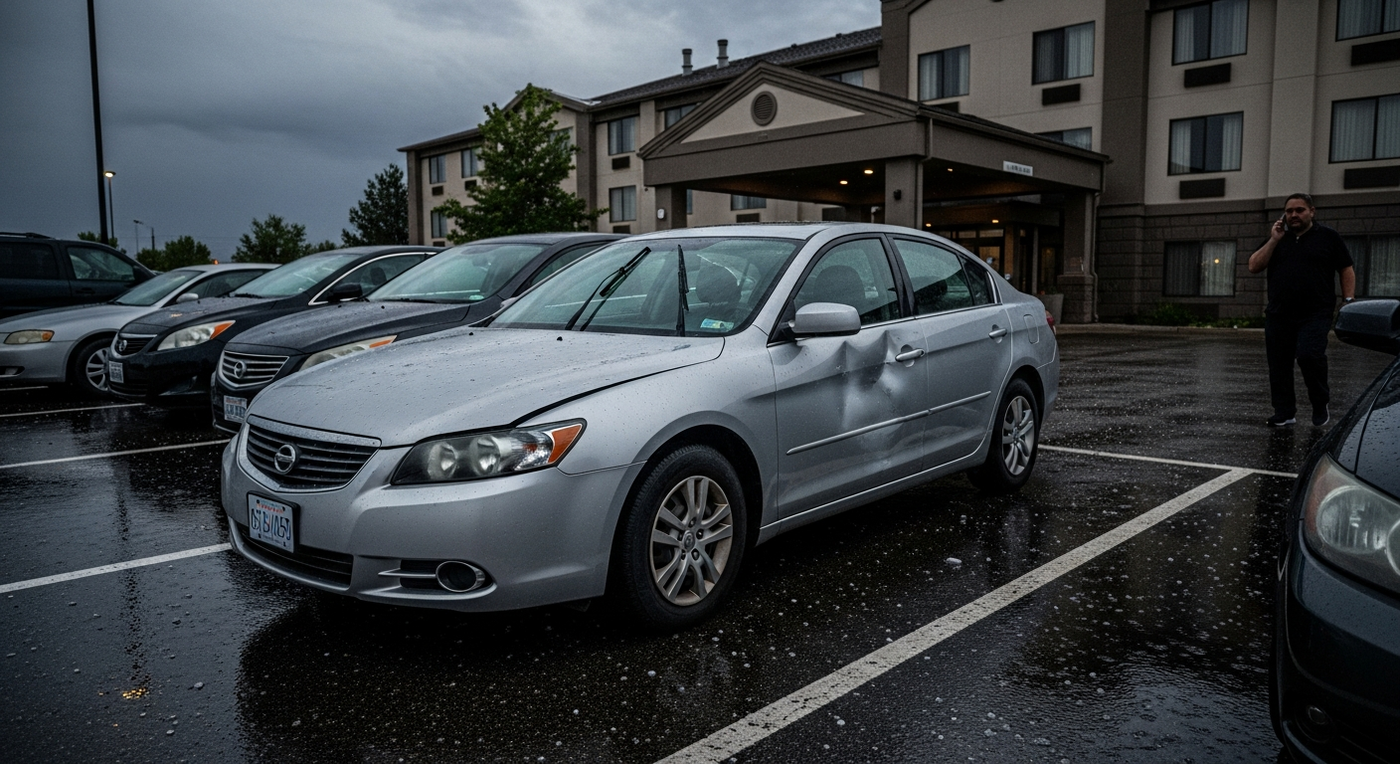
A typical hotel parking lot in Oklahoma City, Wichita, or Cheyenne offers the same protection as your driveway at home: none. The hotel has no liability for weather damage to vehicles in their lot. Some properties offer covered parking or garage access for an additional fee, typically around $10 to $20 per night. For a four-night stay, you're looking at roughly $40 to $80 extra. That sounds like an unnecessary expense until you consider that hail damage repairs can run several thousand dollars for moderate storms producing golf ball-sized hail.

The coverage decision becomes more complex during peak summer travel season because you're often booking hotels in unfamiliar cities. You might not know that Amarillo sits in one of the most active hail corridors in North America. You probably haven't checked whether that conference hotel in Des Moines offers garage parking. And unlike your home, where you can monitor weather forecasts and move your car to a covered location when severe storms approach, you're sitting in a hotel room or conference session with no advance warning system and no alternative parking location.

Here's what most people get wrong: they assume their comprehensive insurance makes the parking decision irrelevant. You're covered either way, so why pay extra? But insurance coverage doesn't eliminate the hassle cost—the hours spent getting estimates, the days without your vehicle while repairs happen, the deductible payment, and the potential rate increase. Paying $15 per night for garage parking isn't buying protection from a potentially costly repair bill; it's buying protection from the entire claims process and its downstream consequences.

Some business travelers expense covered parking without thinking twice. Others view it as an unnecessary luxury. The difference often comes down to whether you've personally dealt with hail damage before. Once you've spent a Tuesday morning at a body shop instead of working, the $60 garage fee for a three-night trip stops feeling optional.
4,000+

vehicles

Damaged in single storm

70%

%

Hail events June-August

$4,000+

+

Typical repair costs

The Rental Car Liability Trap

Rental car damage waivers create widespread confusion under normal circumstances. Add hail damage to the equation and most renters have no idea what they're actually liable for until they're standing in the return lot looking at a dimpled hood.

Most credit cards that offer rental car coverage explicitly exclude weather-related damage. The Collision Damage Waiver (CDW) you decline at the counter—the one that typically costs $15 to $30 per day—usually covers hail damage, but the fine print varies by company and location. Some rental agreements hold you liable for loss of use fees if the vehicle requires repair time off the rental fleet, potentially adding several hundred dollars beyond the actual damage cost.

The scenario plays out like this: you rent a car for a summer road trip through Montana and Wyoming. You decline the CDW because your credit card provides rental coverage. A severe thunderstorm rolls through Billings while you're having dinner, producing quarter-sized hail that dents the hood, roof, and trunk. When you return the car in Denver three days later, the rental company documents the damage and sends you a bill for repairs plus loss-of-use fees for the estimated time the vehicle will be in the shop.

You file a claim with your credit card's rental coverage, which denies it because weather damage falls outside their policy terms. You file with your personal auto insurance, which covers it minus your deductible—but now you have a claim on your record. The rental company has already charged your card for the full amount, and you're fighting to get reimbursed while dealing with your insurance company.

The liability question becomes even murkier with one-way rentals. If you pick up a car in Dallas and drop it in Denver, where is your responsibility for weather protection during that trip? Are you expected to monitor forecasts across four states and seek covered parking every time severe weather threatens? Most rental agreements don't specify, leaving renters in a legal gray area when hail damage occurs.

Business travelers who rent cars weekly face a different calculation than vacation renters. If you're in Omaha every month from May through August, the cumulative CDW cost over a summer season might exceed $1,000. But a single hail damage incident could cost several thousand dollars plus the administrative headache of fighting with insurance companies and rental agencies. Some frequent renters opt for annual third-party rental insurance policies that cover weather damage for approximately $100 to $200 per year—far cheaper than per-rental CDW fees, but only worthwhile if you rent often enough to justify the upfront cost.

The rental car scenario also highlights a planning gap that doesn't exist with your personal vehicle. At home, you know which parking options offer hail protection. You know your garage is safe, or you know to park under the carport when storms approach. With a rental car in an unfamiliar city, you're making real-time decisions about where to park without local knowledge. Is that hotel parking lot in Lubbock safe? Should you pay for garage parking at the Fort Worth convention center? You're guessing, and you're guessing during the three-month window when hail risk peaks.

Decision Tradeoffs

Pros

  • Economy lot savings$7/day vs $24 for covered spots—$119 saved on week-long trip
  • Credit card rental coverageFree protection included with many cards
  • Low daily probabilityAny single location faces minimal risk on specific day

Tradeoffs

  • Deductible responsibility$500-$1,000 out-of-pocket even with comprehensive insurance
  • Loss of use feesRental companies charge $450+ for fleet downtime during repairs
  • Claims hassle cost6+ hours dealing with estimates, rentals, and paperwork
  • Rate increase riskComprehensive claims can affect renewal premiums

For trips over 4 days during peak season in hail corridors, covered parking costs less than the expected hassle value of a single incident.

What Actually Works: Practical Protection Strategies

The most effective approach combines advance planning with real-time weather monitoring, but the advance planning part matters more than most travelers realize.

When booking summer travel to cities in the Great Plains or Front Range, check whether your airport parking, hotel, and rental car pickup location offer covered options before you finalize reservations. This isn't about always choosing covered parking—it's about knowing whether it exists as an option if weather forecasts look threatening as your trip approaches. Denver International Airport's covered parking structures fill up during peak travel periods; you can't decide 24 hours before your flight that you want garage parking if it's already booked.

For airport parking specifically, the decision timeline matters. If you're leaving your car for more than four days during June, July, or August in a hail-prone market, the probability math shifts. According to NOAA data, severe hail events occur somewhere in the central U.S. roughly every three days during peak season. Your individual location risk remains low on any given day, but over a week-long period, the cumulative probability increases enough that the covered parking premium starts looking more reasonable.

Mobile weather apps with severe weather alerts provide some protection, but only if you're in a position to act on them. A push notification about a severe thunderstorm warning in the city where your rental car is parked doesn't help if you're in a meeting 40 minutes away. The more useful strategy: when you arrive in a new city during summer months, identify covered parking locations near your hotel or primary destinations before you need them. If severe weather develops, you know exactly where to move the vehicle rather than scrambling to find options while storms approach.

Some travelers photograph their vehicles before extended parking periods or rental car pickups, creating documentation of pre-existing condition. This doesn't prevent damage, but it eliminates disputes about whether dents existed before a hail event. Rental car companies particularly benefit from ambiguity about pre-existing damage; clear photographic evidence with timestamps removes that ambiguity.

The insurance decision—whether to purchase CDW for rentals or upgrade to covered parking—ultimately comes down to risk tolerance and hassle aversion. The expected value calculation suggests declining coverage makes financial sense over many trips, but expected value doesn't account for the time cost of dealing with a single damage incident. If your time is worth $100 per hour and you spend six hours handling a hail damage claim, that's $600 in opportunity cost on top of your deductible and any potential rate increase.

One detail most travelers miss: some rental car companies allow you to add CDW after pickup but before damage occurs. If you decline coverage at the counter but then see severe weather forecasts for the region, you can sometimes call the rental company and add coverage retroactively for the remaining rental period. Not all companies allow this, and policies vary by location, but it's worth asking about when you pick up the vehicle.

The summer travel and hail season overlap creates a specific planning challenge because the decisions that matter most—where to park, whether to buy coverage—happen weeks or months before the weather that determines whether those decisions were correct. You can't know in May whether a severe hail storm will hit Denver the second week of July. But you can know whether covered parking exists as an option, what it costs, and how to access it if forecasts turn threatening. That advance knowledge is what separates travelers who face costly hail damage from those who pay for garage parking and avoid the problem entirely.

Verified Sources

  1. NOAA National Centers for Environmental Information

    NOAA National Centers for Environmental Information

    Severe weather event frequency data

Back to Storm Prep