Editorial Quick Answers

Your Insurance Company Just Totaled Your Hail-Damaged Car. Now What?

When cosmetic hail damage exceeds your vehicle's value, you have three settlement options—and most drivers never hear about two of them.

Your Insurance Company Just Totaled Your Hail-Damaged Car. Now What?
Hail Protector Editorial / GeminiEditorial

The Letter That Changes Everything

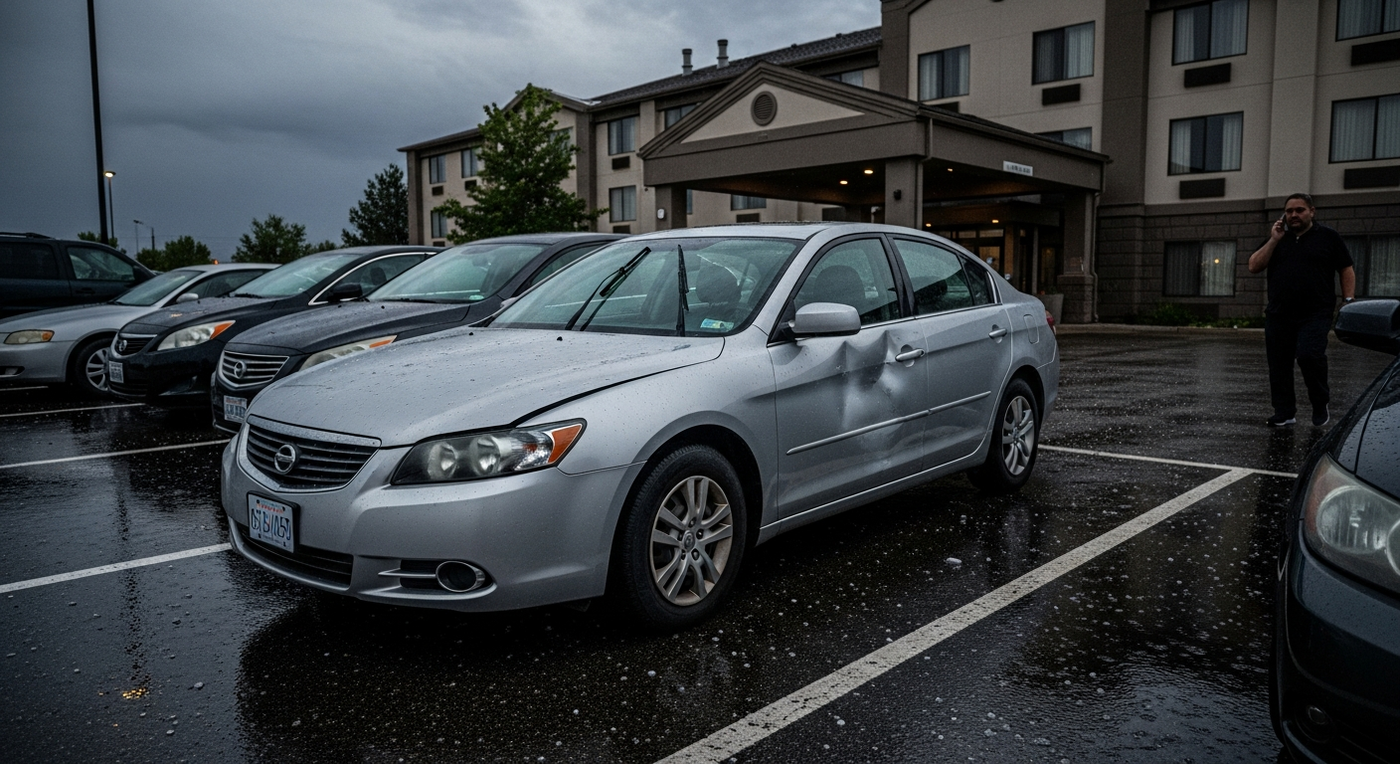
The adjuster's email arrives two weeks after the storm: your 2019 Honda CR-V with 78,000 miles has been declared a total loss. The hail damage estimate came to $8,400, but the actual cash value of your car is only $7,200. You're expecting a check and instructions on where to drop off the keys. What you're not expecting is a choice.

Most drivers assume a total loss declaration means the insurance company takes the car and cuts a check. That's one option. But in most states, you can also buy back the salvage, keep driving the dented vehicle, and pocket the difference between the settlement and the buyback price. Or you can challenge the actual cash value calculation and potentially increase your payout without touching the salvage question at all.

The decision matters because these three paths lead to wildly different financial outcomes—and the insurer's first settlement letter rarely explains all of them clearly.

What "Total Loss" Actually Means

A vehicle is totaled when repair costs exceed a percentage of its actual cash value—that threshold varies by state, typically ranging from roughly 70% to 100%. In the hail damage context, this creates a peculiar situation: a car can be mechanically perfect, cosmetically ugly, and financially totaled all at once.

The actual cash value (ACV) is what your specific vehicle was worth the moment before the storm, accounting for make, model, year, mileage, condition, and local market prices. Insurers determine this using databases like CCC ONE or Mitchell, which pull comparable vehicle sales in your region. The estimate isn't always accurate—it's a starting point for negotiation.

Here's what surprises people: the total loss threshold includes sales tax, title fees, and other transaction costs in some states but not others. A car valued at $12,000 might be totaled at $9,500 in damage in one state and $11,000 in another, purely based on how the formula accounts for replacement costs.

Option One: Accept the Settlement and Surrender the Vehicle

This is the straightforward path. The insurer pays you the actual cash value minus your deductible, takes possession of the car, and sells it at a salvage auction. You use the payout as a down payment on a replacement vehicle.

The math works cleanly when you were already considering an upgrade or when the vehicle had existing mechanical issues that would have required expensive repairs soon anyway. You walk away with cash and no further obligations.

The downside: you're buying a replacement in a market where used car prices remain elevated compared to pre-2020 levels. According to Bureau of Labor Statistics CPI data, used vehicle prices have stabilized but haven't returned to historical norms. That $7,200 settlement might not buy the equivalent of what your pre-hail CR-V was worth in actual utility.

70-100

%

Damage threshold for totaling

15-25

%

Typical salvage buyback cost

30-50

%

Resale penalty with rebuilt title

Option Two: Buy Back the Salvage and Keep Driving

In most states, you can purchase the salvage from your insurer for a fraction of the settlement value—typically around 15-25% of the actual cash value, though this varies based on salvage auction demand in your region. The insurer deducts the salvage value from your settlement, you keep the car, and it receives a salvage or rebuilt title.

Here's a concrete example: Your car is valued at $10,000. Damage estimate is $11,500. The salvage buyback price is approximately $2,000. Instead of receiving a $10,000 settlement and losing the car, you receive $8,000 and keep driving the dented vehicle. You're $8,000 richer than you were before the storm, minus your deductible.

This option makes financial sense when the damage is purely cosmetic. Hail dents don't compromise structural integrity, don't affect crash safety, and don't impact mechanical function. You're driving an ugly car that works exactly as well as it did before the storm.

The rebuilt title creates consequences down the road. When you eventually sell or trade the vehicle, buyers will see the title brand and discount their offers—rebuilt titles typically reduce resale value by roughly 30-50% compared to clean-title equivalents. But if you're planning to drive this car for another five years or until it dies, that future resale penalty is irrelevant. You've already extracted the value.

Some states require a salvage inspection before you can register a rebuilt title vehicle, even when the damage was cosmetic. The inspection confirms the car is roadworthy—usually a formality for hail damage, but it adds a step and a small fee to the process.

Option Three: Negotiate the Actual Cash Value

Before you decide whether to keep or surrender the vehicle, you can challenge the ACV calculation. Insurers use automated valuation models, and those models sometimes undervalue vehicles, especially when your specific car has desirable features, recent maintenance, or lower-than-average mileage for its age.

You're entitled to see the valuation report. Request the comparable vehicles the insurer used—year, mileage, features, condition, and sale prices. If your car has a premium trim package, new tires, or recent transmission work, and the comparables don't reflect those factors, you have grounds to negotiate.

Pull your own comparables from local dealership listings, Autotrader, or Cars.com. If similar vehicles are selling for $1,500 more than the insurer's valuation, document it. Send photos of your car's condition before the storm if you have them. Highlight anything that makes your vehicle worth more than the average example.

Increasing the ACV by even $1,000 or more changes the math on both the standard settlement and the salvage buyback option. It's worth two hours of research before you sign anything.

The Hidden Variable: Your State's Title Laws

Salvage and rebuilt title regulations vary dramatically by state, and these differences affect whether the buyback option makes sense.

Some states issue a "salvage" title that can be converted to a "rebuilt" title after inspection. Others issue a permanent "hail damage" or "cosmetic damage" brand that never goes away but doesn't carry the same stigma as a salvage title from a collision. A few states allow insurers to total a vehicle without issuing a salvage title if the damage is cosmetic only and the owner keeps the car.

These distinctions matter for insurance. Some carriers won't write comprehensive and collision coverage on rebuilt title vehicles. Others will, but at higher premiums. If you're financing the car, your lender might require full coverage, which means you need to confirm your insurer will continue the policy before you buy back the salvage.

Registration requirements also vary. Most states require a VIN inspection and brake-and-light check for rebuilt titles. A few require a more extensive safety inspection that includes frame measurements—overkill for hail damage, but required nonetheless.

Verified Sources

  1. NOAA Storm Prediction Center

    NOAA Storm Prediction Center

    Official convective outlook archive and risk categories.

  2. bls.gov

    bls.gov

    Referenced in article via bls.gov.

Back to Storm Prep