Editorial Quick Answers

Your Insurer Just Totaled Your Hail-Damaged Car. Here's What Happens Next.

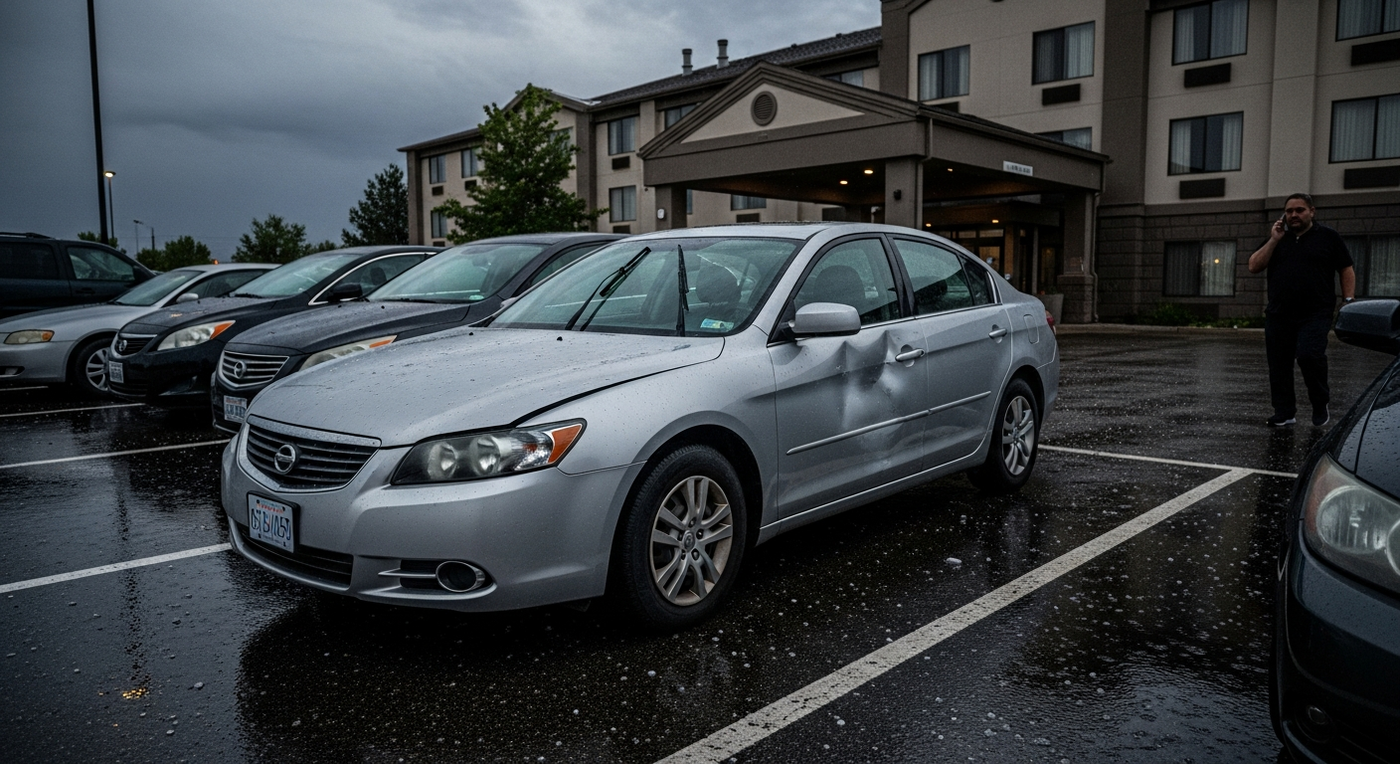
When hail damage exceeds your vehicle's actual cash value, you face a decision most drivers never prepare for: take the check, buy back the salvage, or challenge the valuation.

Your Insurer Just Totaled Your Hail-Damaged Car. Here's What Happens Next.
Hail Protector Editorial / GeminiEditorial

The Total Loss Threshold Isn't What You Think

Insurance companies declare a vehicle a total loss when repair costs reach a specific percentage of the car's actual cash value—but that threshold varies by state. In Texas, it's 100% of ACV. In Colorado, just 80%. Montana sets the bar at 75%.

This means identical hail damage on identical vehicles can produce different outcomes depending on where you registered the car. A 2019 Honda Civic worth roughly $18,000 with approximately $14,000 in hail damage gets totaled in Colorado but repaired in Texas.

The calculation uses actual cash value, not replacement cost. Your insurer determines ACV by finding comparable vehicles in your market, then subtracting depreciation. A car you bought for $32,000 three years ago might have an ACV of roughly $22,000 today—and hail damage of approximately $17,000 suddenly crosses the total loss threshold in most states.

Three Paths After a Total Loss Declaration

Option One: Accept the Settlement.

The insurer pays you the actual cash value minus your deductible, then takes possession of the vehicle. They sell it at salvage auction, typically recovering around 20-30% of the ACV according to industry data. You walk away with a check and no car.

This is the cleanest exit. You avoid salvage title complications, maintain a clear vehicle history for your next purchase, and eliminate the cosmetic eyesore of driving a dented car. The settlement check becomes your down payment on a replacement.

Option Two: Owner-Retained Salvage.

You keep the damaged vehicle and receive the settlement minus both your deductible and the salvage value. The salvage value—what the insurer would have recovered at auction—typically runs 15-25% of the ACV based on auction market patterns, though it varies based on the vehicle's age, make, and damage extent.

Here's the math on that roughly $22,000 Civic: The insurer offers $22,000 minus your $500 deductible = $21,500. If you choose owner-retained salvage and the salvage value is approximately $4,500, you receive $17,000 and keep the car. You're driving a dented vehicle with a salvage title, but you're $17,000 richer.

Most states require you to apply for a salvage title, then complete an inspection process to obtain a rebuilt title before legally driving the vehicle. The inspection verifies the car remains roadworthy despite cosmetic damage—a straightforward process for hail damage since no structural components failed.

Option Three: Challenge the Valuation.

Challenging the Valuation

If you believe the insurer's ACV assessment is too low, you can dispute it with comparable vehicle listings from your market. Find three similar vehicles—same year, make, model, mileage, and condition—currently for sale at higher prices. Submit these as evidence.

According to Insurance Information Institute guidance, insurers must justify their valuations with market data. A successful challenge raises the ACV, which might push repair costs below the total loss threshold—or simply increase your settlement.

This process delays payment by weeks or months. It works best when you have time to research and the gap between the insurer's valuation and market reality is substantial—think several thousand dollars, not a few hundred.

75-100

%

State total loss thresholds

30-50

%

Rebuilt title value reduction

20-30

%

Insurer salvage auction recovery

The Rebuilt Title Penalty

A salvage title becomes a rebuilt title after passing state inspection, but the stigma remains permanent. Resale value typically drops 30-50% compared to a clean title vehicle based on market analysis.

That rebuilt-title Civic worth roughly $22,000 with a clean title might fetch approximately $11,000-$15,000 with a rebuilt title, even if the hail damage was purely cosmetic. Buyers assume the worst: flood damage, frame damage, or shoddy repairs. They're wrong about hail-totaled vehicles, but their assumptions control the market.

Some lenders refuse to finance rebuilt title vehicles. Many insurers decline to offer comprehensive and collision coverage, limiting you to liability-only policies. This creates a secondary problem: if you still owe money on the car, your lender might require full coverage you can't obtain.

When Keeping the Salvage Makes Financial Sense

Run this calculation: settlement minus salvage value, plus remaining loan balance, minus replacement vehicle cost.

Scenario A: You own the car outright - Settlement: $21,500 - Minus salvage value: $4,500 - Net payout if you keep it: $17,000 - Remaining loan: $0 - Cost to replace with similar vehicle: roughly $22,000.

Keeping the salvage means you drive a dented car but save $5,000 compared to accepting the settlement and buying a replacement. If you plan to drive this vehicle for three more years, the cosmetic damage becomes irrelevant—you're not selling it anyway.

Scenario B: You owe $12,000 - Net payout if you keep it: $17,000 - Minus loan payoff: $12,000 - Cash in pocket: $5,000 - You still own a dented but functional car.

Accepting the settlement gives you $21,500 minus the $12,000 loan = $9,500 toward a replacement. But replacement vehicles cost roughly $22,000, leaving you approximately $12,500 short. Keeping the salvage leaves you with $5,000 cash and a paid-off vehicle.

The math favors salvage retention when: the damage is cosmetic only, you plan to keep the vehicle long-term, you can obtain insurance coverage, and you don't need the full settlement to afford a replacement.

What Insurance Companies Don't Advertise

Insurers prefer you accept the settlement. It closes the claim faster, eliminates ongoing customer service, and prevents disputes about rebuilt title insurability. The adjuster won't volunteer that owner-retained salvage exists—you have to ask.

Some insurers make the salvage buyback process deliberately cumbersome. They'll quote a salvage value higher than auction data supports, reducing your net payout. They'll delay providing the salvage title paperwork. They'll warn about rebuilt title consequences while downplaying the financial benefits.

Request the salvage value calculation in writing. Ask what comparable salvage auction results they used. In many states, you can hire an independent appraiser to assess salvage value—if their number is lower than the insurer's, you have negotiating leverage.

Verified Sources

  1. Insurance Information Institute

    Insurance Information Institute

    Auto insurance claims process and valuation disputes

Back to Storm Prep