Explainer Deep Dive

Hail and Your Car's Paint: Why Clear Coat Fails, How UV Exposure Accelerates Damage, and When PDR Won't Save It

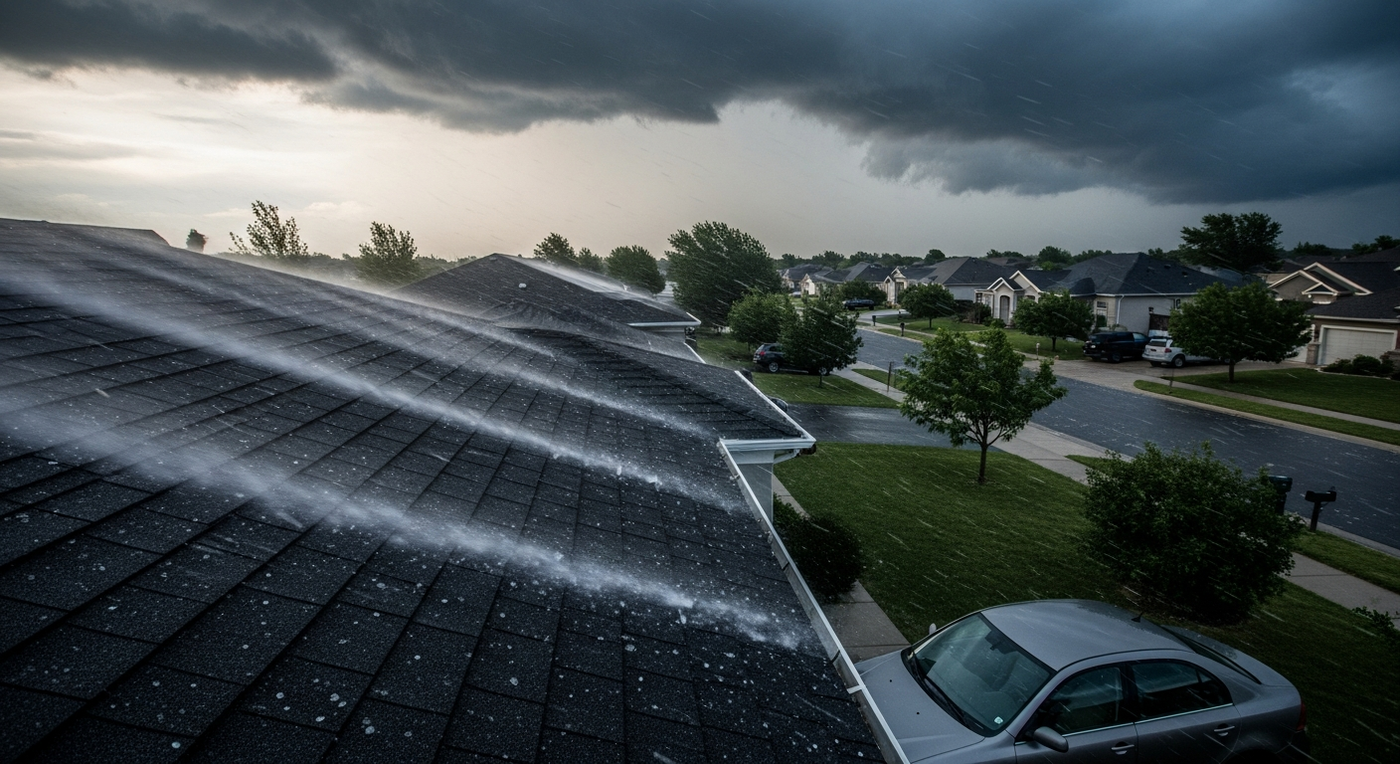
The difference between a $500 repair and a $4,000 respray often comes down to whether a hailstone cracked through a layer of protection roughly half the thickness of a human hair.

Hail and Your Car's Paint: Why Clear Coat Fails, How UV Exposure Accelerates Damage, and When PDR Won't Save It
Hail Protector Editorial / GeminiExplainer

The Seven-Year Brittleness Curve

Here's what most people get wrong about hail damage: they assume the storm is the only variable. In reality, a 2018 Camry and a 2012 Camry hit by identical hail will often sustain dramatically different paint damage. The culprit is ultraviolet radiation.

Clear coat degrades from the moment it leaves the factory. UV exposure breaks down the polymer chains that give the coating its structural integrity, a process called photodegradation. Research on automotive coatings shows this degradation typically accelerates after approximately five to seven years of sun exposure, particularly in high-UV environments like the Southwest or mountain states where thinner atmosphere provides less filtering.

A car garaged most of its life will have noticeably more resilient clear coat than one parked outside daily. The difference becomes obvious during hail events—the garaged vehicle might emerge with dents but intact paint, while the sun-baked car shows widespread cracking from stones that weren't particularly large. Paint thickness gauges can measure this degradation before a storm ever hits, and some detail shops use these readings to predict how a vehicle will fare in severe weather.

The chemistry here matters. Clear coat is typically a two-component urethane system—a resin and a hardener that cross-link during the curing process. UV radiation breaks these cross-links, leaving the coating progressively more brittle and chalky. You've seen the evidence if you've ever run your hand across an old car's hood and felt a rough, slightly powdery texture. That's advanced clear coat failure, and at that stage even moderate hail will shatter the remaining coating like safety glass.

Temperature swings compound the problem. Clear coat expands and contracts with heat, and each cycle creates microscopic stress. A vehicle in Phoenix experiences more dramatic temperature differentials than one in Seattle—the paint might reach 180°F in afternoon sun, then cool to 70°F overnight. After thousands of these cycles over several years, the coating develops internal stresses that make it far more susceptible to impact damage.
1.5-2

mils

Clear coat thickness

0.75

inch

Minimum cracking hail size

5-7

years

UV degradation acceleration point

12-18

months

Corrosion timeline after cracking

When Cosmetic Becomes Structural

Once clear coat cracks, you're racing a clock most drivers don't know is running. The crack creates a pathway for moisture to reach the base coat and primer layers beneath. Base coat is pigmented but porous—it was never designed to be a moisture barrier. Within weeks of a hail storm, water begins migrating through these cracks during rain or even morning dew.

The base coat swells when wet, creating additional stress that widens the original crack. More concerning is what happens at the metal interface. Modern vehicles use electrocoat primer systems that provide excellent corrosion resistance, but only when the system remains sealed. Introduce moisture through a crack in the clear coat, and you've created the conditions for oxidation between the primer and base coat layers.

This corrosion typically appears as bubbling or lifting paint around the original hail impact site. This progression typically takes roughly 12 to 18 months in moderate climates, faster in humid or coastal environments where salt accelerates the process. What started as a cosmetic issue—a small crack in clear coat over a minor dent—has become a structural problem requiring metal treatment before repainting.

Here's the insidious part: this damage often isn't visible until it's advanced. The corrosion begins at the metal surface and works its way outward through the paint layers. By the time you see bubbling on the exterior, there may be significant oxidation underneath requiring more extensive metalwork than the original hail dent would have needed.

Insurance adjusters understand this timeline, which is why many hail damage claims include language about timely repairs. Wait too long to file or complete the repair, and you may find yourself arguing about whether subsequent paint failure is storm damage or deferred maintenance. Some policies explicitly limit the window for hail claims to 12 months, recognizing that damage assessment becomes murky after the initial impact evidence degrades.

The economics shift dramatically once moisture intrusion begins. A dent with intact clear coat might cost approximately $150 to repair with PDR. The same dent with a hairline crack could require an estimated $800 panel respray. But if you've waited until corrosion appears, you're looking at metal treatment, possibly filler work, primer, base coat, clear coat, and blending—typically around $1,500 for a single panel, and that's assuming the corrosion hasn't spread to adjacent areas.

The PDR Decision Matrix

Paint condition determines whether PDR is even possible, but most drivers don't know how to evaluate this themselves. Technicians use a simple test: they run a fingernail across the impact site at an angle. If they feel the nail catch on a raised edge, the clear coat has likely fractured. Smooth transitions suggest the paint flexed but didn't break.

Lighting matters enormously for this assessment. Hail damage inspectors use high-intensity LED panels positioned at severe angles to create shadows that reveal surface irregularities. In direct sunlight or dim garage lighting, you might miss clear coat damage that's obvious under proper illumination. This is why professional estimates sometimes differ dramatically from what you see in your driveway—they're literally seeing things you can't without the right equipment.

The size and depth of the dent also factor into the equation, but not always in obvious ways. A shallow, broad dent might be easier to PDR than a small, deep one, because the metal hasn't been stretched as severely. When hail creates a sharp, deep impact, the metal often stretches beyond its elastic limit—it won't return to its original shape no matter how skilled the technician. These dents require filler, which means conventional bodywork and repainting.

Panel location matters too. Dents on body lines, panel edges, or braces are difficult or impossible to access from behind, ruling out PDR regardless of paint condition. Quarter panels on many modern vehicles have internal structural supports that block access. Aluminum panels, increasingly common on trucks and luxury vehicles, behave differently than steel—they work-harden more readily and are less forgiving of PDR attempts.

Some shops won't attempt PDR on vehicles older than ten years specifically because of clear coat brittleness concerns. They've learned through experience that the paint often fails during the repair process itself—the pressure from PDR tools cracks already-degraded clear coat that looked intact before work began. At that point, they're liable for paint damage they didn't cause but revealed, creating warranty headaches nobody wants.

The most frustrating scenario is mixed damage—some dents with intact paint, others with cracks. You end up paying for both PDR on the repairable areas and conventional bodywork on the compromised panels. This hybrid approach is often more expensive than choosing one method for the entire vehicle because it requires two different processes, multiple shop visits, and careful blending where the repair types meet.

What the Detailing Industry Won't Tell You

Professional detailers can often predict hail vulnerability before storms hit. They see the early warning signs: clear coat that's begun to haze, paint that doesn't bead water properly anymore, slight color fading that indicates UV damage. These are all symptoms of polymer degradation that make the coating brittle.

Paint correction—the process of removing scratches and swirls through machine polishing—actually removes clear coat. Depending on how aggressively a vehicle has been detailed over its lifetime, there may be significantly less than the original 2 mils remaining. Some older vehicles that have been polished repeatedly might have less than 1 mil of clear coat left. At that thickness, even minor hail can punch through to the base coat.

You can measure this. Paint thickness gauges typically cost roughly $200 to $500 for decent models, and they'll tell you exactly how much coating remains on each panel. Factory paint on steel panels typically measures around 4 to 6 mils total (primer, base coat, and clear coat combined). Readings below approximately 3 mils suggest either aggressive polishing history or a panel respray. Readings that vary significantly between panels—say, 5 mils on the hood but 3 mils on the roof—indicate uneven wear or repair history.

The roof is almost always the most vulnerable panel. It receives more direct UV exposure than any other surface, and it's where hail strikes most directly. If your vehicle is going to show clear coat failure, it'll likely appear on the roof first. This is also why roof dents are often the most expensive to repair—they're visible, they accumulate water and debris, and the paint is typically in the worst condition.

Here's a detail that surprises people: dark colors show hail damage more readily than light ones, but light colors often sustain worse paint damage. White and silver cars hide minor clear coat cracks visually, so owners may not realize the coating has failed until corrosion appears months later. Black and dark blue vehicles show every imperfection immediately, prompting faster repairs before moisture intrusion begins.

Ceramic coatings and paint protection film add negligible impact resistance. They're measured in microns—a ceramic coating might be approximately 2 microns thick, compared to roughly 50 microns for clear coat. They offer UV protection and scratch resistance, which can slow clear coat degradation over time, but they won't prevent hail from cracking through the underlying layers. Paint protection film is thicker—typically around 150 to 200 microns—and provides somewhat more impact protection, but it's still not enough to stop a hailstone traveling at typical velocities of 40 to 60 mph.

The best protection remains the simplest: covered parking. A carport or garage eliminates both the impact threat and the UV exposure that makes paint brittle in the first place. Hail covers—the padded blankets designed to drape over vehicles during storms—work if you have warning, but they're impractical for sudden severe weather. By the time you see the storm approaching, it's often too late to deploy a cover safely.

Climate matters more than most people realize. A vehicle that spent its first five years in Oregon will have more resilient clear coat than an identical model that lived in Arizona, even if they're both now in Colorado when hail hits. The cumulative UV exposure is what determines brittleness, and that damage is permanent—moving a sun-damaged car to a cloudy climate doesn't restore the coating's impact resistance.

Verified Sources

  1. NOAA Storm Prediction Center

    NOAA Storm Prediction Center

    Official convective outlook archive and risk categories.

Back to Hail Science