Explainer Deep Dive

Hail Damage Prevention: The Complete Guide to Protecting Vehicles From Severe Storms

The most effective hail protection happens weeks before the first storm watch, not in the frantic minutes after your phone buzzes with a warning.

Hail Damage Prevention: The Complete Guide to Protecting Vehicles From Severe Storms
Hail Protector Editorial / GeminiExplainer

The Geography of Risk

Hail doesn't fall randomly. According to Storm Prediction Center climatology data, the central United States experiences a disproportionate concentration of severe hailstorms, with the corridor from north Texas through Oklahoma, Kansas, and Nebraska seeing the highest frequency of golf-ball-sized hail or larger. But frequency alone doesn't tell the complete story.

Colorado records fewer hail days than Kansas, yet Denver consistently ranks among the costliest cities for hail damage according to insurance industry data. The reason: density. When a supercell crosses the Front Range suburbs, it encounters hundreds of thousands of vehicles parked in driveways, apartment complexes, and shopping centers. A single storm can damage tens of thousands of cars in an afternoon according to insurance industry reports. The 2017 hailstorm that hit the metro area generated insurance claims exceeding $2.2 billion, with roughly half of that total from vehicle damage alone.

Texas presents a different pattern. Hail season typically extends from March through June, with a secondary peak in October, and the state's size means multiple regions face elevated risk simultaneously. San Antonio, Fort Worth, and the I-35 corridor between them form a region where springtime supercells routinely produce destructive hail.

Here's what most people misunderstand about hail climatology: the risk isn't binary. You don't either live in hail country or you don't. Insurance Information Institute data shows that damaging hail falls in all fifty states, including Hawaii. The question is frequency and severity. Minnesota might see large hail roughly five days per year on average; Wyoming might see approximately fifteen. That difference matters when you're deciding whether to invest in permanent protection or rely on awareness and positioning.

If you live where severe hail occurs multiple times annually, your prevention strategy needs to be systematic and passive—something that protects your vehicle whether you're home or not, awake or asleep. If you're in a region that sees damaging hail once every few years, active monitoring and a solid backup plan might suffice.

The other geographic variable is your parking situation, which often matters more than your ZIP code. A homeowner with a two-car garage in Oklahoma City faces less risk than a Denver apartment dweller with assigned outdoor parking, despite Oklahoma's higher hail frequency. Geography creates the hazard; your daily parking reality determines your exposure.

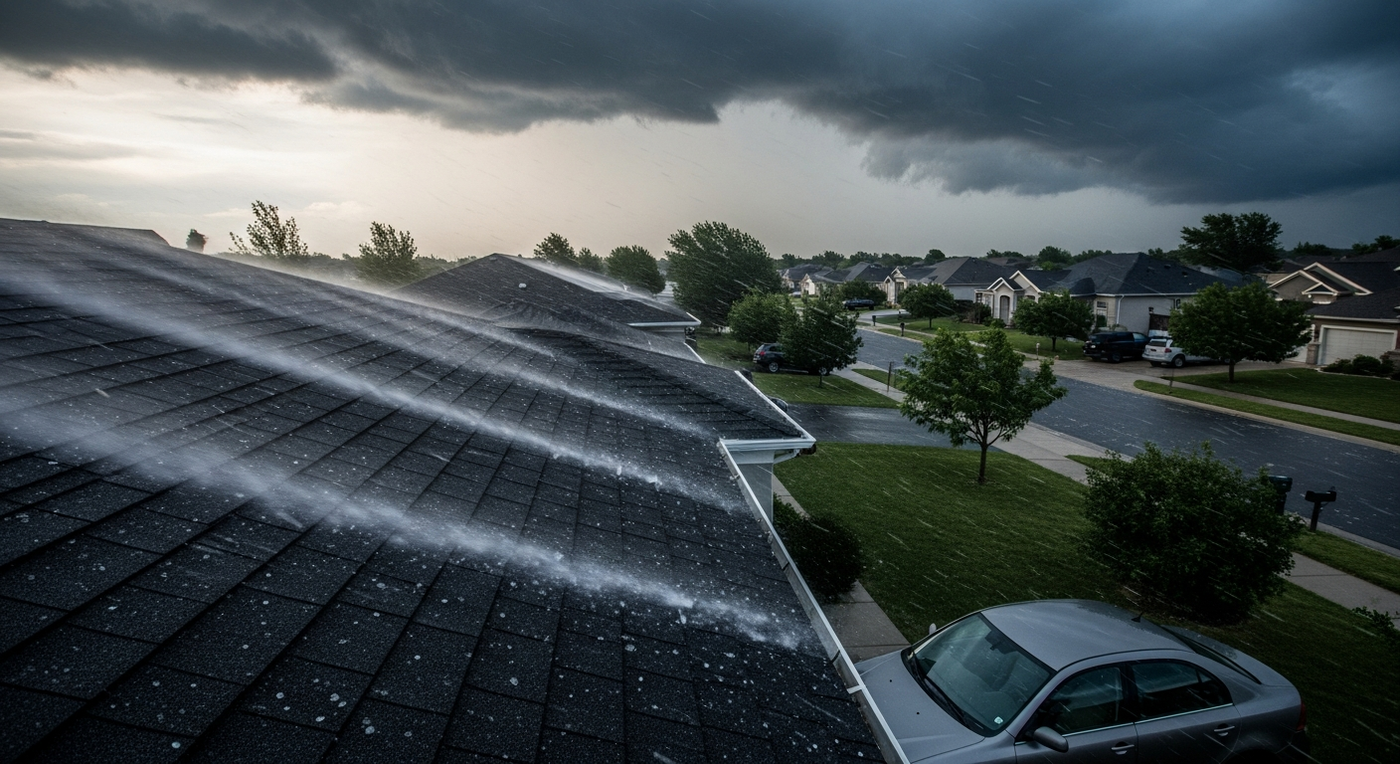
A attached garage is the gold standard for hail protection, but most people can't simply build one on demand.
Permanent Structures: Carports, Garages, and Covered Parking

Free Protection: Awareness and Positioning

The cheapest prevention costs nothing but attention. Weather prediction has improved dramatically over the past two decades. The National Weather Service's Storm Prediction Center issues severe weather outlooks up to eight days in advance, with increasing specificity as storms approach. A Day 4 outlook might simply highlight a broad region with potential for severe storms; by Day 1, forecasters can often identify which counties face the highest probability of significant hail.

This lead time creates opportunity. If you know Tuesday afternoon carries a 30% chance of severe hail in your area, you can make decisions Monday night. Park in a garage at work instead of the surface lot. Move your vehicle under the covered parking at your apartment complex, even if it's not your assigned spot. Ask a friend with garage space if you can park there for the afternoon. These aren't emergency measures—they're routine adjustments based on probabilistic information.

The key is making weather awareness habitual. Most people check the forecast to decide what to wear. Extending that habit to include severe weather risk takes minimal effort but requires consistency. During peak hail season—April through June for most of the central U.S.—checking the Storm Prediction Center's convective outlook should become as automatic as checking tomorrow's high temperature.

Positioning matters even without advance warning. When storms develop rapidly, you often have approximately thirty to sixty minutes between the first severe thunderstorm watch and hail falling. That's enough time to move a vehicle if you know where you're moving it to. The mistake is waiting until warnings are issued to figure out your options.

Effective positioning requires knowing your area's shelter options before you need them. Public parking garages downtown. The covered pickup area at the airport. The parking structure at the mall. Even a highway overpass, though this is a last resort and comes with significant safety concerns—you should never shelter under an overpass during a tornado, and you're blocking emergency access routes.

Some people keep a mental map of every covered parking option within a ten-minute drive. Others use the notes app on their phone. The method doesn't matter; the preparation does. When a severe thunderstorm warning includes "tennis ball sized hail" in the text, you don't want to be googling "parking garage near me.".

One counterintuitive observation: trees provide almost no protection from large hail. The instinct to park under a tree is understandable—shade suggests shelter—but hail falls with enough force that foliage barely slows it down. Worse, severe thunderstorms often produce high winds that break branches, adding falling limbs to the hail impact. If your only options are an open parking lot or under a tree, the tree might actually increase total damage risk.

The limitation of awareness-based prevention is that it requires you to be available and able to act. If you're in a meeting when the warning hits, or asleep at 2 AM when the storm rolls through, or simply away from your vehicle, all the weather knowledge in the world doesn't help. That's when passive protection becomes necessary.

$1.4B

Single 11-minute storm damage

$2.2B

2017 Denver hailstorm claims

10-20%

%

Premium increase after claim

~50

mph

Golf-ball hail terminal velocity

Portable Protection: Covers, Blankets, and Inflatable Systems

The market for portable hail protection has expanded significantly over the past decade, driven partly by insurance companies offering premium discounts for documented protection use. Options range from approximately $200 quilted car covers to $500+ inflatable systems that create a protective bubble around your vehicle.

Hail covers work through energy absorption. A golf-ball-sized hailstone falling at terminal velocity—approximately 50 miles per hour—carries substantial kinetic energy. A standard car cover made from thin polyester does essentially nothing to dissipate that energy. A purpose-built hail cover uses multiple layers of padding—typically foam or quilted fabric—to slow the hailstone's impact and distribute the force across a wider area. The goal isn't to make the cover impervious to hail; it's to reduce the energy transferred to your vehicle's paint and panels below the threshold that causes denting.

Quality varies enormously. Effective hail covers typically feature at least three layers of padding and can withstand hail up to roughly two inches in diameter without allowing panel damage. Cheaper versions might stop pea-sized hail but fail against anything larger. The challenge is that manufacturers rarely provide standardized impact testing data, making comparison difficult.

Inflatable hail protection systems take a different approach. These devices use a fan to maintain constant air pressure inside a cover that surrounds your vehicle, creating a cushion of air between the hail and your car. The concept is sound—air is an excellent shock absorber—but the systems have practical limitations. They require electrical power, so you need access to an outlet wherever you park. Setup takes several minutes, which means you need advance warning. And they cost significantly more than traditional covers, with most systems running approximately $400 to $600.

The real question with any portable protection is whether you'll actually use it. A hail cover that lives in your garage because it's too cumbersome to deploy regularly provides zero protection. This is where honest self-assessment matters. If you're the type of person who checks weather obsessively and doesn't mind spending ten minutes covering your car when storms threaten, a good hail blanket might be perfect. If you know you'll forget or won't bother, you're better off investing that money elsewhere.

One approach that works for some people: keep the cover in your trunk and use it only for high-confidence situations. When the Storm Prediction Center issues a moderate or high risk outlook for your area—typically three to five times per season—that's when you deploy protection. This reduces the hassle factor while still providing coverage for the most dangerous setups.

The insurance discount question comes up frequently. Some carriers offer premium reductions of approximately 5% to 10% for documented hail protection, but the details vary by company and state. The discount typically requires proof of purchase and sometimes photos showing the cover in use. Whether the savings justify the cost depends on your premium—if you're paying approximately $1,200 annually for comprehensive coverage, a 10% discount saves you about $120 per year, meaning a $400 cover pays for itself in roughly three years. But if your premium is lower or the discount smaller, the math changes.

Permanent Structures: Carports, Garages, and Covered Parking

An attached garage is the gold standard for hail protection, but most people can't simply build one on demand. For homeowners without garages, the question becomes whether investing in permanent covered parking makes financial sense.

A basic steel carport—the kind with a metal roof and open sides—costs approximately $3,000 to $5,000 installed for a single-car structure, with prices increasing for larger sizes or upgraded materials. These provide complete protection from hail but none from theft or side-blown rain. A fully enclosed carport or detached garage costs significantly more, typically starting around $8,000 for a basic single-car structure and climbing past approximately $15,000 for anything with finished walls, electricity, or aesthetic upgrades.

The math on permanent structures is straightforward but not always compelling. If you're in a high-frequency hail area and own multiple vehicles, the investment might pencil out. A family with two cars, each worth approximately $30,000, faces potential damage of several thousand dollars per vehicle in a severe hailstorm. If major hail events happen every few years, a $10,000 carport could potentially prevent $20,000 in damage over a decade. Add in the insurance premium reduction—some carriers offer approximately 10% to 15% discounts for garaged vehicles—and the structure might approach break-even.

But there are complications. First, comprehensive insurance already covers hail damage, minus your deductible. If your deductible is $500 and you file a claim every three years, you're paying $500 every three years to avoid damage that a $10,000 structure would prevent—making the structure's payback period approximately 60 years on deductible savings alone. The structure doesn't pay for itself unless you either drive very expensive vehicles, have a high deductible, or want to avoid filing claims entirely to prevent rate increases.

Second, not everyone can build a carport. Homeowners associations frequently prohibit them. Local zoning might require setbacks that make placement impossible. Rental properties are obviously off the table. For many people, permanent protection simply isn't an option regardless of the economics.

Third, structures require maintenance. Metal carports in hail-prone areas take a beating themselves. A severe storm might not damage your car underneath, but it can dent the carport's roof panels, requiring eventual replacement. The structure protects your vehicle while creating a new maintenance liability.

For people who can build and can justify the cost, though, permanent coverage offers something portable protection can't: passive, automatic safety. You never forget to deploy a garage. You don't need to be home when the storm hits. It works at 3 AM as well as 3 PM. That peace of mind has value beyond the pure financial calculation.

The System Approach: Layering Multiple Strategies

The most effective prevention combines multiple approaches. Awareness tells you when risk is elevated. Positioning gives you a free option when you're available to act. Portable protection covers situations where you have warning but no access to shelter. Permanent structures handle everything else.

Consider a specific scenario: You live in the Oklahoma City metro area, park in an open driveway at home, and work in a downtown office building with both surface and garage parking. Your prevention system might look like.

During hail season, you check the Storm Prediction Center outlook every morning. On days with elevated severe weather risk, you pay for garage parking at work instead of using the free surface lot—roughly $9 for the day versus potential damage in the thousands. You keep a quality hail cover in your garage at home and deploy it when same-day forecasts show high probability of severe storms in your immediate area. For overnight storms or situations where you're traveling, you rely on comprehensive insurance with a $1,000 deductible—high enough to keep premiums reasonable, low enough that a hail claim won't be financially catastrophic.

This system isn't perfect. A surprise severe storm that develops during your commute might catch you exposed. But it dramatically reduces your exposure compared to doing nothing, and it does so without requiring a $10,000 investment in a carport that your HOA might not allow anyway.

The key is matching your prevention level to your actual risk and constraints. Someone in an apartment with assigned outdoor parking can't build a garage and can't always move their car on short notice. For them, a good hail cover might be the entire prevention strategy. Someone with a flexible work schedule and access to covered parking might never need to buy anything—awareness and positioning might be enough.

Here's what doesn't work: assuming your insurance will handle it. Yes, comprehensive coverage pays for hail damage. But filing claims has consequences. According to industry data, comprehensive claims can increase premiums by roughly 10% to 20% at renewal, and the increase can persist for several years. File two hail claims in three years and you might face non-renewal or substantially higher rates. Insurance is a backstop, not a primary prevention strategy.

What You're Really Protecting

The obvious answer is resale value. Hail damage tanks a vehicle's worth, even after repairs. A car with a documented hail claim might sell for 10% to 20% less than an identical vehicle with a clean history. For a $30,000 vehicle, that's potentially $3,000 to $6,000 in lost value.

But there's a less tangible cost: time and hassle. Filing a claim, getting estimates, scheduling repairs, arranging a rental car—the administrative burden of hail damage is substantial. Quality paintless dent repair takes days or weeks, depending on severity and shop capacity. After major hailstorms, repair shops in affected areas get backlogged for months. San Antonio residents who filed claims after the 2022 storm sometimes waited six months for repairs.

Some people don't repair hail damage at all. They take the insurance payout and drive a dimpled car, pocketing the difference. This works financially but means living with visible damage and accepting the resale value hit. Others repair the damage but discover that even expert PDR doesn't restore the vehicle to perfect condition—certain angles of light still show the ghost of the dents.

Prevention eliminates all of this. A car that never gets hit by hail never needs repair, never has a claim on its history, never sits in a body shop for three weeks. The value isn't just the repair cost avoided; it's the preservation of the vehicle's entire ownership experience.

Decision Tradeoffs

Pros

  • Zero ongoing costBasic covers run $200-600 one-time purchase
  • Works anywhere you parkNo property modifications or permissions needed
  • Insurance discounts availableSome carriers reduce premiums 5-10% with proof

Tradeoffs

  • Requires deployment effortMust anticipate storms and physically cover vehicle
  • Limited to 2-inch hailMost covers fail against larger stones
  • Useless if you're awayNo protection during travel or overnight surprises

Portable covers work best for attentive owners in moderate-risk areas who park at home during storm season.

The Decision Framework

Choosing your prevention approach starts with three questions.

First, what's your actual hail exposure? Not the theoretical risk based on climatology, but your real-world exposure given where you park. Someone who garages their car at home and works in a building with underground parking has minimal exposure even in Oklahoma City. Someone with outdoor parking at home and work in the same city has maximum exposure. Be honest about your daily reality, not your ideal situation.

Second, what's your tolerance for active management? Some people enjoy monitoring weather and making tactical decisions. Others want a set-it-and-forget-it solution. A prevention strategy that requires daily attention will fail if you're not the type of person who'll maintain that attention through an entire hail season.

Third, what are your actual options? Renters can't build carports. People in dense urban areas might not have access to alternative parking. Your constraints matter as much as your preferences.

The framework isn't about finding the perfect solution—it's about finding the best available solution given your constraints. Perfect would be an attached three-car garage in a region that never sees hail. Most people don't have that. What they have is some combination of awareness, positioning options, portable protection, and insurance. The goal is to assemble those pieces into something that actually works for your specific situation.

One final consideration: prevention compounds. The first year you avoid hail damage, you save the deductible and repair hassle. The second year, you also avoid the premium increase from the first year's claim. The third year, you're still benefiting from the clean claims history. Over time, effective prevention creates a widening gap between your costs and the costs of someone who relies entirely on filing claims.

The 2022 San Antonio storm lasted eleven minutes, but the financial and practical consequences for vehicle owners lasted months or years. That's the nature of hail damage—brief events with extended impacts. Prevention inverts that equation. The effort happens before the storm, often weeks or months before. The benefit lasts for the life of the vehicle.

Most vehicle protection is reactive. You buy insurance after you buy the car. You fix damage after it occurs. Hail is one of the few automotive risks where proactive protection is both possible and practical. Whether that protection is checking the forecast each morning, keeping a cover in your trunk, or parking in a garage, the principle is the same: the best time to protect your vehicle is before the sky turns green and the first ice starts to fall.

Verified Sources

  1. Storm Prediction Center

    Storm Prediction Center

    Hail climatology data and severe weather forecasting

  2. Insurance Information Institute

    Insurance Information Institute

    National hail damage statistics and claim trends

  3. Insurance Information Institute

    Insurance Information Institute

    Premium impact analysis for comprehensive claims

Back to Hail Science