Regional Report Kansas Hail Report

Kansas Hail Season Peaks When the Dryline Retreats: Why May and June Bring the Highest Risk

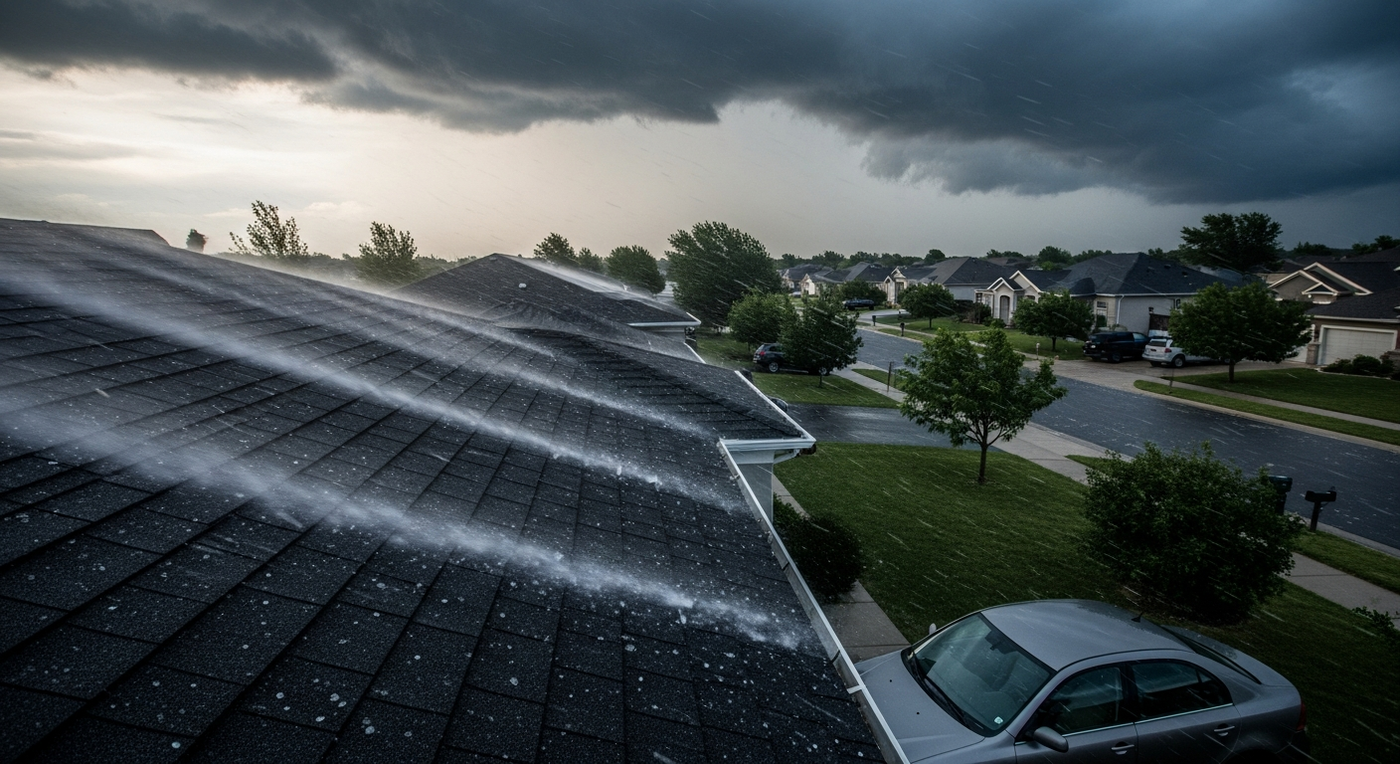
The same flat terrain that makes Kansas wheat country also allows supercell thunderstorms to maintain rotation for 100+ miles, creating hail swaths that can damage vehicles across entire metro areas during a single afternoon.

Kansas Hail Season Peaks When the Dryline Retreats: Why May and June Bring the Highest Risk
Hail Protector Editorial / GeminiRegional Report

The Dryline Creates Kansas's Hail Window

Kansas hail season runs from April through June, with peak activity concentrated in May and early June when atmospheric conditions align across the state. According to Storm Prediction Center climatology data, this period accounts for roughly 60-70% of the state's annual significant hail reports—those measuring two inches or larger.

The timing isn't random. Spring brings the dryline, a sharp moisture boundary that separates humid air from the Gulf of Mexico and dry desert air from the Southwest. In April, this boundary typically sits over western Kansas. By May and June, it retreats westward into Colorado and the Oklahoma Panhandle, allowing the warm sector—the region of unstable, moisture-rich air ahead of cold fronts—to expand across the entire state.

When the warm sector covers Kansas, every metro from Liberal to Kansas City sits in the zone where supercells can develop. The atmosphere during these months provides the essential ingredients: strong wind shear that creates rotating updrafts, abundant moisture that fuels towering thunderstorms, and instability that allows hail embryos to cycle through the storm multiple times before falling.
Flat Terrain Means Long-Track Hail Swaths

Kansas's topography amplifies hail risk in a way that doesn't apply to states with varied terrain. The state's elevation rises gradually from roughly 700 feet in the east to 4,000 feet in the west, but there are no mountain ranges, river valleys, or significant hills to disrupt storm structure.

Supercells that form over Kansas can maintain their organization for hours. A single storm might track from the Colorado border to the Missouri state line—a distance exceeding 400 miles—without encountering terrain features that would weaken its updraft or disrupt the mesocyclone. The result: hail swaths that stretch 50 to 100 miles, affecting multiple counties during a single event.

This creates a different risk profile than mountainous states where storms weaken as they encounter ridges or valleys. In Kansas, if a supercell produces hail, it often continues producing hail until the storm itself dissipates or moves into a less favorable environment. Drivers along I-70 or I-35 can find themselves in the path of the same hailstorm for an hour or more if they're traveling parallel to its track.

The 2024 Season Reinforced Commute-Hour Vulnerability

The 2024 Kansas hail season illustrated the timing problem that makes May and June particularly disruptive. Multiple significant hail events tracked across Wichita, Topeka, and the Kansas City metro during afternoon and evening hours when highways were crowded with commuters.

A late May supercell in 2024 produced a hail swath from Hutchinson through Wichita to El Dorado, dropping golf ball to baseball-sized hail across a 70-mile corridor between 4 PM and 6 PM. Thousands of vehicles were caught on US-54 and I-35 with no shelter available. Body shops in Wichita reported backlogs extending into July, with repair estimates typically running several thousand dollars per vehicle for comprehensive hail damage.

The pattern repeated in early June when a cluster of supercells formed along the dryline in western Kansas and tracked eastward through the evening. One storm maintained hail production from Hays to Salina to Junction City, a distance of roughly 120 miles, without significant weakening. The flat terrain allowed the storm's updraft to remain intact across three counties.

April Brings the First Wave, June the Last

While May sees the highest concentration of severe hail, April and June bookend the season with distinct characteristics. April events tend to occur when strong upper-level systems—jet stream disturbances—provide the forcing needed to overcome marginal instability. These storms often form in northwest Kansas and track southeast, affecting the I-70 corridor from Colby through Salina.

June events, by contrast, typically develop in higher moisture and instability but weaker wind shear. The dryline has retreated farther west by mid-June, and the jet stream has shifted north toward Nebraska and South Dakota. Hail-producing storms in June often form along outflow boundaries—the leading edge of cool air from earlier thunderstorms—rather than along the dryline itself. These storms can be less predictable in their timing and location.

According to NOAA's Storm Events Database, Kansas averages around 100 to 150 hail reports of one inch or larger each May, compared to roughly 60 to 80 in April and 70 to 100 in June. The month-to-month variation depends heavily on whether the jet stream pattern favors repeated storm systems crossing the state.

Why Kansas Hail Gets Less Attention Than Tornado Risk

Here's what most people get wrong: Kansas is more famous for tornadoes than hail, but hail causes far more widespread property damage each year. Tornadoes affect narrow paths, often a few hundred yards wide. Hail swaths can be 10 to 20 miles wide and stretch across multiple counties.

A single tornado might damage 50 to 100 structures along its track. A single hailstorm can damage tens of thousands of vehicles across a metro area in one afternoon. The 2024 Wichita event alone likely affected more vehicles than all of Kansas's tornadoes that year combined. Yet tornado warnings dominate public awareness while hail warnings receive less attention until stones start falling.

Kansas Hail Season Progression

  1. March

    Preparation Window

    Add comprehensive coverage before season starts. Document vehicle condition with photos.

  2. April

    Season Begins

    Strong jet stream systems drive northwest-to-southeast storms along I-70 corridor. 60-80 reports of 1"+ hail.

  3. May

    Peak Activity

    Dryline retreats west, warm sector expands statewide. 100-150 reports of 1"+ hail. Highest metro area risk.

  4. Early June

    Final Major Wave

    High moisture but weaker shear. Outflow boundary storms less predictable. 70-100 hail reports.

  5. July

    Sharp Decline

    Jet stream shifts to Canada. Multicell clusters replace supercells. Hail reports drop 60-70% from June.

The Warning Problem: Storms Develop Rapidly

Kansas's flat terrain creates another challenge: storms are visible from great distances, but that visibility doesn't translate to adequate warning time for drivers. A supercell might be apparent on the western horizon 30 minutes before it arrives, but determining whether it will produce hail—and where that hail will fall—remains difficult until the storm is nearly overhead.

Hail cores within supercells shift position as the storm evolves. A storm tracking northeast might drop hail in a corridor 10 miles south of its overall path, then shift the hail core 10 miles north 20 minutes later. Drivers who think they're safely north of the storm can find themselves in baseball-sized hail with little warning.

The National Weather Service issues severe thunderstorm warnings when storms are capable of producing hail one inch or larger or wind gusts of 58 mph or greater. But the warning polygon—the area outlined on radar apps—covers a broad region. Knowing you're inside a severe thunderstorm warning doesn't tell you whether hail will fall at your specific location. Many drivers continue traveling through warned areas, assuming they'll avoid the worst of the storm.

60-70

%

Annual hail reports May-June

100+

miles

Supercell rotation distance

$3,000-$8,000

Typical repair costs

60-70

%

Risk drop June to July

Insurance Implications: Comprehensive Coverage and Timing

Kansas hail damage falls under comprehensive auto insurance coverage, not collision. Drivers who carry only liability coverage—the state minimum—receive no compensation for hail damage regardless of severity. According to Insurance Information Institute data, comprehensive claims for hail damage in Kansas typically spike in May and June, with average repair costs often ranging from $3,000 to $8,000 depending on vehicle size and hail stone diameter.

Filing a comprehensive claim for hail damage generally doesn't affect insurance rates the same way an at-fault collision would, but insurers track claim frequency. Multiple comprehensive claims within a short period can lead to non-renewal or difficulty finding coverage. Some Kansas drivers who experienced hail damage in both 2023 and 2024 reported challenges securing affordable comprehensive coverage for 2025.

Deductibles matter significantly. A $500 comprehensive deductible on a $4,000 hail repair means the driver pays $500 and insurance covers $3,500. A $1,000 deductible cuts the insurance payout to $3,000. Drivers who park outside regularly during hail season might consider whether a lower deductible makes financial sense given the elevated risk from April through June.

Where to Find Shelter When Warnings Are Issued

The practical challenge during Kansas hail season: finding overhead protection when you're driving through rural areas. Interstate rest stops offer no covered parking. Gas stations along I-70 and I-35 typically have canopies over fuel pumps but not over parking areas, and station owners generally prohibit vehicles from parking under the fuel canopy during severe weather.

Some drivers pull under highway overpasses during severe thunderstorm warnings, but this creates hazards. Overpasses funnel wind, increasing wind speed and making conditions more dangerous. They also create traffic bottlenecks when multiple vehicles stop, blocking the roadway for emergency vehicles. The Kansas Highway Patrol explicitly advises against using overpasses as storm shelter.

The better option: monitor radar before departing during hail season and delay travel if supercells are forecast along your route. Apps that display radar and severe thunderstorm warnings provide 20 to 40 minutes of notice in most cases—enough time to exit the highway and find a parking garage, covered car wash, or other structure with overhead protection.

In metro areas like Wichita, Topeka, and Kansas City, parking garages become crowded quickly when severe thunderstorm warnings are issued during commute hours. Some drivers reported waiting 15 to 20 minutes to enter downtown Wichita garages during the May 2024 event as others sought the same shelter.

July Marks the Transition: Hail Risk Drops Sharply

By early July, Kansas hail season effectively ends for most of the state. The jet stream has shifted well into Canada, removing the wind shear needed for sustained supercells. The dryline retreats into New Mexico and far western Texas. Thunderstorms still form—often daily across Kansas in July—but they're typically multicell clusters or pulse storms that produce heavy rain and frequent lightning rather than organized supercells with large hail.

According to climatological data, Kansas hail reports drop by roughly 60-70% from June to July. August sees even fewer events. The atmosphere remains unstable and moisture-rich, but the upper-level dynamics that create rotating updrafts are absent. Hail that does fall in July and August tends to be smaller—pea to quarter-sized—and associated with weak supercells or strong pulse storms rather than the organized systems that dominate May and June.

This sharp seasonal transition means the window for significant hail damage is concentrated into roughly 90 days. Drivers who can garage their vehicles from April through June substantially reduce annual hail risk. Those who park outside year-round face the majority of their hail exposure during this three-month period.

The Pre-Season Window: March Preparation

March offers a preparation window before hail season begins in earnest. Comprehensive insurance coverage takes effect immediately upon purchase, so drivers who add it in March are covered when the first significant hail event occurs in April. Waiting until after the first hailstorm of the season means paying for damage out of pocket.

Vehicle inspections matter for insurance purposes. Insurers sometimes require documentation of a vehicle's pre-existing condition before issuing comprehensive coverage, particularly for older vehicles or those with prior damage. Photographs showing the vehicle's roof, hood, and trunk before hail season can prevent disputes about whether dents resulted from a recent storm or prior damage.

Portable car covers designed for hail protection exist but have limitations. They must be installed before hail begins—not practical for drivers caught on the highway—and wind can dislodge them during severe thunderstorms. Some Kansas drivers keep hail blankets in their vehicles for use if they can pull into a parking lot and deploy the cover before hail arrives, but this requires 5 to 10 minutes of setup time and calm conditions.

The most reliable protection remains overhead structure: a garage, carport, or parking garage. For Kansas drivers who park outside at home, the April-through-June window represents the highest-risk period for vehicle damage from a meteorological phenomenon that the state's flat terrain and spring atmospheric patterns make almost inevitable.

Verified Sources

  1. NOAA Storm Prediction Center

    NOAA Storm Prediction Center

    hail climatology and seasonal patterns

  2. NOAA Storm Events Database

    NOAA Storm Events Database

    historical hail reports by month and location

Back to Hail Science