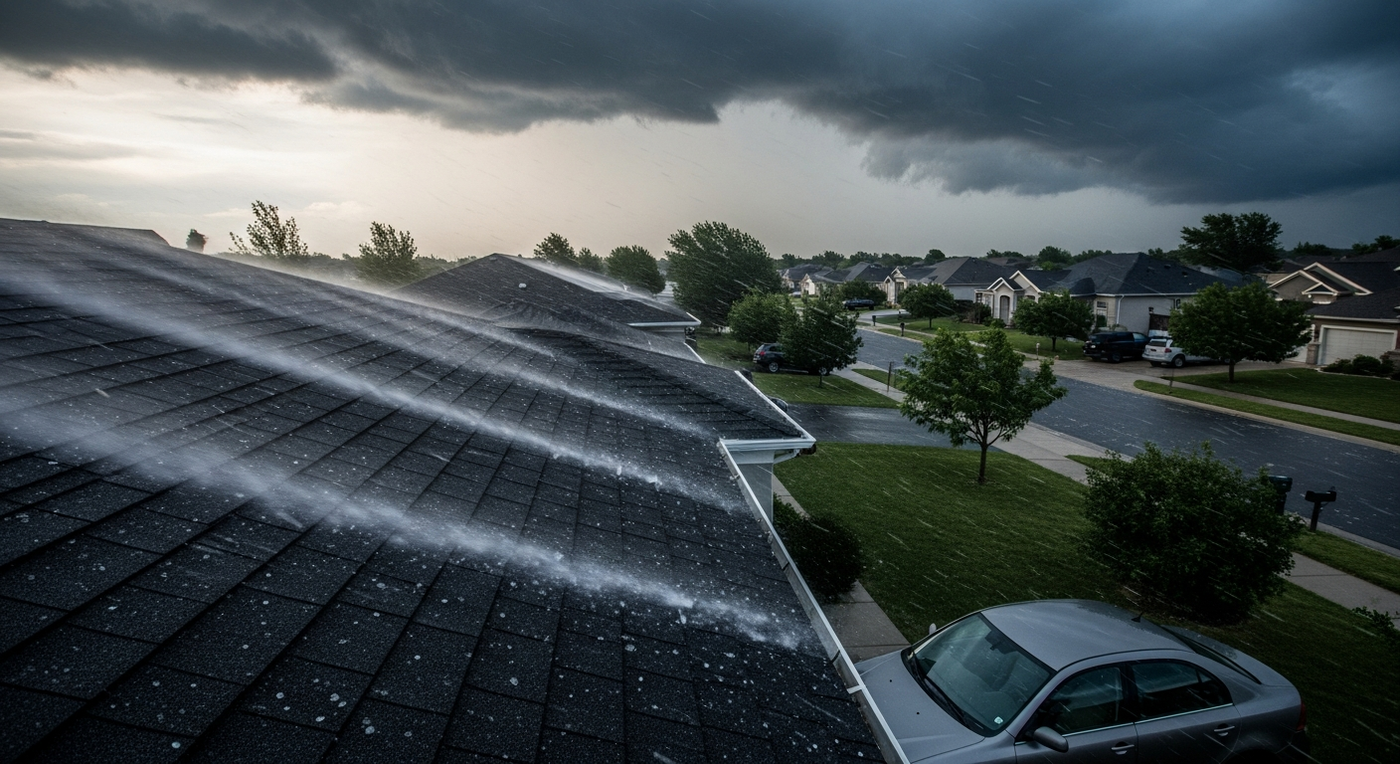
The 3 AM Problem
The National Weather Service issues a tornado warning at 3:17 AM for a supercell tracking northeast at 45 mph. Your phone buzzes. Maybe. If you remembered to enable wireless emergency alerts. If your phone isn't on silent. If the storm's path intersects your county polygon precisely enough to trigger the geofencing algorithm.
Daytime severe weather creates natural warning windows—you see the sky darken, you hear thunder, you check radar, you move your car. Nocturnal supercells eliminate all of those cues. According to Storm Prediction Center research, roughly 30-35% of significant severe weather reports in the Great Plains occur between 10 PM and 6 AM during spring months, yet these events account for a disproportionately higher share of insurance claims for vehicle damage.
The math is straightforward: daytime hail hits moving vehicles, parked vehicles, and gives owners time to react. Nighttime hail hits stationary targets exclusively, with zero mitigation opportunity.