Regional Report Oklahoma Hail Report

Oklahoma's Six-Month Hail Gauntlet: Why the Sooner State Faces the Longest Damage Window in America

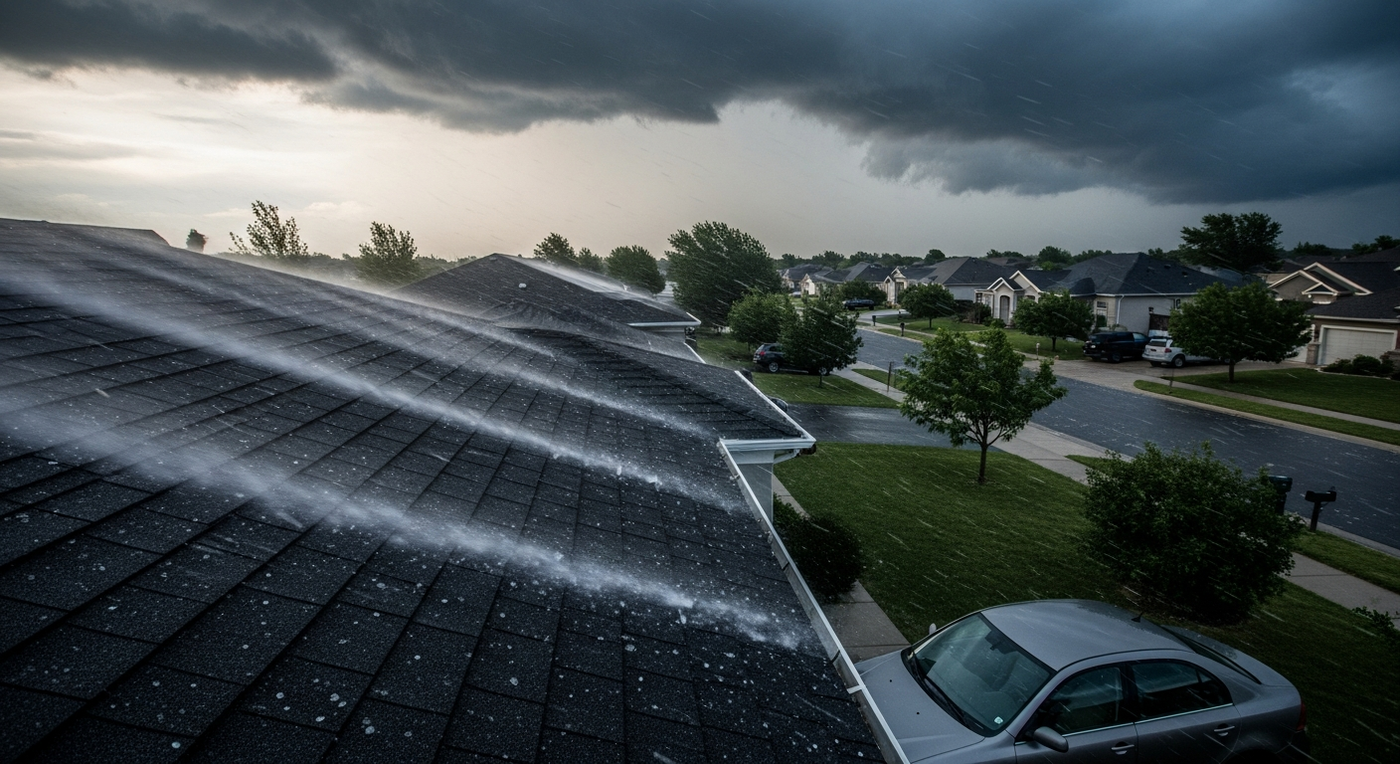
Oklahoma experiences hail-producing storms from March through August, creating a half-year exposure period driven by the state's unique position where multiple atmospheric mechanisms activate in sequence.

Oklahoma's Six-Month Hail Gauntlet: Why the Sooner State Faces the Longest Damage Window in America
Hail Protector Editorial / GeminiRegional Report

The Geography That Won't Quit

Oklahoma sits at the intersection of three storm-generating engines that rarely align elsewhere in North America. Cold air masses diving south from Canada collide with moisture streaming north from the Gulf of Mexico, all while the jet stream positions itself directly overhead during spring. This isn't a brief seasonal alignment—it's a six-month procession of different atmospheric setups that each produce hail through distinct mechanisms.

The state's location at roughly 35°N latitude places it in what meteorologists call the "transition zone," where neither arctic nor tropical air masses dominate for extended periods. Instead, they battle for position from early spring through late summer, creating the instability that fuels severe thunderstorms. NOAA's Storm Events Database shows Oklahoma records hail reports in every month from March through August with remarkable consistency, unlike neighboring states where activity concentrates in a narrower window.

March Through May: The Supercell Factory

The spring months produce Oklahoma's most violent hail events. March brings the first significant clash between retreating winter cold and advancing Gulf warmth, creating steep temperature gradients in the lower atmosphere. These gradients, combined with increasing solar heating, generate the rotating supercell thunderstorms capable of suspending hailstones in updrafts long enough to grow them to destructive sizes.

April and May represent peak intensity. Supercells during these months can produce hail exceeding two inches in diameter—large enough to total vehicles and punch through residential roofing. The jet stream remains strong and positioned over the southern Plains, providing the wind shear necessary for storm rotation. Surface temperatures climb into the 70s and 80s while air at higher altitudes remains below freezing, creating the deep layer of instability that allows hailstones to grow through multiple updraft cycles.

Storm chasers and researchers concentrate their efforts during this window because the atmospheric setup produces textbook supercells with clearly defined structure. These aren't disorganized clusters of thunderstorms—they're isolated rotating engines that can maintain themselves for hours while moving across hundreds of miles.

The June Transition Nobody Expects

Here's what catches Oklahoma drivers off-guard: tornado season's decline in June doesn't mean hail season ends. The atmospheric dynamics simply shift. As the jet stream retreats northward and surface temperatures climb into the 90s, the supercell regime gives way to different storm types that still produce damaging hail.

Pulse storms become more common—intense single-cell thunderstorms that explode vertically in the afternoon heat, produce a brief burst of large hail, then dissipate. These storms lack the rotation of spring supercells but compensate with extreme updraft strength driven by surface heating. A pulse storm can drop golf ball-sized hail on a neighborhood in minutes, then vanish before the National Weather Service issues a warning.

Mesoscale convective systems (MCS) also increase in frequency. These organized lines and clusters of storms often develop after sunset, fed by the low-level jet that strengthens at night. While individual cells within an MCS typically produce smaller hail, the systems cover enormous areas—a single MCS can affect multiple counties in one night. According to Storm Prediction Center research on MCS climatology, these nocturnal complexes account for a substantial portion of summer severe weather across the Plains.

July and August: The Overlooked Tail

Most Oklahoma residents mentally file away their hail concerns after June, assuming summer heat shuts down severe weather. The data tells a different story. July and August produce numerous hail reports statewide, though the character of these events differs from spring.

Summer hail tends to be smaller on average—often pea to quarter-sized rather than golf ball dimensions. But "smaller" doesn't mean harmless. Hail the size of a quarter falling at terminal velocity still chips windshields, dents hoods, and damages crops. Insurance claims from summer hail events can reach millions annually because the storms often strike metro areas where vehicle density is high.

The summer pattern favors afternoon and evening development, triggered by daytime heating rather than large-scale frontal systems. Storms form along outflow boundaries from earlier convection or along the dryline—the sharp moisture gradient that separates humid air from the Gulf and dry air from the desert Southwest. These boundaries act as focusing mechanisms, concentrating instability into narrow zones where storms repeatedly develop.

August represents the tail end of Oklahoma's hail season, but not its elimination. Hail reports drop compared to spring peaks, yet the month still experiences more hail activity than many states see during their entire annual maximum. The atmospheric ingredients remain available—moisture, instability, and lift—just in different proportions than the spring setup.

6

months

Continuous hail exposure period

35°N

latitude

Transition zone positioning

Why Oklahoma's Window Stays Open

The six-month duration stems from Oklahoma's position in the continental interior, far enough from moderating oceanic influences that seasonal transitions occur slowly. Spring doesn't flip to summer overnight; instead, the atmosphere cycles through weeks of transitional patterns where different storm modes take turns dominating.

Compare this to states along the Atlantic coast, where marine air masses moderate temperature extremes and compress the severe weather season into a tighter window. Or consider mountain states, where topography disrupts the large-scale flow patterns necessary for sustained severe weather. Oklahoma lacks these limiting factors. It's flat enough that storm systems move unimpeded, yet positioned where multiple air masses naturally converge.

The state also benefits—if that's the right word—from its latitude. Positioned in the mid-latitudes, Oklahoma experiences the full range of seasonal solar heating without tilting so far north that summer days become too long or so far south that winter cold never arrives. This creates a Goldilocks zone for severe weather: enough seasonal variation to generate strong temperature contrasts, but enough consistency to maintain those contrasts across multiple months.

Oklahoma's Hail Season Progression

  1. March-May

    Supercell Dominance

    Rotating storms with jet stream aloft produce largest hailstones from colliding air masses

  2. June

    Regime Shift

    Pulse storms and nocturnal systems replace supercells as jet retreats north

  3. July-August

    Heat-Driven Activity

    Afternoon heating triggers smaller but frequent hail along moisture boundaries

What the Six-Month Window Means for Preparation

Oklahoma drivers face a fundamentally different risk calculation than motorists in states with brief hail seasons. A Kansas City resident might reasonably park their vehicle in a garage during the few weeks in May when hail risk peaks. An Oklahoma City resident faces that same decision from March through August—half the year.

This extended exposure changes the math on protective measures. Hail-resistant car covers become more cost-effective when deployed across six months rather than six weeks. The decision to seek covered parking during storm warnings shifts from occasional inconvenience to regular routine. Insurance Information Institute data shows Oklahoma consistently ranks among the top states for hail insurance claims, a direct reflection of this prolonged exposure period.

The seasonal length also affects when people pay attention. Spring storm coverage dominates local news, creating heightened awareness in April and May. But that awareness often fades by July, even though hail-capable storms continue forming regularly. A driver vigilant about parking under cover in April might leave their vehicle exposed in July, not realizing the risk remains substantial.

The Forecast Limitations Nobody Mentions

Here's an uncomfortable truth about Oklahoma's extended hail season: meteorologists can identify days with hail potential, but pinpointing which neighborhoods will actually see stones remains largely impossible beyond a few hours. The Storm Prediction Center issues outlooks days in advance showing broad risk areas, but those areas typically encompass dozens of counties. Whether your specific ZIP code gets hit depends on storm-scale processes that don't become clear until convection initiates.

This uncertainty compounds across six months. During a three-week hail season, you might reasonably take maximum precautions every day. Across six months, that approach becomes unsustainable. Most people settle into a pattern of monitoring forecasts and responding to warnings, accepting some level of unavoidable exposure.

Radar technology helps once storms develop, but Oklahoma's hail season includes plenty of events that form too quickly for effective response. A supercell in May might be tracked for hours as it crosses the state, giving ample warning. A July pulse storm might go from first echo to hail on the ground in minutes, leaving little time to move vehicles or seek shelter.

Regional Variations Within the State

Oklahoma's hail season doesn't affect all regions equally. The northwest counties—the Panhandle and areas near the Kansas border—experience peak activity slightly earlier in spring, when the strongest jet stream dynamics focus on the northern Plains.

Southeast Oklahoma experiences a somewhat different pattern, with more influence from Gulf moisture and less from dry continental air. Hail events in this region tend toward the smaller end of the size spectrum but occur with high frequency during summer months when afternoon heating triggers convection along the moisture-rich boundary layer.

The I-35 corridor from the Red River to the Kansas border deserves special mention. This north-south highway bisects the state through areas where storm frequency peaks, creating what insurance adjusters informally call "hail alley within hail alley." Vehicles traveling this route during the March-August window face elevated exposure simply from spending hours on the road during afternoon and evening hours when storms most commonly develop.

The Economic Reality of Half-Year Exposure

Auto body shops in Oklahoma operate under different business models than their counterparts in hail-free regions. The extended season means steady work from spring through summer rather than a brief spike in May. Some shops specialize exclusively in hail repair, employing paintless dent removal technicians year-round rather than seasonally.

This creates an odd economic dynamic: Oklahoma has developed infrastructure to handle hail damage efficiently, which somewhat mitigates individual repair costs through competition and specialization. But the sheer volume of claims across six months keeps insurance premiums elevated. A driver in Oklahoma often pays more for comprehensive coverage than someone with an identical vehicle and driving record in a state where hail season lasts weeks instead of months.

The agricultural impact extends even longer than the urban vehicle damage window. Wheat harvest in Oklahoma begins in May and continues through June, coinciding with peak hail intensity. A single supercell can destroy thousands of acres of ready-to-harvest wheat, representing months of investment lost in minutes.y-to-harvest wheat in minutes. Summer crops face exposure through July and August, when pulse storms and MCS events continue producing damaging hail. According to USDA Risk Management Agency data, Oklahoma farmers file substantial hail claims across the entire growing season, reflecting the state's uniquely extended exposure.

Living With the Calendar

Oklahoma's six-month hail season represents a fundamental characteristic of the state's climate, not a temporary pattern or recent development. The atmospheric setup that creates this extended window—the collision zone of different air masses, the seasonal progression of the jet stream, the distance from moderating oceanic influences—has operated for millennia and will continue operating regardless of human activity.

Residents develop coping strategies that become second nature. Checking radar before leaving work during spring and summer months. Knowing which parking garages offer temporary shelter downtown. Keeping a mental map of overpasses and covered areas along regular driving routes. These aren't paranoid behaviors—they're rational responses to living in a place where the atmosphere produces hail-generating storms for half the year.

The extended season also creates a certain fatalism. You can't avoid all exposure across six months without fundamentally altering your life. At some point, you'll be caught away from shelter when a storm develops. Your vehicle will spend nights in an open driveway because you don't have a garage. You'll drive through areas where storms are possible because staying home isn't practical. The goal becomes reducing exposure where possible while accepting that some damage risk is simply the price of living in Oklahoma.

That acceptance doesn't mean ignoring the threat. It means understanding that Oklahoma's hail season isn't a brief spring phenomenon you can wait out—it's a half-year reality that requires sustained awareness and practical adaptation. The drivers who fare best aren't those who panic at every cloud, but those who integrate hail awareness into their routine decision-making from March through August, every year, without exception.

Verified Sources

  1. NOAA Storm Prediction Center

    NOAA Storm Prediction Center

    Official convective outlook archive and risk categories.

  2. ncdc.noaa.gov

    ncdc.noaa.gov

    Referenced in article via ncdc.noaa.gov.

  3. spc.noaa.gov

    spc.noaa.gov

    Referenced in article via spc.noaa.gov.

  4. iii.org

    iii.org

    Referenced in article via iii.org.

Back to Hail Science